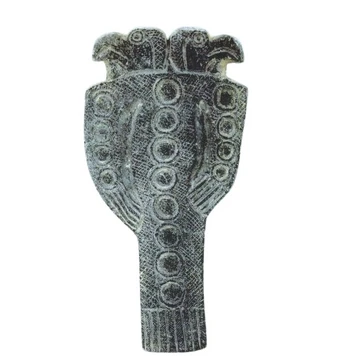
Frequently Asked Questions
The most-asked questions about double-headed eagle.
What exactly is the double-headed eagle as a symbol?
It is a heraldic charge depicting a single eagle body with two heads turned in opposite directions, historically used to signify supreme imperial or sovereign authority. It appears in coats of arms, imperial seals, and state emblems across several European civilizations.
Where does the symbol originate?
Its earliest well-attested use is in Byzantine imperial iconography, where it adorned the emperor's throne, seals, and military banners. From there it spread westward and northward through dynastic marriages and political alliances.
Who are the principal historical figures tied to the emblem?
Key figures include Byzantine emperors such as Justinian I, Holy Roman Emperors like Frederick II, Russian Grand Prince Ivan III, and Serbian rulers of the Nemanjić dynasty. Each adopted or modified the eagle to reflect their own claim to universal sovereignty.
Where should a newcomer begin exploring the topic?
Start with a basic overview of Byzantine imperial symbolism, then follow the emblem's transmission into the Holy Roman Empire and the Grand Duchy of Moscow. From there, branch into the specific national variants that interest you most.
Why does the eagle have two heads instead of one?
Medieval and early-modern commentators most often read the two heads as representing the emperor's dual jurisdiction over church and state, or his watch over both the East and the West. Some later interpretations link them to the union of two dynasties or realms under one ruler.
What distinguishes the Russian version from the original Byzantine one?
The Russian coat of arms, formalized after 1497, adds a smaller crowned eagle on the breast, a scepter and orb in the talons, and a crown above the heads. The earlier Byzantine depiction is typically simpler, showing just the two-headed bird with a single crown.
Which modern states still feature the double-headed eagle?
Russia, Serbia, and Albania each incorporate a double-headed eagle into their national coats of arms today. Several German federal states and the city of Berlin also use it in their heraldry, though in a more regional context.
What is a common misconception about the symbol?
A frequent assumption is that the double-headed eagle is essentially a Russian invention, but in fact it predates Russian usage by several centuries and was employed by at least a dozen distinct polities before ever appearing on a Muscovite seal.
What is one of the most significant historical moments involving the emblem?
The 1497 marriage of Ivan III of Moscow to Sophia Palaiologina, niece of the last Byzantine emperor, is widely cited as the moment the double-headed eagle entered Russian state heraldry. It signaled Moscow's self-presentation as the heir to Byzantine imperial legitimacy.
Where can fans dig deeper into the heraldic and artistic details?
National heraldic archives in Moscow, Belgrade, and Berlin hold primary seal and coat-of-arms records. For visual study, Byzantine and medieval manuscript collections in major European libraries offer the earliest painted examples of the two-headed eagle.