Chihuahua
Smallest recognized dog breed, retaining pre-Columbian ancestry.

Carlos.ferreira.rejas · CC BY-SA 3.0
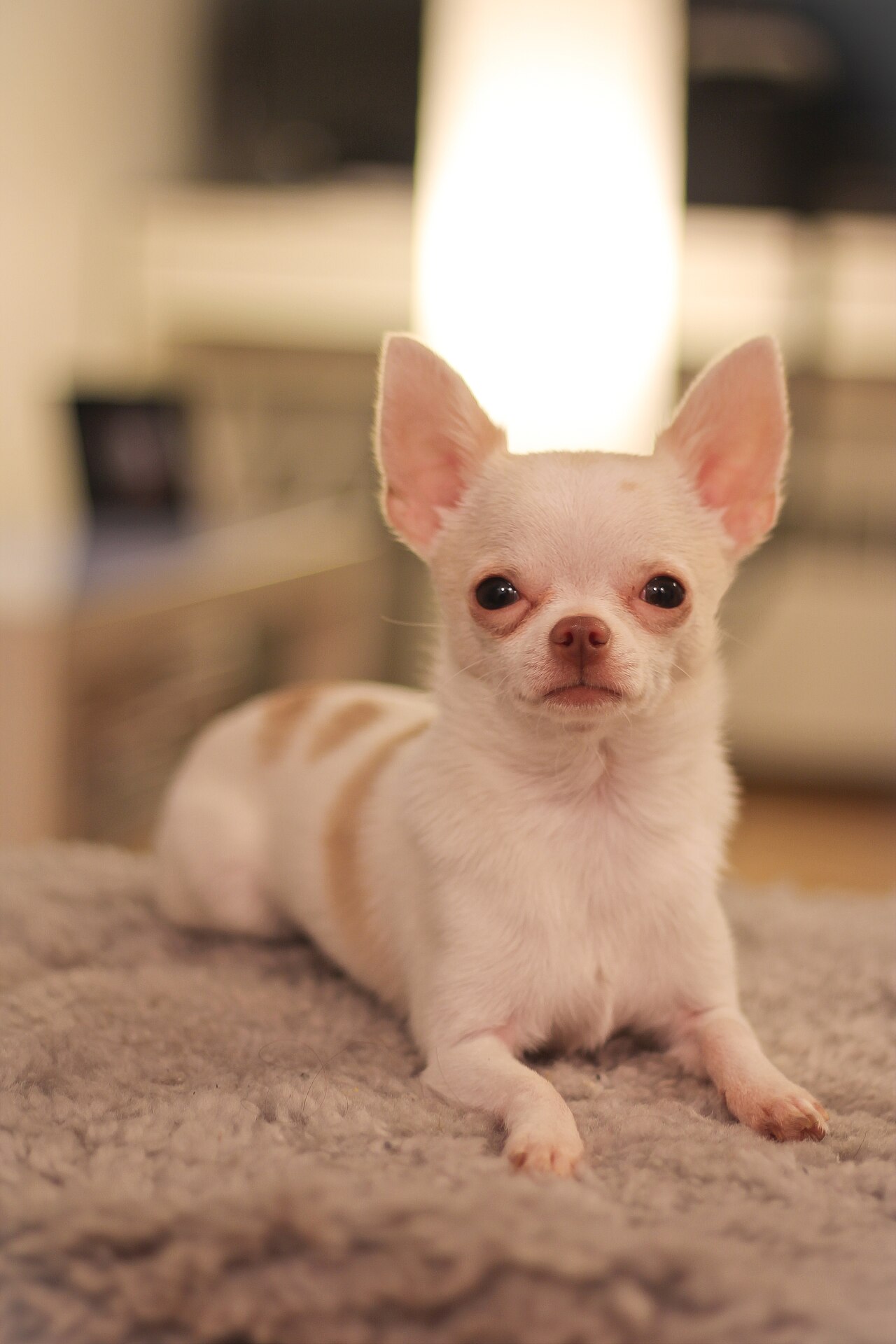
The Chihuahua, also called the Chihuahueño, is a Mexican toy breed and the smallest recognized dog breed globally. Bred mainly as a companion, it is known for its small body, large upright ears, and round head. The breed comes in short-haired and long-haired versions, and its coat can be nearly any color or pattern. Genetic research shows that the Chihuahua carries a small amount of ancestry from pre-Columbian dogs native to the Americas, setting it apart from most modern breeds, which trace back mainly to Europe. The breed gained official recognition in the early 1900s and has since become one of the world’s most popular companion dogs.
Genetic studies indicate that native American dogs entered North America from Siberia roughly ten thousand years ago and remained isolated from other breeds for about nine thousand years until Europeans arrived. A 2020 analysis of ancient dog genomes found that this pre-colonial ancestry survives in the Chihuahua at about four percent, while an earlier 2013 study had suggested it might be as high as seventy percent. Colonial records from the early nineteenth century mention small, nearly hairless dogs, and one account claims that sixteenth-century conquistadores found them plentiful in the region later named Chihuahua. In a 1520 letter, Hernan Cortés wrote that the Aztecs raised and sold little dogs as food. The American Kennel Club first registered a Chihuahua in 1904, a dog named Midget owned by H. Raynor of Texas.
Breed standards specify an "apple-shaped" skull, also called an "apple-dome" conformation, with large round eyes, large erect ears set high on a dramatically rounded skull, and a well-defined stop forming a near ninety-degree angle where the muzzle meets the skull. Chihuahuas have a soft spot on the head called the molera, similar to a human infant’s fontanel. Older "deer" type dogs, with a flat head, wider-set eyes, larger ears, and longer legs, may still be registered but are considered faulty in competition. Standards generally specify only weight and proportions, not height; typical height ranges from six to nine inches. The international standard prefers dogs between 1.5 and 2.5 kilograms, disqualifying those outside 1.0 to 3.0 kilograms. The American standard sets a maximum show weight of 5.9 pounds, while the British standard prefers four to six pounds. Pet Chihuahuas often exceed these weights, sometim
- origin
- Mexico
- breed type
- Toy dog
- size
- Smallest recognized dog breed
- weight (show standard)
- 1.0–3.0 kg (FCI); max 2.7 kg (AKC)
- height
- 15–23 cm (6–9 in) generally; some up to 30–38 cm
- coat varieties
- Short- and long-coated
- life expectancy
- Varies by study; 7.91–11.8 years
Quick Facts
- Country
- Mexico
- Coat
- short-haired (smooth) or long-haired
- Fcistd
- http: · www.fci.be/Nomenclature/Standards/218g09-en.pdf
Facts from the source article.
Lore & Background
The Chihuahua is a Mexican breed of toy dog, recognized as the smallest dog breed in the world. It is kept primarily as a companion animal. The breed is defined by its compact size, large erect ears, and rounded skull. It appears in both short-coated and long-coated varieties, and can be found in a wide range of colors and patterns. Genetic studies show that the Chihuahua retains a small proportion of pre-Columbian indigenous American dog ancestry, distinguishing it from most modern breeds of largely European origin. The breed was formally recognized in the early twentieth century. Breed standards specify an "apple-shaped" skull, also called an "apple-dome" conformation, with large, round eyes and a well-defined stop that forms a near 90-degree angle where the muzzle meets the skull. A soft spot on the head, called the molera, is similar to a human infant's fontanel. An older "deer" type exists, with a flatter head, more widely set eyes, larger ears, and longer legs, but this is considered a fault in competition. The breed standard does not specify height, only weight and overall proportions; the Fédération Cynologique Internationale standard prefers dogs between a certain weight range, while the American standard sets a maximum weight for showing. Pet Chihuahuas often weigh more than show standards. The breed does not breed true for size, and puppies from the same litter can mature at drastically different sizes. The merle coat pattern is disallowed by the international standard due to associated health risks. The Chihuahua may display above-average aggression toward people and other dogs, and the American Kennel Club does not recommend them for families with young children. The breed has genetic predispositions to several neurological diseases and a mild predisposition to congenital heart disease. It is prone to hypoglycemia due to its fast metabolism, and veterinarians may recommend honey as a home remedy for less severe cases in puppies. A 2018 study in Japan found an average life expectancy of 11.8 years for the Chihuahua.
Reader's Guide
Its formal recognition in the early twentieth century and subsequent popularity worldwide have made it a common companion animal. The breed's characteristics include an apple-shaped skull, a molera (soft spot on the head), and a wide range of coat colors and patterns. Health concerns include predisposition to several neurological diseases, hypoglycemia due to fast metabolism, and a high incidence of dystocia (obstructed labor) in bitches. The breed's life expectancy varies across studies, with some showing lower figures than crossbreeds. The merle coat pattern is disqualified by international standards due to associated health risks. Chihuahuas may display above-average aggression toward people and other dogs, and the American Kennel Club does not recommend them for families with young children.
Did You Know?
- The Chihuahua retains about 4% pre-Columbian indigenous American dog ancestry, according to a 2020 study.
- Chihuahuas have a molera, a soft spot on the head similar to a human infant's fontanel.
- The breed has a 10.4 times higher incidence of dystocia (obstructed labor) than the average for all dogs.
Threads of a Ten-Thousand-Year Lineage
The Chihuahua carries a genetic story unlike almost any other modern dog breed. DNA research traces its roots to native American canines that migrated from Siberia roughly ten thousand years ago and then spent around nine thousand years in genetic isolation until European contact. That pre-colonial lineage, once nearly ubiquitous across the continent, now survives in only a handful of breeds. A 2020 ancient-genome study placed the Chihuahua's pre-Columbian contribution at approximately four percent, while an earlier 2013 analysis had estimated it as high as seventy percent. Either way, the breed stands apart from the European-derived majority of today's dogs. The modern breed took shape in the early twentieth century, with the American Kennel Club registering its first Chihuahua, a dog named Midget owned by H.
The Apple-Dome and the Rules of the Ring
The Chihuahua's most recognizable feature is its rounded, apple-dome skull, which gives the head a high, dramatically domed profile. Set into that skull are large, round eyes and broad, erect ears, while the stop—the angle where the muzzle meets the forehead—forms a near ninety-degree break. A small soft spot called the molera, comparable to a human infant's fontanel, sits on the top of the head and is more easily felt than seen. The breed comes in both short- and long-coated varieties and appears in virtually every color and pattern, from solid to marked to splashed. An older "deer" type, with a flatter crown, wider-set eyes, and longer, more slender legs, can still be registered but is judged as a fault in competition. Weight standards vary by kennel club: the FCI targets 1.5 to 2.5 kilograms, the AKC caps showing weight at 2.7 kilograms, and the British standard prefers 1.8 to 2.7 kilograms.
A Fragile Blueprint: Health and Longevity
Despite their cheerful demeanor, Chihuahuas carry a notable genetic vulnerability, particularly in the nervous system. The breed shows predispositions to atlantoaxial instability, ceroid lipofuscinosis, congenital deafness, congenital hydrocephalus, muscular dystrophy, necrotizing meningoencephalitis, and neuroaxonal dystrophy, along with a mild tendency toward congenital heart disease. Medial patellar luxation is also considered a significant concern. On the positive side, a 2001 radiographical survey found the Chihuahua had the lowest rate of periodontal disease among six breeds examined. Because of their rapid metabolism and high energy demand relative to body mass, Chihuahuas are especially susceptible to hypoglycemia; veterinarians sometimes suggest a half teaspoon of honey as a mild at-home remedy, and breeders often administer it daily during the weaning period.
Companion, Controversy, and the Teacup Market
Primarily kept as a companion animal, the Chihuahua has become one of the world's most popular small dogs since its formal recognition in the early twentieth century. Yet temperament can be a double-edged sword: the breed may display above-average aggression toward both people and other dogs, and the American Kennel Club does not recommend it for households with young children. With other canines, Chihuahuas tend to be mildly sociable, though compatibility varies depending on the other dog's breed. In the breeding world, size is a persistent flashpoint. The breed does not pass size down predictably—puppies from the same litter can mature at drastically different weights—yet commercial pressure to produce "teacup" or "tiny teacup" specimens drives some breeders to select for ever-smaller dogs at a premium price. Responsible breeders, however, often prefer larger females to reduce the risk of dystocia, or obstructed labor, a genuine danger in such a tiny breed. Pet Chihuahuas bought as companions frequently weigh well above show standards, sometimes exceeding 4.5 kilograms, without losing their purebred status.
Common Misconceptions (Editorial)
Some believe the Chihuahua is a relatively recent European-derived breed, but genetic studies show it retains about 4% pre-Columbian indigenous American dog ancestry. Another common misconception is that the breed's pre-colonial ancestry is as high as 70%; while a 2013 study suggested that, a more recent 2020 study indicates the figure is approximately 4%.
Why It Matters (Editorial)
The Chihuahua endures as a cultural and biological link to pre-Columbian Mexico, its tiny frame carrying a genetic trace of dogs that existed before European contact. Its popularity as a companion animal also raises practical concerns, such as a notably higher risk of difficult labor, reminding us that even the smallest breeds require informed care.
Gallery





Frequently Asked Questions
What is a Chihuahua?
A Chihuahua is a Mexican toy-breed dog and holds the title of the world's smallest recognized breed. It is kept almost exclusively as a companion pet and comes in both short- and long-coated forms.
How small is a Chihuahua, really?
Most Chihuahuas stand roughly 15 to 23 cm (6–9 in) at the shoulder, and show standards limit their weight to about 1.0–3.0 kg depending on the registry. A few outliers can grow to around 38 cm, but the breed is defined by its tiny frame.
Where do Chihuahuas come from?
The breed traces its roots to Mexico, and genetic research shows it carries a small share of pre-Columbian indigenous American dog ancestry. That makes it distinct from the vast majority of modern breeds, which are mostly descended from European stock.
What does a Chihuahua look like?
You'll recognize one by its compact body, big upright ears, and distinctly rounded skull. Coat length varies between short and long, and the breed appears in a very wide spread of colors and patterns.
Why do breed fans consider the Chihuahua special?
Beyond being the smallest recognized breed, the Chihuahua is one of the few that still carries measurable pre-Columbian American dog DNA, giving it a genetic lineage most other breeds simply don't have. That ancestral link is a big part of what sets it apart in the world of toy breeds.
More in Dog Breeds 1-22
Spotted an error? Know more?
This is a living reference — every entry is fact-audited, and reader corrections feed straight into our audit queue. Suggest an edit · See this site's audit record