Birth of the Living Dead
Documentary on the making and legacy of Night of the Living Dead.

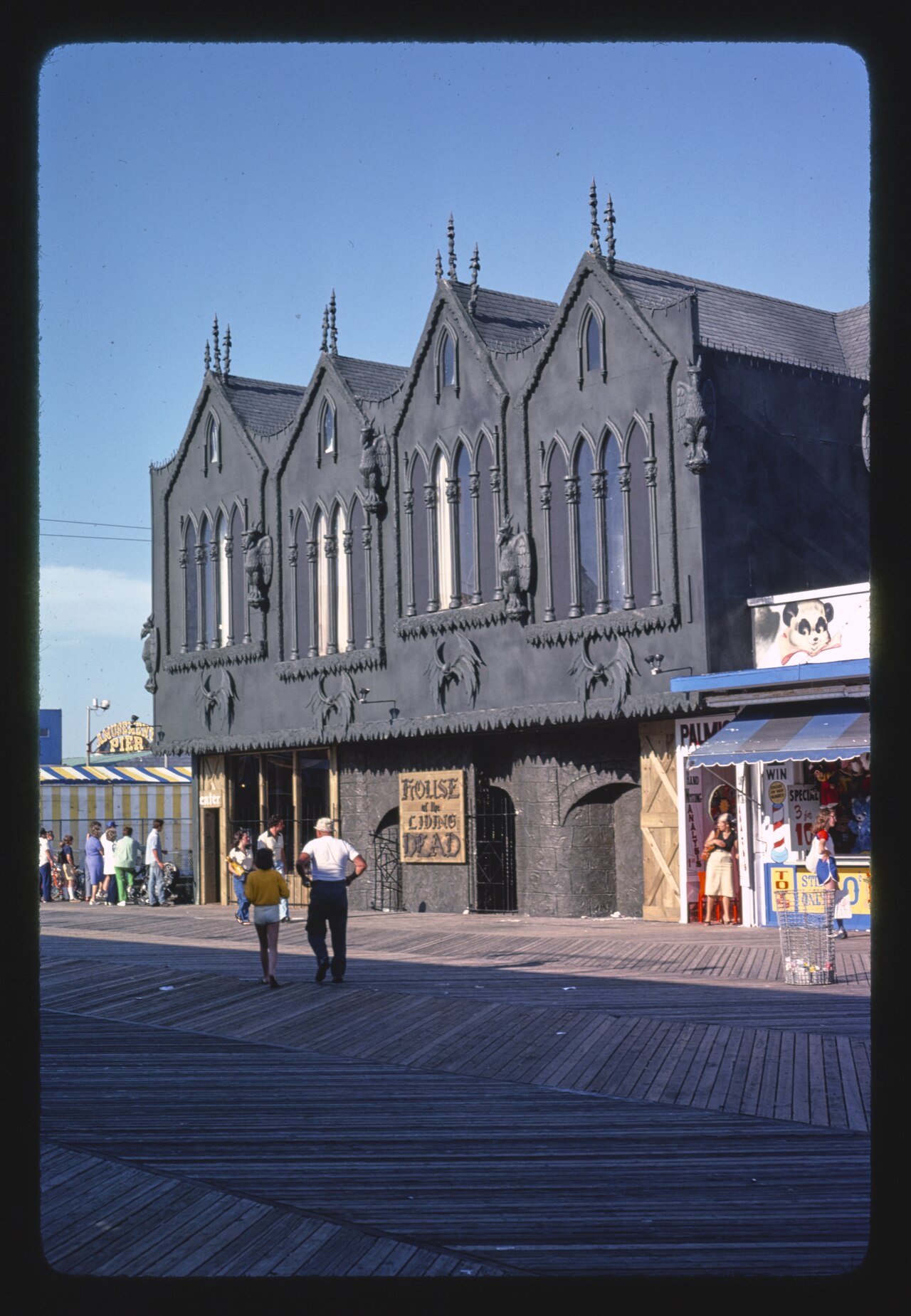
John Margolies · Public domain
Birth of the Living Dead (sometimes known by its working title Year of the Living Dead) is a 2012 American documentary film directed by Rob Kuhns. It examines the 1968 horror film Night of the Living Dead and its legacy, featuring interviews with the film's director George A. Romero, critics, and filmmakers. The documentary explores the film's production, accidental fall into the public domain, and its cultural impact, including comparisons to 1960s lynch mobs and Vietnam War footage.
Quick Facts
- Director
- Rob Kuhns
- Producer
- Rob Kuhns / Esther Cassidy
- Music
- Gary Pozner / Brian Gross
- Cinematography
- Suprotim Bose / Michael Grippo
- Studio
- Glass Eye Pix / Predestinate Productions
- Distributor
- First Run Features
- Released
- 19 October 2012 · Tallgrass Film Festival
- Runtime
- 76 minutes
- Country
- United States
- Language
- English
Facts from the source article.
Lore & Background
Rob Kuhns directed Birth of the Living Dead, interviewing a range of authors, critics, and filmmakers about the impact and enduring popularity of Night of the Living Dead. George A. Romero describes the film's background, production, and distribution, including how it accidentally fell into the public domain. Larry Fessenden discusses the film's postmodernist aspects, such as Johnny's taunting of Barbra in the opening graveyard scene as an early commentary on horror films inside a horror film. Gale Anne Hurd cites the film as an influence on her work as executive producer of The Walking Dead. Elvis Mitchell notes how the film presents a strong Black male protagonist without resorting to racial commentary. The final scene, in which Duane Jones' character Ben is killed by a posse, is compared to historical footage of 1960s lynch mobs and police brutality, and scenes of violent zombie attacks are compared to footage from Vietnam broadcast on television.
Reader's Guide
Birth of the Living Dead serves as a compact tribute to Night of the Living Dead, drawing on interviews with key figures like Romero, Fessenden, Hurd, and Mitchell. The documentary highlights the film's accidental public domain status, which contributed to its widespread distribution and cultural penetration. Critics praised its entertaining anecdotes and fan-driven analysis, though some noted a lack of new insights or commentary on Romero's later work. The film's reception was largely positive, with a 96% approval rating on Rotten Tomatoes and a Metacritic score of 65/100. It premiered at the Tallgrass Film Festival in October 2012 and was released on iTunes and in limited theaters in October 2013. The documentary underscores how Night of the Living Dead influenced horror and social commentary, particularly through its depiction of a Black protagonist and its parallels to real-world violence.
Did You Know?
- It premiered at the Tallgrass Film Festival on October 19, 2012.
- Larry Fessenden, who was interviewed, also served as executive producer.
- John A. Russo was contacted for an interview but declined involvement.
Origins and the Public Domain Legacy
The 1968 film Night of the Living Dead, penned by George A. Romero and John A. Russo, established what we now recognize as the modern zombie: reanimated human corpses driven to consume the flesh and brains of the living. Set in rural Pennsylvania, the story follows a small group of survivors barricaded in a farmhouse against an ever-growing horde. The film's cultural footprint is enormous, yet its legal standing is unusual. A copyright error during its initial release left the work in the public domain, a circumstance that has generated decades of derivative works—films, books, and other media—claiming to expand upon its characters and plot, often without any participation from the original cast or crew. This open legal status has made the franchise one of the most freely adapted in horror history, with creators ranging from Romero himself to entirely unrelated filmmakers all building on the same foundational narrative. The result is a sprawling, loosely connected universe that defies a single canonical owner.
Romero's Dead Series: A Chronicle of Deterioration
Romero wrote and directed all six entries in his Dead series, spanning from the 1968 original through Survival of the Dead in 2009. Rather than functioning as traditional sequels, each film introduces entirely new characters while the world itself deteriorates incrementally—the zombie population grows and the fate of remaining humans grows more precarious. The only narrative thread connecting them is the escalating epidemic. Labeled the "Trilogy of the Dead" through Land of the Dead, the films are steeped in social commentary addressing topics from racism to consumerism. Romero has stated he consciously tried to make each entry distinct from its predecessor, yet audiences often responded more favorably to lighter, spoof-tinged entries like Dawn of the Dead than to his more serious works such as Day of the Dead. He attributed this to a "television mentality" where viewers crave repetition over variation. No film in the series offers a genuine happy ending; each simply presents a world that has worsened since the last installment. The sole character continuity is the military officer played by Alan van Sprang, who appears in both Diary of the Dead and Survival of the Dead.
The Remakes: Revisiting the Classics
Three of Romero's original films received remake treatments, each bringing different directors and creative approaches while retaining the core premises. The 1990 Night of the Living Dead was helmed by Tom Savini, the special make-up effects artist who had worked on both Dawn of the Dead and Day of the Dead, with Romero himself rewriting the screenplay. The plot tracks the 1968 original closely: Barbara, Ben, the Cooper family, and Tom Landry with his girlfriend Judy Rose Larson are trapped in a Pennsylvania farmhouse under siege by reanimated ghouls. Zack Snyder directed the 2004 Dawn of the Dead remake, transposing the mall siege to a Milwaukee setting where a group of strangers—including a pregnant woman and a police sergeant—barricade themselves against the undead before attempting an escape to an island on Lake Michigan. Steve Miner's 2008 Day of the Dead relocated the action to Leadville, Colorado, where a couple finds their town sealed off by military forces as the dead begin rising. These remakes demonstrate the franchise's remarkable adaptability across decades and creative voices.
O'Bannon's Radical Reimagining: Return of the Living Dead
The most significant departure from Romero's zombie canon came through Dan O'Bannon's adaptation of John A. Russo's 1978 novel. Russo and producer Tom Fox offered O'Bannon the director's chair, and he accepted on the condition he could radically rewrite the material to distinguish it from Romero's work. He discarded Russo's script entirely, keeping only the title, and overhauled the fundamental rules of the undead. Where Romero's zombies consume any part of a living human, O'Bannon's are fixated exclusively on brains. His creatures move with rapid speed and can communicate, despite physical defects that should make such activity impossible. Most strikingly, the chemical 2-4-5 Trioxin can resurrect any deceased life form regardless of how long the body has been buried. The resulting film series, which spawned four sequels, treats Night of the Living Dead as a movie based on real events rather than a direct continuation. This spin-off approach created an entirely parallel zombie mythology with its own internal logic, coexisting alongside Romero's canon without contradicting it.
Gallery
Frequently Asked Questions
What is Birth of the Living Dead?
It is a 2012 American documentary that chronicles the production and lasting cultural influence of George A. Romero's 1968 classic Night of the Living Dead. The project was also developed under the working title Year of the Living Dead.
Who directed Birth of the Living Dead?
Rob Kuhns directed the film, which had its world premiere at the Tallgrass Film Festival on October 19, 2012.
What topics does Birth of the Living Dead cover?
The documentary traces how Night of the Living Dead was made, how it accidentally entered the public domain, and how it reshaped horror filmmaking. It also draws visual and thematic parallels between the original film and 1960s lynch mob footage as well as Vietnam War coverage.
Who appears in Birth of the Living Dead?
The film features interviews with George A. Romero alongside various critics and fellow filmmakers who discuss the original movie's significance and legacy.
How was Birth of the Living Dead received by critics?
The documentary earned strong praise, holding a 96% positive score from 23 critics on Rotten Tomatoes.
More in Documentary films about horror 1-24
Spotted an error? Know more?
Reader corrections go straight into our review queue. Suggest an edit · How this site is sourced