1991 Belarusian strikes
Nationwide strikes that turned from economic to anti-Soviet demands.
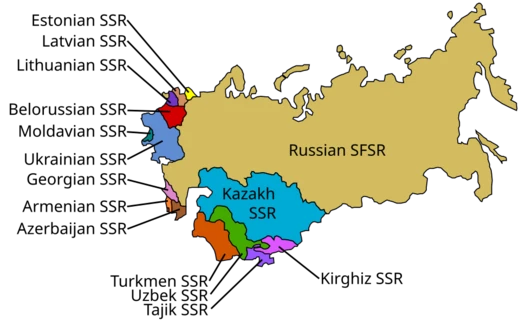
The 1991 Belarusian strikes, known in Belarus as the April Strikes, were a series of nationwide strikes and rallies in the Byelorussian Soviet Socialist Republic. They began in opposition to price increases and a tax on goods sold between republics, which heavily affected the export-based Belarusian economy. The protests later turned into a broadly anti-Soviet movement, calling for the resignation of Soviet leadership and fresh elections.
Quick Facts
- Part of
- the Belarusian democracy movement and the Dissolution of the Soviet Union
- Location
- Byelorussian Soviet Socialist Republic, Soviet Union
- Causes
- Price increases; Approval of the 1991 Soviet Union referendum
- Methods
- General strike
- Result
- Wages increased
- Price increases rolled back
- 5% tax cancelled
Facts from the source article.
Background
The Soviet economic downturn reduced demand for these goods, causing massive layoffs. The Chernobyl disaster further damaged the economy, contaminating a quarter of Belarusian forests, forcing evacuations, and causing damages estimated at $235 billion. Against this backdrop, the Belarusian national revival emerged in the late 1980s and early 1990s.
Prelude
Another measure, the so-called 'Gorbachev tax', imposed a 5% tax on goods sold in one republic that were made in another. The Byelorussian SSR, focused on exports to other republics, bore the burden of this tax more than any other except the Russian SFSR.
Strikes
On 3 April 1991, workers at the Minsk Electromechanical Plant walked out and began protesting on Daŭhrabrodskaja Street. The crowd grew to 50,000 as other factory workers joined, marching to the Government House. In following days, more industries and cities joined; by week's end, workers from 98 industries formed a strike committee supported by the anti-Soviet Belarusian Popular Front. Demands shifted from economic to political, calling for withdrawal of party committees from enterprises, resignation of Mikhail Gorbachev and the Cabinet of Ministers, fresh elections for the Supreme Soviet, and establishment of the Declaration of State Sovereignty as a constitutional document.
Opposition leaders Vasil Bykaŭ and Ales Adamovich publicly supported the strikes. Independent deputies, including Alexander Lukashenko, called on the government to accept workers' demands. Opposing the strikes were the Presidium of the Supreme Soviet led by Nikolai Dementey and first deputy chairman Stanislav Shushkevich, as well as Vyacheslav Kebich, who took a conciliatory line and worked to reduce prices, though by then demands had become political.
End of the strikes
A strike by railway workers in Orsha crippled the Soviet economy, halting trains including routes from Moscow to Paris and Leningrad to Odesa. On the evening of 25 April 1991, OMON riot police intervened, dispersing the strikers and ending the strike, leading to negotiations. Economic demands were accepted, but political demands were refused. Workers at potash plants in Salihorsk continued striking for a month after Orsha and resumed in August 1991.
More in Dissolution of the Soviet Union
Spotted an error? Know more?
Reader corrections go straight into our review queue. Suggest an edit · How this site is sourced