Digital Visual Interface
Digital and analog video interface developed by the DDWG.
Last updated

Dmitry Makeev · CC BY-SA 4.0
Digital Visual Interface (DVI) is a video interface standard that can carry both digital and analog signals in the same connector, making it the only widespread standard with that capability.[1]
Key facts and history
An earlier attempt to update the analog VGA connector was the Enhanced Video Connector (EVC) by VESA in 1994-1995, which used a 35-pin connector carrying analog video, audio, and data.[2] As digital flat-panel displays became more common, VESA released the Plug & Display (P&D) standard in 1997, which reused the EVC connector but focused on digital video using single-link TMDS.[3] Because P&D was physically large and expensive, a consortium developed the DFP standard in 1999, which used a 20-pin connector for digital video only.[4] DVI instead stripped the data functions from P&D, using a 29-pin MicroCross connector to carry both digital and analog video.[4]
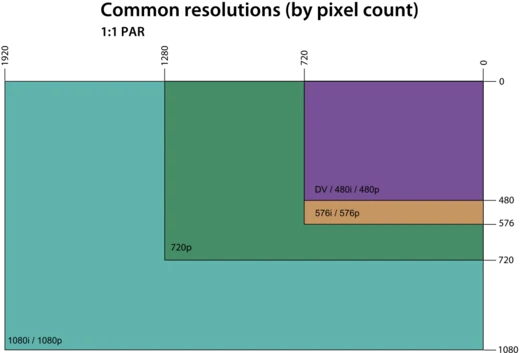
Single-link DVI supports resolutions up to 1920 × 1200 at 60 Hz, while dual-link DVI supports up to 2560 × 1600 at 60 Hz.[5] In December 2010, Intel, AMD, and other manufacturers announced they would phase out support for DVI-I, VGA, and LVDS by 2013/2015 in favor of DisplayPort and HDMI.[6] DVI supports dual-link TMDS signals, which provide higher resolution capability compared to the single-link TMDS used by P&D and DFP connectors.[4] The TMDS and VESA/DDC twisted pairs in DVI and HDMI have identical electrical specifications; however, HDMI does not transmit analog signals and can carry digital audio.[7]
What the cited sources add
The same article stated that a digital interface would obviously make more sense for flat panel displays.[8] Eiden also observed that analog flat panel displays had a justified existence because hardware to control a digital equivalent did not yet exist.[8] The article reported that digital TFTs avoid the need to trim clock and phase, requiring only brightness and contrast adjustments.[8] Eiden concluded that the question of standards had been practically resolved and graphics boards with digital outputs were available.[8]
References
- Wikipedia, "Digital Visual Interface" (CC BY-SA 4.0), which cites: Kruegle, "CCTV Surveillance: Analog and Digital Video Practices And Technology", Butterworth-Heinemann, 2006, p. 268 (we also read that source) en.wikipedia.org
- Wikipedia, "Digital Visual Interface" (CC BY-SA 4.0), which cites: "VESA Standards", Video Electronics Standards Association; Manchester, "The VESA Digital Flat Panel (DFP) Standard: A White Paper", VESA Marketing Committee, 1999 (original not read by us) en.wikipedia.org
- Wikipedia, "Digital Visual Interface" (CC BY-SA 4.0), which cites: "Digital Visual Interface & TMDS Extensions", Silicon Image, October 2004; Manchester, Gary, "Molex PnD intellectual property letter", October 7, 1996; "VESA Standards", Video Electronics Standards Association; "Digital Visual Interface & TMDS Extensions", Silicon Image, October 2004; "VESA Plug and Display (P&D) Standard, Version 1", Video Electronics Standards Association, June 11, 1997 (original not read by us) en.wikipedia.org
- Wikipedia, "Digital Visual Interface" (CC BY-SA 4.0), which cites: Manchester, "The VESA Digital Flat Panel (DFP) Standard: A White Paper", VESA Marketing Committee, 1999; "Digital Visual Interface & TMDS Extensions", Silicon Image, October 2004; "MicroCross DVI Connector System: Digital Visual Interface Standard", Molex, December 2000; "MicroCross DVI (Digital Visual Interface) Connector System", Molex, November 1999 (original not read by us) en.wikipedia.org
- Wikipedia, "Digital Visual Interface" (CC BY-SA 4.0), which cites: Walton, "Dell 2407WFP and 3007WFP LCD Comparison", AnandTech, March 2, 2007 (original not read by us) en.wikipedia.org
- Wikipedia, "Digital Visual Interface" (CC BY-SA 4.0), which cites: Intel Newsrom – Leading PC Companies Move to All Digital Display Technology, Phasing out Analog (8. December 2010); "HDMI versions", 2017-01-17 (original not read by us) en.wikipedia.org
- Wikipedia, "Digital Visual Interface" (CC BY-SA 4.0), which cites: "High-Definition Multimedia Interface: Specification 1.3a", HDMI LA, 2006-11-10 (original not read by us) en.wikipedia.org
- Eiden, "TFT Guide Part 3 - Digital Interfaces", TomsHardware.com, July 7, 1999. facts only, no text reused. tomshardware.com
Each numbered sentence above was checked against the source it cites before publication. Sentences citing Wikipedia adapt text from the English Wikipedia article Digital Visual Interface (contributors), used under CC BY-SA 4.0; this entry is available under the same licence. Other sources were used for facts only; no text or images are copied from them.
More in Display Standards
Sources
Compiled from Wikipedia and the sources listed below. Text from Wikipedia is available under CC BY-SA 4.0; this entry is adapted from it.
- Wikipedia: Digital Visual Interface (CC BY-SA 4.0).
Spotted an error? Know more?
Reader corrections go straight into our review queue. Suggest an edit · How this site is sourced