Alexander disease
Rare leukodystrophy causing white matter destruction and Rosenthal fibers.
Last updated

Wikimedia Commons · CC BY 4.0
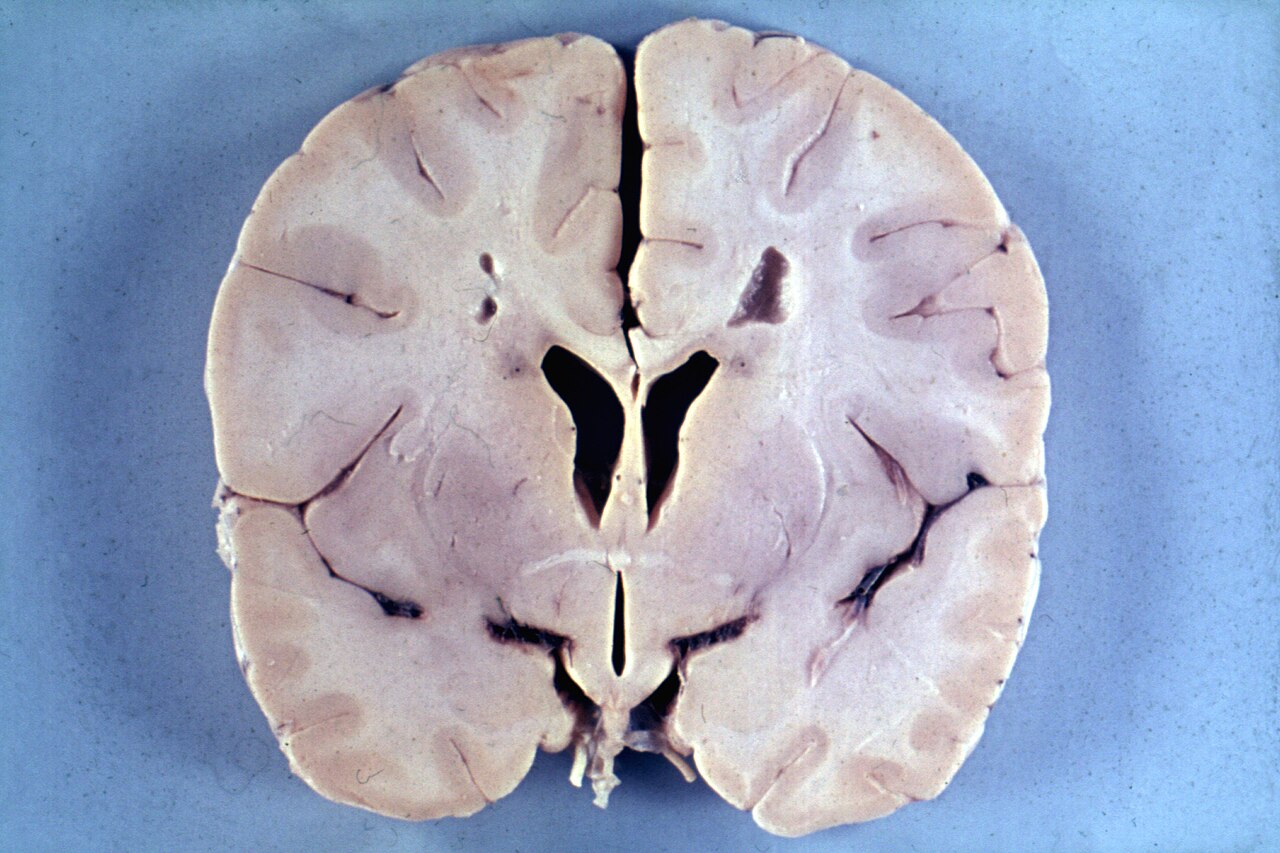
Alexander disease is a rare genetic disorder that progressively damages the nervous system.[1] Alexander disease is a condition that worsens over time and frequently results in death.[2] The condition affects people of any sex, and its occurrence shows no variation across ethnic, racial, geographic, or cultural/economic groups.[2]
Quick Facts
- First documented
- 1949
- First documented by
- W. Stewart Alexander
- Inheritance
- Autosomal dominant
- Prevalence
- 1 in 2.7 million
- Types
- Infantile
- juvenile
- adult; also Type I and Type II
Facts from the source article.
Key facts and history
Symptoms include developmental delays, macrocephaly, seizures, spasticity, and in some cases hydrocephalus or dementia.[3] The Children's Hospital of Philadelphia notes that symptoms vary greatly depending on when the disease first appears.[1] From 1949 through 1964, doctors observed 15 additional patients with comparable symptoms, which prompted proposals that these represented the same disorder and that it should carry Alexander's name.[4] Mutations in the GFAP gene, which is located on chromosome 17q21, are responsible for causing Alexander disease.[5]
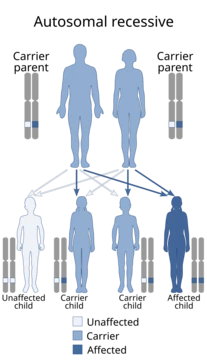
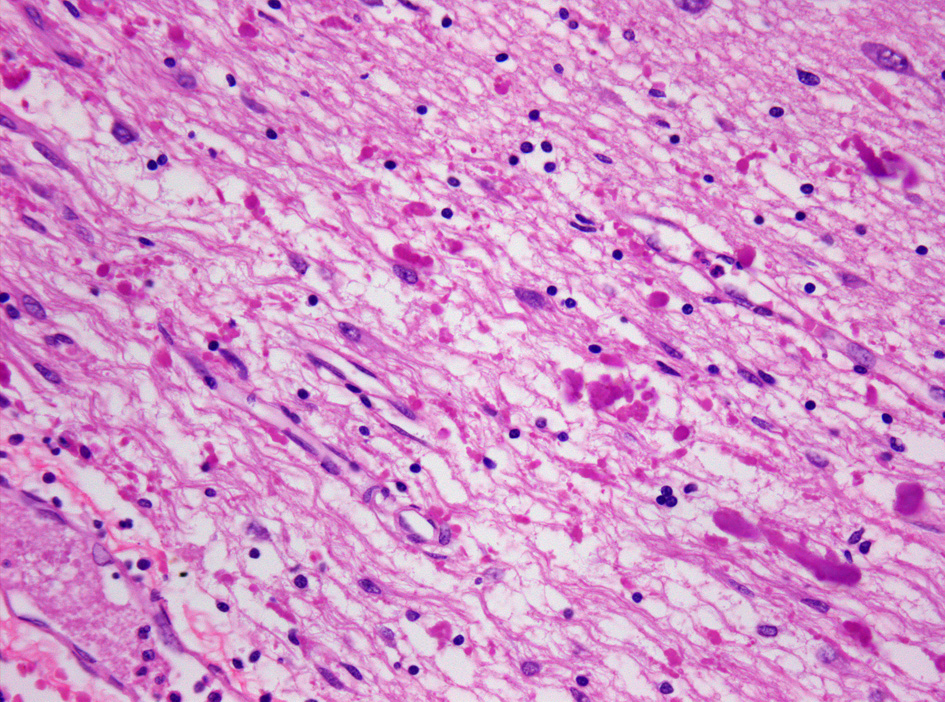
The condition follows an autosomal dominant inheritance pattern; however, the majority of instances result from new sporadic mutations rather than being inherited.[6] Alongside the breakdown of white matter, fibrous, eosinophilic deposits referred to as Rosenthal fibers develop in the brain.[7] Outcomes are typically unfavorable; those with the infantile form typically do not survive past age seven.[8]
What the research sources say
When stem cells were corrected with gene editing, the derived astrocytes showed no signs of Alexander disease.[9] The Children's Hospital of Philadelphia explains that most cases are not inherited from a parent, but a small number of patients show no identifiable GFAP change.[1] A 2001 news article notes that Albee Messing's research group pinpointed the responsible gene after a genetically engineered mouse unexpectedly displayed key symptoms of the disease.[10]
References
- "Alexander Disease", Children's Hospital of Philadelphia, 21 December 2017. facts only, no text reused. chop.edu
- Wikipedia, "Alexander disease" (CC BY-SA 4.0), which cites: "Alexander Disease Information Page", National Institute of Neurological Disorders and Stroke, 2018 }} {{PD-notice (original not read by us) en.wikipedia.org
- Wikipedia, "Alexander disease" (CC BY-SA 4.0), which cites: Srivastava, "GeneReviews®", University of Washington, Seattle, July 25, 1993; "Strategies for treatment in Alexander disease", Neurotherapeutics, October 2010, p. 507–15 (original not read by us) en.wikipedia.org
- Wikipedia, "Alexander disease" (CC BY-SA 4.0), which cites: Messing, "Alexander Disease", Journal of Neuroscience, 2012-04-11, p. 5017–5023 (original not read by us) en.wikipedia.org
- Wikipedia, "Alexander disease" (CC BY-SA 4.0), which cites: "GFAP mutations in Alexander disease", Int. J. Dev. Neurosci., 2002, p. 259–68; "GFAP and its role in Alexander disease", Exp. Cell Res., June 2007, p. 2077–87; "Alexander disease", J. Neurosci., April 2012, p. 5017–23 (original not read by us) en.wikipedia.org
- Wikipedia, "Alexander disease" (CC BY-SA 4.0), which cites: Srivastava, "GeneReviews®", University of Washington, Seattle, July 25, 1993 (original not read by us) en.wikipedia.org
- Wikipedia, "Alexander disease" (CC BY-SA 4.0), which cites: Srivastava, "GeneReviews®", University of Washington, Seattle, July 25, 1993; ; "Cause of brain disease found", January 2, 2001 (we also read that source) en.wikipedia.org
- Wikipedia, "Alexander disease" (CC BY-SA 4.0), which cites: "Alexander Disease Information Page: National Institute of Neurological Disorders and Stroke (NINDS)", www.ninds.nih.gov (original not read by us) en.wikipedia.org
- "Mutation in common protein triggers tangles, chaos inside brain cells", news.wisc.edu, 23 October 2018. facts only, no text reused. news.wisc.edu
- "Cause of brain disease found", January 2, 2001. facts only, no text reused. news.bbc.co.uk
Each numbered sentence above was checked against the source it cites before publication. Sentences citing Wikipedia adapt text from the English Wikipedia article Alexander disease (contributors), used under CC BY-SA 4.0; this entry is available under the same licence. Other sources were used for facts only; no text or images are copied from them.
More in Diseases named after discoverers
Sources
Compiled from Wikipedia and the sources listed below. Text from Wikipedia is available under CC BY-SA 4.0; this entry is adapted from it.
- Wikipedia: Alexander disease (CC BY-SA 4.0).
- Word definitions: the , each quoted from its Wikipedia article.
Spotted an error? Know more?
Reader corrections go straight into our review queue. Suggest an edit · How this site is sourced