Frequently Asked Questions
The most-asked questions about dinosaurs.
What exactly is the subject of this encyclopedia?
Dinosaurs are a clade of archosaur reptiles that ruled land ecosystems for roughly 165 million years, spanning the Late Triassic through the end of the Cretaceous. The group includes everything from tiny feathered theropods to sauropods that weighed more than a dozen elephants.
Who are the most iconic 'characters' fans talk about?
Tyrannosaurus rex, Triceratops, Stegosaurus, and Brachiosaurus form the core lineup most people picture first. Each represents a distinct body plan—apex predator, armored herbivore, plated defender, and towering long-neck—that has become shorthand for the whole era.
Where should a total newcomer begin?
Start by learning the three periods of the Mesozoic (Triassic, Jurassic, Cretaceous) to get the timeline, then pick one well-documented species like T. rex to anchor your understanding before branching into lesser-known groups.
What key fact surprises people the most?
Dinosaurs were never a single uniform body type; they occupied nearly every terrestrial niche, ranging from chicken-sized omnivores to 40-meter-long herbivores, and included armored, horned, and even semi-aquatic forms.
What is the biggest turning point in the whole story?
Around 66 million years ago an asteroid impact triggered the K-Pg mass extinction, eliminating every non-avian dinosaur lineage in a geologically brief window. The event reset terrestrial ecosystems and paved the way for mammals to diversify.
Which 'supporting cast' species do fans love exploring?
Velociraptor, Spinosaurus, Ankylosaurus, and Parasaurolophus are perennial crowd favorites because they showcase how far dinosaur anatomy and ecology stretched beyond the textbook giants. Each one challenges the simplistic 'big lizard' image in a different way.
What is the origin story of the group?
Dinosaurs first emerged in the Late Triassic roughly 230 million years ago as small, upright bipeds that gradually outcompeted rival archosaurs. Over the next 160 million years they radiated into dozens of distinct orders filling every available land niche.
What is the most persistent misconception fans run into?
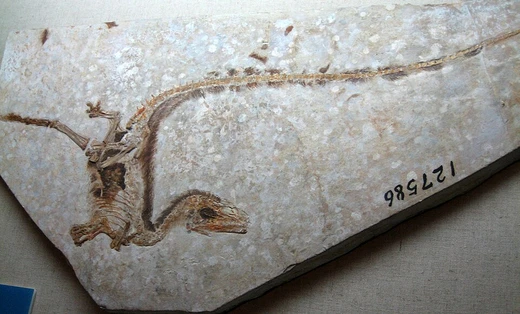
The old cartoon image of slow, cold-blooded, scaly lizards is badly outdated; fossil trackways, bone microstructure, and feather impressions all point to active, likely warm-blooded animals, many of which were covered in feathers rather than bare scales.
Where do I find the primary 'source material'?
The fossil record—bones, footprints, coprolites, and trace fossils—is the raw text, supplemented by peer-reviewed paleontology journals and the collections of major institutions like the Smithsonian, AMNH, and London's Natural History Museum. Field expeditions and new excavation papers are where the 'next season' of discoveries gets written.
Is there a 'sequel,' or did the story end?
The franchise never truly wrapped: birds are the direct living descendants of feathered theropod dinosaurs, so every pigeon, eagle, or ostrich walking around today is a dinosaur in modern form. In that sense the 'series' is still ongoing, just with a very different cast of actors.