Pararhabdodon
A lambeosaurine hadrosaur from the Late Cretaceous of Spain.
Pararhabdodon is a genus of lambeosaurine hadrosaurid dinosaur from the Maastrichtian-aged Tremp Group of Spain. Its name means "near fluted tooth" in reference to Rhabdodon. It was one of the last non-avian dinosaurs known from the fossil record that went extinct during the Cretaceous-Paleogene extinction event.
Quick Facts
- Type species
- Pararhabdodon isonensis
Facts from the source article.
History and assigned material
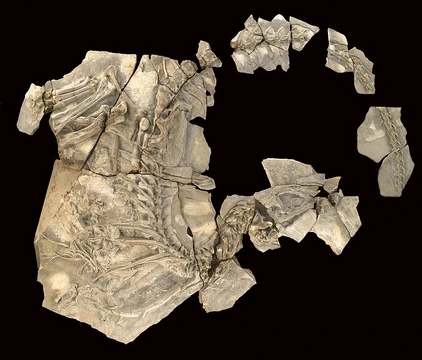
The story of Pararhabdodon begins in the spring of 1985, when fossils were first dug up at the Sant Romà d'Abella site in the Spanish Pyrenees. These bones, found in the Talarn Formation near Isona, were initially described in 1987 as belonging to the genus Rhabdodon. After more remains were uncovered in 1990, researchers led by Casanovas-Cladellas decided the material deserved its own name, coining Pararhabdodon isonense in 1993. The species name was later adjusted to isonensis in 1997. Further excavation in 1994 added two maxillae, two dorsal vertebrae, a complete sacrum, two partial ribs, and a fragmentary ischium to the collection. All the known bones from this spot—including left and right maxillae, five neck vertebrae, five back vertebrae, one tail vertebra, a sacrum, rib fragments, parts of both scapulae, a humerus, and an ulna—came from a single animal, spread across a four-meter by two-and-a-half-meter area. In 2020, new hindlimb material found at the same site in 2018 was described by Jesús F. Serrano and his team, and these pieces are also thought to belong to the same individual. The holotype is a nearly complete vertebra from the lower neck, cataloged as IPS SRA-1, with another neck vertebra, a humerus, and an ulna serving as paratypes.
Description
Pararhabdodon was a herbivore that could walk on two or four legs. Its holotype measured about 6 meters long, but bone analysis shows it was still growing. The species probably reached roughly 9 meters, similar to relatives like Corythosaurus and Tsintaosaurus. This is notable because Pararhabdodon lived on an island, where dwarfism is common in other European hadrosaurs; Adynomosaurus, for instance, stayed around the same smaller size.
Classification
Since its discovery in the mid-1980s, Pararhabdodon has shifted between several positions within the iguanodontian family tree. The first fossils were initially thought to belong to the genus Rhabdodon, and when the species was formally named in 1993, it was still considered a primitive iguanodont, possibly a rhabdodontid. The discovery of skull bones in 1994 allowed the original researchers to reclassify it as a hadrosaur. In 1999, they went further, arguing it was a primitive member of the subfamily Lambeosaurinae—the first ever recognized from Europe. Later work challenged this, placing it as a more basal hadrosauroid instead. A 2009 study provided evidence that it was indeed a lambeosaurine and specifically a close relative of the Chinese genus Tsintaosaurus. This relationship has held up in subsequent research, and the group containing them was later named Tsintaosaurini. A competing hypothesis emerged in 2020, linking Pararhabdodon to other European lambeosaurs within a group called Arenysaurini.
More in Dinosaurs of Spain
Spotted an error? Know more?
Reader corrections go straight into our review queue. Suggest an edit · How this site is sourced