Acheroraptor
Late Cretaceous dromaeosaurid from the Hell Creek Formation.
Last updated

Skye McDavid · CC BY 4.0
Acheroraptor was one of the last non-avian dinosaurs to live before the Cretaceous–Paleogene extinction event.[1] The sole species within this genus, A. temertyorum, was established in 2013 by David Evans, Derek Larson, and Philip J. Currie based on a maxilla with teeth.[2]
Scientific classification
- KingdomAnimalia
- PhylumChordata
- ClassReptilia
- CladeDinosauria
- CladeSaurischia
- CladeTheropoda
- Family†Dromaeosauridae
- Genus†Acheroraptor
Named by Evans et al., 2013
Sources: Wikipedia taxobox: Acheroraptor (CC BY-SA 4.0)
Quick Facts
- Type species
- Acheroraptor temertyorum
Facts from the source article.
Biology and range
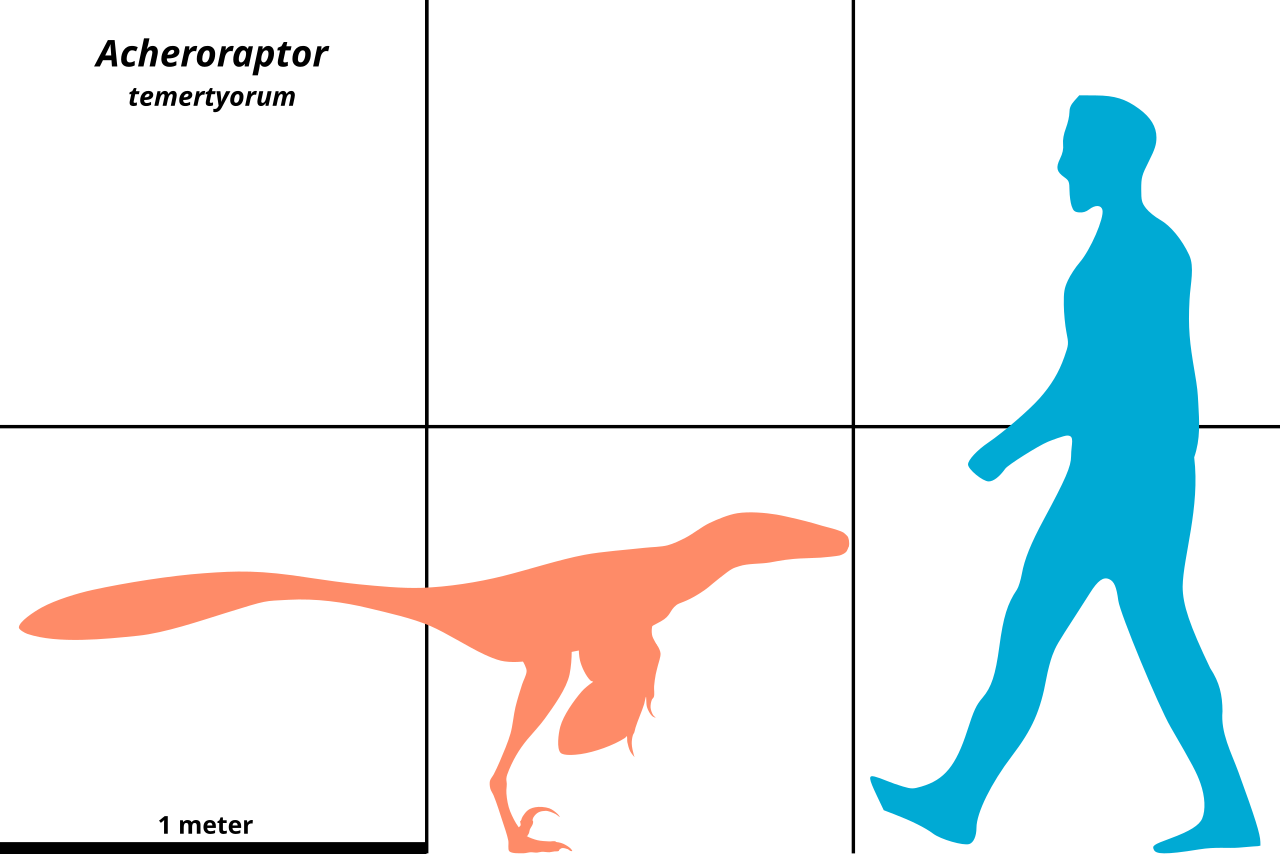
The strata date to the latest Maastrichtian stage, immediately prior to the Cretaceous–Paleogene extinction event.[2] Acheroraptor was described as a "mid-sized" dromaeosaurid in its initial description.[3] The maxilla has a small anterior region measuring only 20 mm long, with a ratio of 2.25.[2] The holotype specimen for A. temertyorum is the maxilla cataloged as ROM 63777.[2]
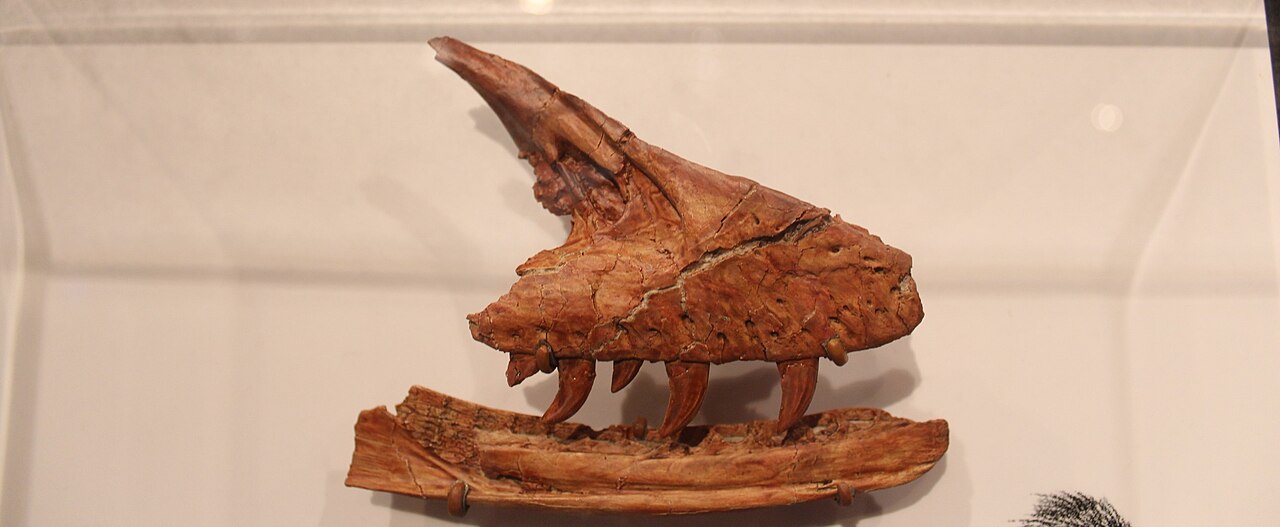
Commercial collectors unearthed the fossils on August 28, 2009, within the Hell Creek Formation of Montana.[2] A small "chin" is present at the dentary's tip, which is far less pronounced than the one seen in Velociraptor.[2] Acheroraptor is one of the most recent dromaeosaurids known from the fossil record.[2]
What the specialist sources record
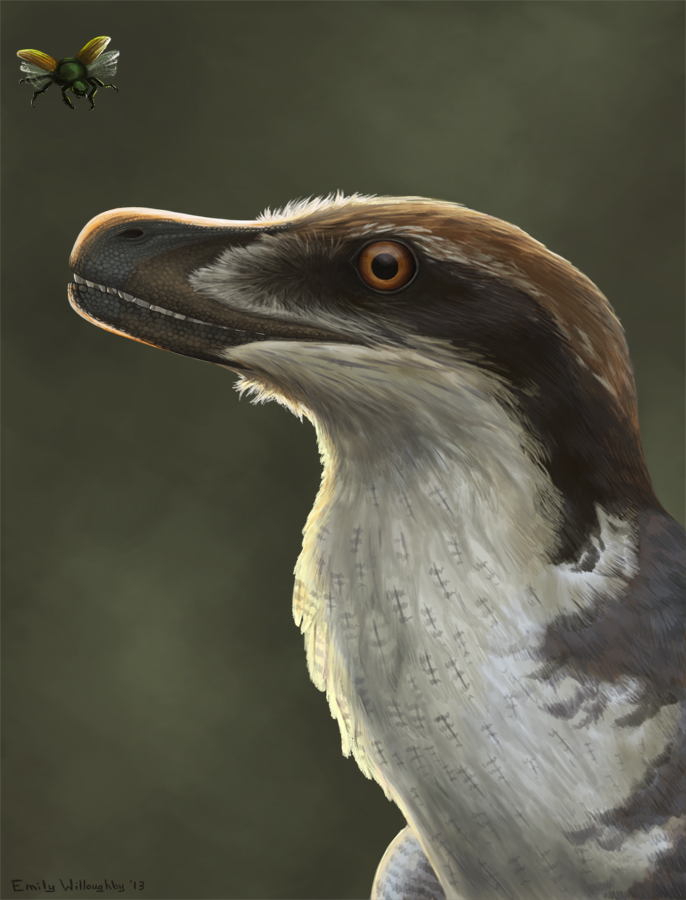
The David Evans Lab announcement states that Acheroraptor gives a more complete picture of the North American ecosystem just before the great extinction.[1] The same source notes that the jaw bones compare more closely to Asian species like Velociraptor than to older North American species.[1] Phylogenetic analysis recovered Acheroraptor as a velociraptorine dromaeosaurid nested within a group of Asian species.[1] The close relationship to Asian species suggests migration from Asia may have shaped North American dinosaur communities until the end of the Cretaceous.[1]
A 2024 study of mandibular biomechanics suggests Acheroraptor had relatively weak jaws for inflicting rapid, slashing bites on smaller prey.[4] The GBIF Backbone Taxonomy lists Acheroraptor as an accepted genus in the family Dromaeosauridae.[5] GBIF holds 21 occurrence records for this taxon as of 19 October 2026.[5]
References
- Evans, "New Hell Creek Dromaeosaurid Described", David Evans Lab, 2013-12-16. facts only, no text reused. evanslab.wordpress.com
- Wikipedia, "Acheroraptor" (CC BY-SA 4.0), which cites: Evans, "A new dromaeosaurid (Dinosauria: Theropoda) with Asian affinities from the latest Cretaceous of North America", Naturwissenschaften, 2013, p. 1041–9 (original not read by us) en.wikipedia.org
- Wikipedia, "Acheroraptor" (CC BY-SA 4.0), which cites: Evans, "New Hell Creek Dromaeosaurid Described", David Evans Lab, 2013-12-16; Paul, "The Princeton Field Guide to Dinosaurs", Princeton University Press, 2016, p. 153; Paul, "Predatory Dinosaurs of the World", Simon and Schuster, 1988, p. 358, 366–369; Campione, "Body mass estimation in non-avian bipeds using a theoretical conversion to quadruped stylopodial proportions", Methods in Ecology and Evolution, 2014, p. 913–923 (we also read that source) en.wikipedia.org
- Wikipedia, "Acheroraptor" (CC BY-SA 4.0), which cites: Yun, "Mandibular biomechanics of Acheroraptor temertyorum (Theropoda: Dromaeosauridae) with implications for the feeding ecology and behaviour", Mesozoic, 2024-12-23, p. 459–468 (original not read by us) en.wikipedia.org
- GBIF Backbone Taxonomy and occurrence index, Acheroraptor (taxon key 8691140). CC BY 4.0 (backbone); counts are facts. gbif.org
Each numbered sentence above was checked against the source it cites before publication. Sentences citing Wikipedia adapt text from the English Wikipedia article Acheroraptor (contributors), used under CC BY-SA 4.0; this entry is available under the same licence. Other sources were used for facts only; no text or images are copied from them.
More in Dinosaur genera
Sources
Compiled from Wikipedia and the sources listed below. Text from Wikipedia is available under CC BY-SA 4.0; this entry is adapted from it.
- Wikipedia: Acheroraptor (CC BY-SA 4.0).
- Word definitions: the , each quoted from its Wikipedia article.
Spotted an error? Know more?
Reader corrections go straight into our review queue. Suggest an edit · How this site is sourced