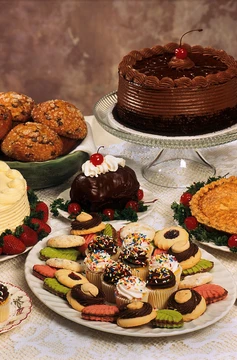
Mousse
A soft, airy food that can be sweet or savory.

Wikipedia / Wikimedia Commons
Mousse is a soft food made by incorporating air bubbles, which creates a light, airy texture. Its consistency can vary from fluffy to creamy and thick, depending on how it is prepared, and it can be either sweet or savory.
The concept dates back to at least 1768, when desserts made with whipped cream in pyramid shapes, flavored with coffee, liqueurs, chocolate, or fruit, were called names like *crème en mousse* or *mousse*. Modern mousses continue this tradition.
Sweet mousses are usually made with whipped egg whites, whipped cream, or both, and flavored with ingredients such as chocolate, coffee, caramel, fruit purées, or spices like mint or vanilla. For some chocolate mousses, egg yolks are stirred into melted chocolate for a richer texture. They are typically chilled before serving, which makes them denser, and are sometimes frozen in silicone molds to hold a defined shape. Sweet mousse can be served as a dessert or used as a light cake filling, and it may be stabilized with gelatin. A key rule for creating a new flavor is that the body comes from whipping cream and either separated egg yolks or whites (almost never both in the same dish), often with gelatin.
Savory mousses can be made from meat, fish, shellfish, foie gras, cheese, or vegetables. Hot savory mousses often get their light texture from beaten egg whites. Molded fish mousse served with bread and butter was a popular American meal or party dip, especially in the 1950s, though it is less common today.
- type
- Food
- earliest recorded reference
- 1768
- texture
- Light and airy, can range from fluffy to creamy and thick
- common sweet flavors
- Chocolate, coffee, caramel, puréed fruits, herbs, spices
- common savory bases
- Meat, fish, shellfish, foie gras, cheese, vegetables
Lore & Background
Various desserts consisting of whipped cream in pyramidal shapes with coffee, liqueurs, chocolate, fruits, and so on either in the mixture or poured on top were called crème en mousse, crème mousseuse, mousse, and so on, as early as 1768. Modern mousses are a continuation of this tradition.
Reader's Guide
Mousse is significant as a versatile culinary preparation that bridges sweet and savory dishes. Its light, airy texture is achieved through the incorporation of air bubbles, typically via whipped egg whites, whipped cream, or both. Sweet mousses are often flavored with chocolate, coffee, caramel, puréed fruits, or herbs and spices, and are commonly chilled or frozen into molds for serving. Savory mousses, made from meat, fish, shellfish, foie gras, cheese, or vegetables, may use beaten egg whites for lightness. The dish has historical roots in 18th-century desserts called crème en mousse, and its legacy continues in both home cooking and professional cuisine. Molded fish mousse, for example, was a popular meal in American cuisine, especially in the 1950s. Mousse also serves as an airy cake filling and is sometimes stabilized with gelatin. Its adaptability and range of textures make it a lasting element in culinary traditions.
Did You Know?
- The word 'mousse' literally means 'foam' in French.
- Sweet mousses are typically made with whipped egg whites, whipped cream, or both.
- Savory mousses can be made from meat, fish, shellfish, foie gras, cheese, or vegetables.
- Molded fish mousse with bread and butter was a popular meal in American cuisine, especially in the 1950s.
More in Desserts 1-22
Spotted an error? Know more?
This is a living reference — every entry is fact-audited, and reader corrections feed straight into our audit queue. Suggest an edit · See this site's audit record