Fine-needle aspiration
Minimally invasive cell sampling for diagnosis of masses.
Last updated
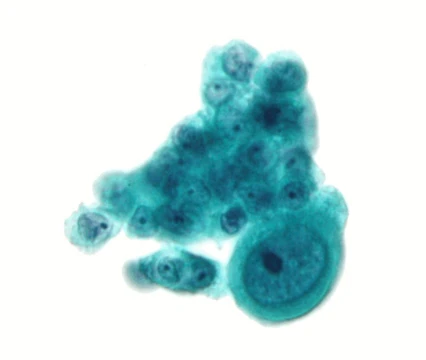
Fine-needle aspiration (FNA) is a diagnostic procedure in which a thin, hollow needle is inserted into a lump or mass to collect cells for microscopic examination. It is a minimally invasive technique that often eliminates the need for more invasive surgical biopsy and hospitalization. The procedure is widely used to diagnose cancer and inflammatory conditions, with infrequent complications.
Quick Facts
- Needle gauge
- 23–25 gauge (0.52 to 0.64 mm (0.025 in) outer diameter)
- First us procedure location
- Maimonides Medical Center
Facts from the source article.
Medical uses
Fine-needle aspiration biopsy is performed when the nature of a lump or tissue mass is uncertain, or to assess treatment effects or obtain tissue for special studies in known tumors. When the lump is palpable, a cytopathologist or surgeon typically performs the short, simple procedure. Otherwise, an interventional radiologist may perform it under x-ray or ultrasound guidance, requiring more preparation and time. The technique is also the main method for chorionic villus sampling, many body fluid samplings, and ultrasound-guided aspiration of breast abscesses, cysts, and seromas.
Procedure
The skin over the biopsy site is cleaned with antiseptic and draped with sterile towels; local anesthetic may be used but is often unnecessary for superficial masses. After locating the mass by palpation or X-rays, a very fine needle is inserted into the mass, sometimes with multiple passes to obtain sufficient cells or to guide other needles.
Cells are withdrawn by syringe aspiration and spread onto a glass slide. Vital signs are taken again, and the patient is observed for three to five hours. For breast biopsies, ultrasound-guided fine-needle biopsy is the most common approach.
Endoscopic ultrasound-guided fine-needle aspiration
Endoscopic ultrasound-guided fine-needle aspiration (EUS-FNA) is a minimally invasive method for obtaining biopsies from hard-to-reach gastric regions, such as the pancreas. Analysis of cystic lesions via EUS-FNA with liquid cell analysis helps differentiate benign, potentially malignant, and malignant pancreatic cysts. 'Through-the-needle' cytologic brushes have been developed to increase cellular content in aspirates.
Rapid on-site evaluation (ROSE) assesses sample adequacy during EUS-FNA by transferring an aliquot onto a glass slide, smearing it, air-drying, and staining with a rapid Romanowsky-type stain for morphological assessment. ROSE reduces the number of needle passes and procedures needed. Research focuses on portable devices for semi-automated sample preparation to simplify ROSE and broaden its implementation.
Post-operative care and complications
Major complications from thin-needle aspiration biopsies are uncommon and generally mild, though type and severity depend on the organs involved. Mild analgesics control post-operative pain; aspirin or substitutes should be avoided for 48 hours unless prescribed for cardiac or neurological conditions. Infection is rare due to maintained sterility and is treated with antibiotics if it occurs. Bleeding is the most common complication, often presenting as a slight bruise; a small amount of blood in sputum or urine is common after lung or kidney biopsies.
Bleeding should decrease during observation; if it persists, monitoring continues, and rarely major surgery is needed. Lung biopsies are frequently complicated by pneumothorax (collapsed lung), occurring in about a quarter to half of patients; most cases are small and resolve without treatment, but a small percentage require hospitalization and a chest tube. Collapsed lungs are more frequent and serious in patients with severe emphysema or difficult biopsies.
Bile leakages after liver biopsies are quite rare. Pancreatitis may occur after biopsies near the pancreas. Breast biopsies may cause bleeding, bruising, rarely infection, and very rarely pneumothorax if performed near the chest wall. Deaths have been reported but are extremely rare.
Did You Know?
- No aspirin or non-steroidal anti-inflammatory medications should be taken for one week before the procedure.
- Routine blood tests, including clotting profile, must be completed two weeks before the biopsy.
- A 2004 study reported cancer spread along the needle path after a liver tumor biopsy, but its conclusions were strongly criticized.
More in Cytopathology
Sources
Compiled from Wikipedia and the sources listed below. Text from Wikipedia is available under CC BY-SA 4.0; this entry is adapted from it.
- Wikipedia: Fine-needle aspiration (CC BY-SA 4.0).
- Word definitions: the , each quoted from its Wikipedia article.
Spotted an error? Know more?
Reader corrections go straight into our review queue. Suggest an edit · How this site is sourced