Cuisine of Michigan
Michigan's cuisine blends immigrant traditions with Great Lakes bounty.
The cuisine of Michigan is part of the broader regional cuisine of the Midwestern United States. It reflects the diverse food history of settlement and immigration in the state. Its culinary roots draw most significantly from the cuisines of Central, Northern and Eastern Europe, and Native North America.
Metro Detroit
Detroit and its metropolitan area are known for a wide variety of food items. Food writers Jane and Michael Stern singled out Detroit as the only place to start when pinpointing the top Coney Islands in the land. Detroit-style pizza is a thick-crusted, rectangular type influenced by Sicilian cuisine. Other Detroit foods include zip sauce served on steaks, the triple-decker Dinty Moore sandwich with corned beef layered with lettuce, tomato, and Russian dressing, and the Chinese-American dish warr shu gai, also called almond boneless chicken.
Several pizza chains began in or near Detroit, including Little Caesars, Jet's Pizza, Hungry Howie's Pizza, and Domino's Pizza in nearby Ypsilanti; Little Caesars and Domino's are both among the top three largest pizza chains in the United States. A substantial number of Greek restaurateurs operate in Detroit, so Mediterranean restaurants are numerous and foods such as gyros, hummus, and falafel are common in grocery stores and restaurants. Polish food is prominent, with dishes like pierogi, borscht, and pączki; bakeries in the Polish enclave of Hamtramck are celebrated for their pączki, especially on Fat Tuesday. A large Arabic-speaking population resides in and around the suburb of Dearborn, home to many Lebanese storefronts.
Lower Peninsula
In Ann Arbor, the Chipati is a tossed salad served inside a freshly baked pita pocket with a secret Chipati sauce on the side; its origination is claimed by Pizza Bob's. Ann Arbor is also known for Hippie Hash, a vegetarian breakfast dish of fried potatoes, vegetables, and feta cheese that originated at Fleetwood Diner in the 1960s, a nod to the city's counterculture movement. Dutch cuisine, especially baked goods, is common in West Michigan, particularly Ottawa County, due to a high number of Dutch immigrants.
The wet burrito is said to have been created in Grand Rapids in 1966. German cuisine is fairly common in the area of Frankenmuth, with multiple restaurants serving German food, including those at the Bavarian Inn. The Traverse City area in the northwestern Lower Peninsula is world-renowned for cherry production, harvesting over 90,000 tons of cherries each year; Michigan is the nation's leading producer of tart cherries. The Montmorency cherry is the most commonly grown tart variety, and a Hungarian sour cherry cultivar, Balaton, has been commercially produced in Michigan since 1998.
Traverse City hosts the National Cherry Festival each July and is commonly known as the Cherry Capital of the World. Pinconning is known as the Cheese Capital of Michigan, noted for its former production of cheese and cheese products, especially Pinconning cheese.
Upper Peninsula
The Upper Peninsula’s food stands apart from the rest of the state. The pasty, a meat-filled pastry brought by Cornish miners, is its most iconic dish, with shops selling chicken, venison, pork, hamburger, and pizza versions dotting the highways. Potato sausage and cudighi, a spicy Italian sausage, are also common. Finnish settlers in the western and central U.P. introduced nisu, a sweet cardamom bread; limppu, a rye bread; pannukakku, a custard-like pancake; viili, a stretchy fermented milk; and korppu, cinnamon toast slices dunked in coffee.
Foods like juusto (a squeaky cheese curd) and saunamakkara (ring bologna) are now standard in most grocery stores. Maple syrup is a prized local product. Fresh Great Lakes fish—lake trout, whitefish, and spring smelt—are widely eaten, with little worry about contamination from Lake Superior; smoked fish is also common. Thimbleberry jam and chokecherry jelly are local treats.
Trenary Toast, from the town of Trenary in Alger County, is a snack of cinnamon-sugar-coated toast. Breweries thrive in communities like Marquette and the Copper Country.
Other
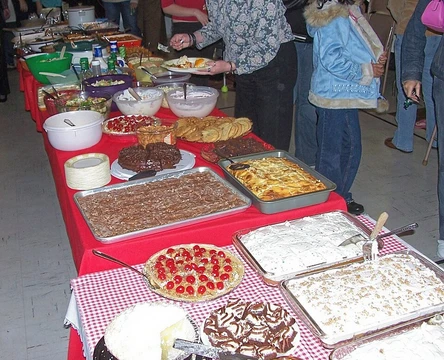
Fish fries are a Friday and Lent tradition in Michigan, often served buffet-style with rolls, french fries, mashed potatoes, salad, coleslaw, applesauce, deep-fried fish, and sometimes fried shrimp or baked fish. The state’s location on four Great Lakes makes fish a staple, with trout, walleye, perch, and catfish being common. Whitefish is a regional coastal specialty, especially smoked whitefish and whitefish dip. Michigan also has a strong wine and beer scene.
The Traverse City area is a popular winery destination, producing Rieslings, ice wines, and fruit wines. Microbreweries are thriving, with Grand Rapids earning the nickname "Beer City USA" and hosting Founders, its largest brewery. Bell’s, another major craft brewery, is in Kalamazoo, another beer-focused city. Mackinac Island, located between the Upper and Lower Peninsulas, is famous for its fudge.
After the fur trade ended, the island became a summer resort, and sweets became linked to it, starting with Native Americans collecting maple sugar. In 1887, the Murdick family opened the first candy shop there, using fans to blow fudge scent into the streets to attract customers. The aroma and number of shops grew, and the Mackinac Island Fudge Festival takes place every August. Visitors to the island are called "fudgies," a term now used for tourists across Northern Michigan and the Upper Peninsula, whether they buy fudge or not. Today, fudge shops are also common in other Michigan tourist towns like St. Ignace and Traverse City.
More in Cuisine of the Midwestern United States
Spotted an error? Know more?
Reader corrections go straight into our review queue. Suggest an edit · How this site is sourced