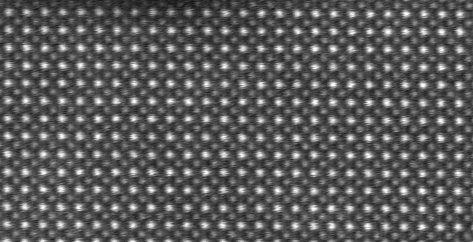
Crystal optics
Branch of optics studying light in anisotropic media.

Pittigrilli · CC BY-SA 4.0
Crystal optics studies how light travels through anisotropic materials—substances like crystals where light’s behavior shifts with the direction it moves. In these media, the refractive index is shaped by both the material’s makeup and its crystal structure, and it can be found using the Gladstone–Dale relation. Many crystals are naturally anisotropic, but in some cases, like in liquid crystals, anisotropy can be induced by applying an external electric field.
In contrast, typical transparent materials like glass are isotropic: light behaves identically no matter which way it travels. In such isotropic media, Maxwell’s equations in a dielectric link the electric displacement field **D** and the electric field **E** through the permittivity of free space ε₀ and the polarization field **P**, which represents the medium’s response to the light’s electric field. For a linear, isotropic medium, **P** is proportional and parallel to **E**, with the electric susceptibility χ as the proportionality constant. This gives **D** = ε₀(1+χ)**E**, where 1+χ is the relative permittivity, related to the refractive index n (for non-magnetic media) by n = √(1+χ).
In an anisotropic medium like a crystal, **P** is not necessarily aligned with **E**. Physically, this happens because the induced dipoles have preferred directions tied to the crystal’s structure. Here, χ becomes a rank-2 tensor rather than a single number, so **P** = ε₀ χ **E**, with components P_i = ε₀ Σ_j χ_ij E_j. In nonmagnetic, transparent materials, the χ tensor is real and symmetric (χ_ij = χ_ji). By choosing appropriate coordinate axes—the principal axes—the tensor can be diagonalized, leaving only χ_xx, χ_yy, and χ_zz nonzero. This yields P_x = ε₀ χ_xx E_x, and similarly for y and z. The axes are orthogonal when all χ entries are real, meaning the refractive index is real in every direction.
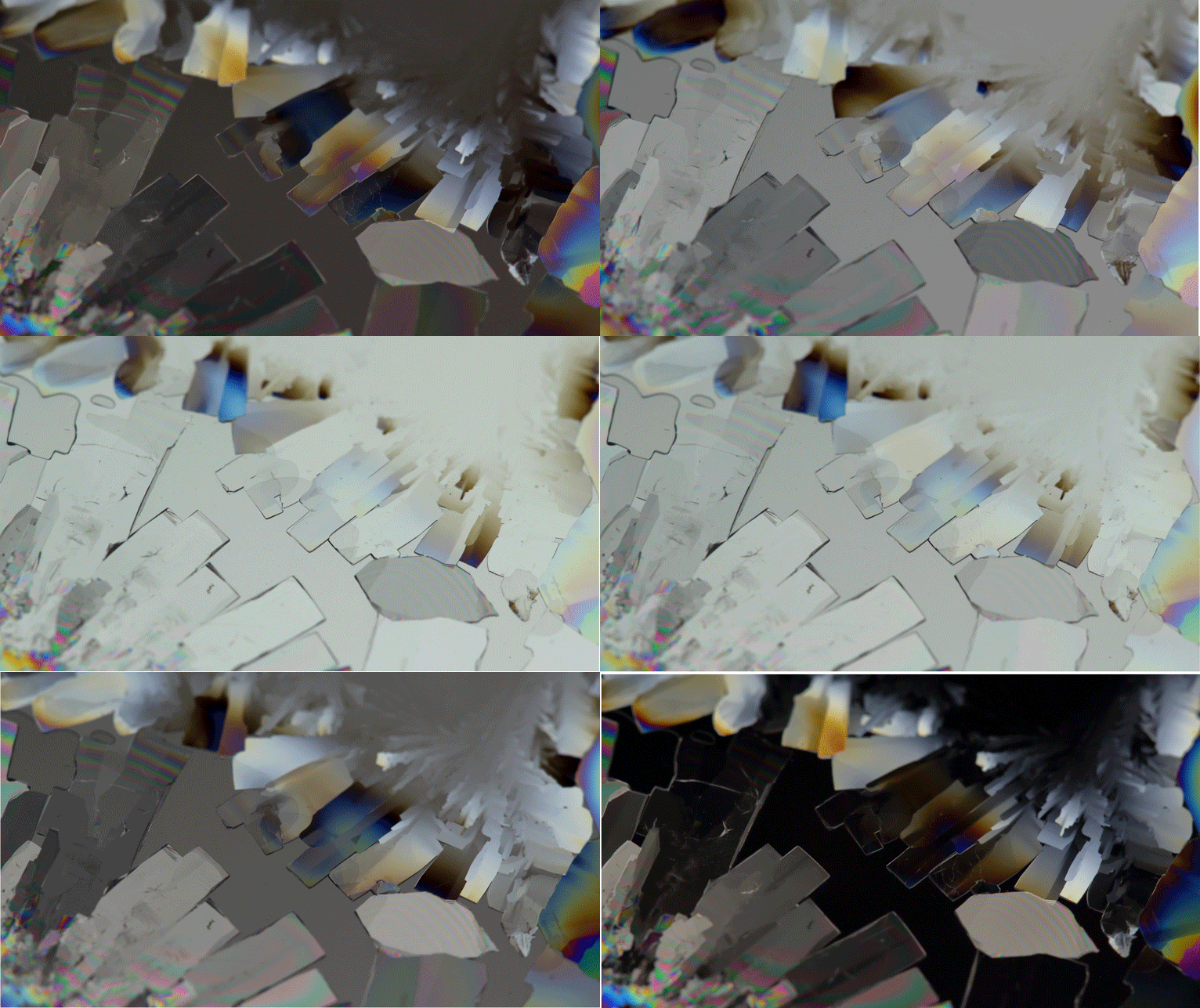
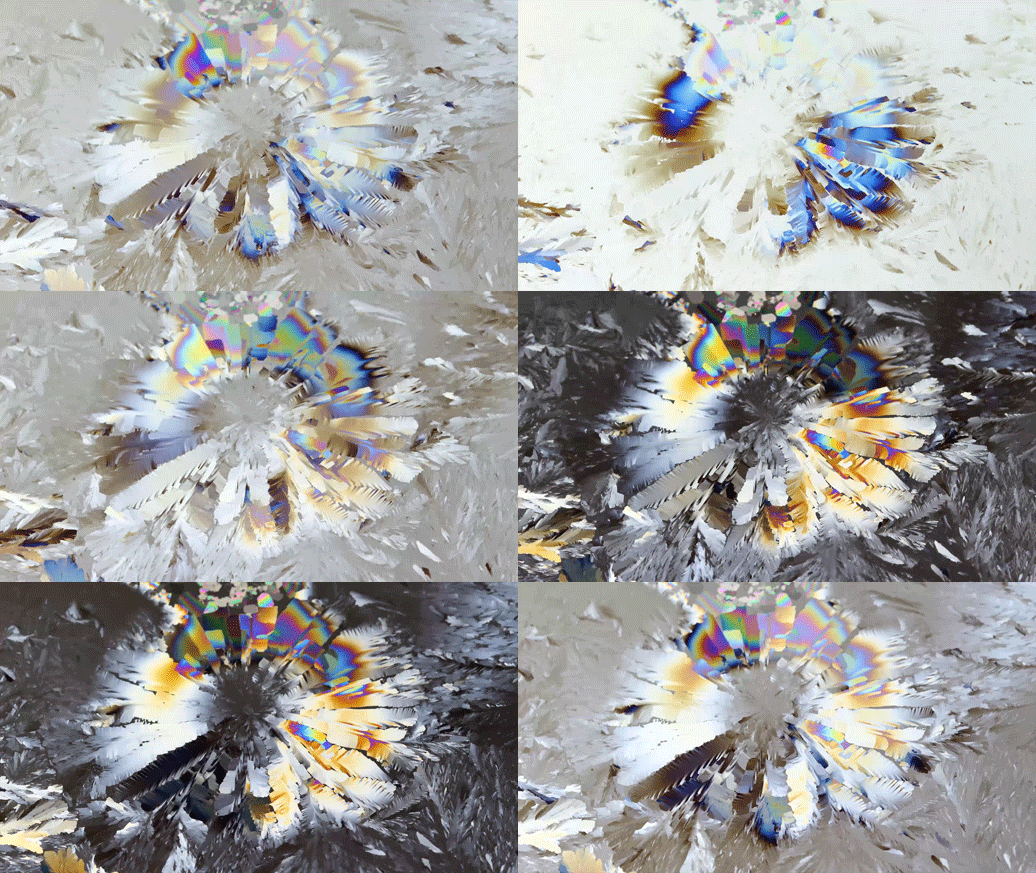
The relation between **D** and **E** also becomes tensorial: **D** = ε₀ ε **E**, where ε is the relative permittivity tensor. Consequently, the refractive index itself is a tensor. For a light wave traveling along the z principal axis and polarized along x, the refractive index is n_x = √(1+χ_xx). For y-polarized light, it’s n_y = √(1+χ_yy). These two different indices cause the wave components to travel at different speeds—a phenomenon called birefringence, seen in crystals like calcite and quartz. If χ_xx = χ_yy ≠ χ_zz, the crystal is uniaxial, with an ordinary index n_o for x- or y-polarized light and an extraordinary index n_e for z-polarized light. A uniaxial crystal is positive if n_e > n_o and negative if n_e < n_o. Light polarized at an angle to the axes splits into components with different phase velocities, so no single refractive index applies; this is often represented by an index ellipsoid. If χ_xx, χ_yy, and χ_zz are all different, the crystal is biaxial.
Other effects arise from external fields. The electro-optic effect alters the permittivity tensor when an electric field is applied, rotating the principal axes and changing how light propagates—useful for light modulators. In response to a magnetic field, some materials develop a complex-Hermitian dielectric tensor, known as the gyro-magnetic or magneto-optic effect. This leads to complex-valued principal axes and elliptically polarized light, breaking time-reversal symmetry, which can be exploited in devices like optical isolators. A non-Hermitian dielectric tensor yields complex eigenvalues, indicating that the material has gain or absorption at a specific frequency.
- field
- Optics
- key_concept
- Anisotropic media
- related_formula
- Gladstone–Dale relation
- media_example
- Crystals, liquid crystals
Lore & Background
In isotropic media like glasses, light behaves the same in all directions, and the electric displacement field D relates to the electric field E via a scalar dielectric constant. In anisotropic media, however, the polarization field P is not necessarily aligned with E, and the electric susceptibility becomes a rank-2 tensor. This tensor can be diagonalized in appropriate coordinate axes, yielding principal susceptibilities χxx, χyy, and χzz.
Reader's Guide
Crystal optics is significant because it explains how light propagates through materials with directional dependence, such as natural crystals and liquid crystals. The tensor nature of the electric susceptibility in anisotropic media leads to phenomena like birefringence, where the refractive index varies with polarization and direction. The ability to induce anisotropy via an external electric field in liquid crystals has practical applications in display technology. The Gladstone–Dale relation provides a means to calculate refractive index from composition and structure, linking material properties to optical behavior.
Did You Know?
- In anisotropic media, the polarization field P is not necessarily aligned with the electric field E.
- The electric susceptibility in anisotropic media is a rank-2 tensor, not a scalar.
- In nonmagnetic and transparent materials, the susceptibility tensor is real and symmetric.
- Anisotropy can be induced in some media, such as liquid crystals, by applying an external electric field.
The Fundamental Divide: Isotropy vs. Anisotropy
Crystal optics sits at the boundary between two worlds of light propagation. In ordinary transparent materials like glass, light encounters a uniform response regardless of its travel direction; the medium is isotropic. But in crystalline structures, the situation changes dramatically: the refractive index is no longer a single scalar value but instead depends on the direction in which the wave travels. This directional sensitivity arises because the crystal's internal architecture gives the material preferred axes along which its constituent dipoles respond more readily to an incoming electric field. The refractive index in such media is determined by both the chemical composition and the specific crystal structure, and can be computed through the Gladstone–Dale relation. What makes the field particularly rich is that anisotropy is not exclusively a property of solid crystals. In liquid crystals, an otherwise isotropic arrangement can be coaxed into anisotropic behavior simply by applying an external electric field, opening the door to tunable optical response.
The Electromagnetic Language of Isotropic Response
Before one can appreciate what makes crystals unusual, it helps to understand the baseline. In a transparent, isotropic dielectric, Maxwell's equations yield a clean proportionality: the electric displacement field D equals the free-space permittivity times the electric field E, plus a polarization term P that captures how the medium's bound charges react to the light's oscillating field. In a linear isotropic material, that polarization is simply a scalar multiple of E, with the proportionality constant being the electric susceptibility χ. Adding the two contributions together gives D = εE, where ε is the dielectric constant and the factor (1 + χ) is the relative permittivity. For non-magnetic materials, the refractive index n follows directly as the square root of that relative permittivity. This tidy scalar framework is what breaks down the moment one enters an anisotropic crystal, and understanding it is essential for seeing exactly where and how the crystal departs from the simple picture.
The Susceptibility Tensor and Preferred Dipole Axes
The defining mathematical shift in crystal optics is the promotion of the electric susceptibility from a single scalar to a rank-two tensor. In an anisotropic medium, the polarization vector P need not point in the same direction as the driving electric field E. Physically, this reflects the fact that the dipoles induced within the crystal possess preferred orientations dictated by the lattice geometry; a field applied along one crystallographic axis will stir up a dipole response that may have components along other axes as well. In three-dimensional component form, the relationship becomes a matrix multiplication: each component of P (Px, Py, Pz) is a linear combination of all three components of E, weighted by the nine tensor elements χxx, χxy, χxz, χyx, χyy, χyz, χzx, χzy, and χzz. This tensor structure encodes the directional asymmetry of the crystal's internal structure and is the mathematical heart of why light propagates differently depending on its direction through the medium.
Intrinsic vs. Induced Anisotropy and the Role of Composition
One of the most practically intriguing aspects of crystal optics is that anisotropy is not always a fixed, immutable property of a material. While natural crystals are born anisotropic due to their ordered lattice, certain media—most notably liquid crystals—can be driven from an isotropic state into an anisotropic one simply by the application of an external electric field. This means the optical response of the material can be switched or modulated on demand, rather than being locked in by the material's static structure. On the other hand, for a given crystal, the refractive index is not arbitrary; it is fixed by the interplay of chemical composition and crystal structure, and the Gladstone–Dale relation provides a calculable link between those material parameters and the resulting optical constant. Together, these two ideas—that anisotropy can be intrinsic or externally induced, and that the magnitude of the optical response is governed by well-defined material parameters—frame the full scope of what crystal optics seeks to describe.
Gallery

Frequently Asked Questions
What is Crystal optics in the crystallography series?
Crystal optics is the branch of optics (chapter 1-20) that examines how light propagates through anisotropic materials. In these media, the way light bends and splits depends on the direction it travels through the material.
What is the central concept Crystal optics revolves around?
The key idea is anisotropic media—materials whose optical properties vary with direction. This means the index of refraction is not a single fixed number but changes depending on which axis of the crystal the light is moving along.
Which formula does Crystal optics rely on for calculations?
The Gladstone–Dale relation is the go-to formula, letting you compute the index of refraction from a material's composition and its crystal structure. Fans often point to it as the mathematical backbone of the chapter.
What real-world materials does Crystal optics cover?
The primary examples are ordinary crystals and liquid crystals. Both fall under the anisotropic-media umbrella, so the same directional-dependent light behavior applies to each.
Why does Crystal optics matter within the broader crystallography canon?
It bridges pure crystallography and applied optics by showing that a crystal's internal lattice structure directly dictates how it interacts with light. Without this chapter, you couldn't explain why a calcite shard splits a beam into two or why LCD screens work at all.
More in Crystallography 1-20
Spotted an error? Know more?
This is a living reference — every entry is fact-audited, and reader corrections feed straight into our audit queue. Suggest an edit · See this site's audit record