Frequently Asked Questions
The most-asked questions about crossbows.
What is a crossbow, in simple terms?
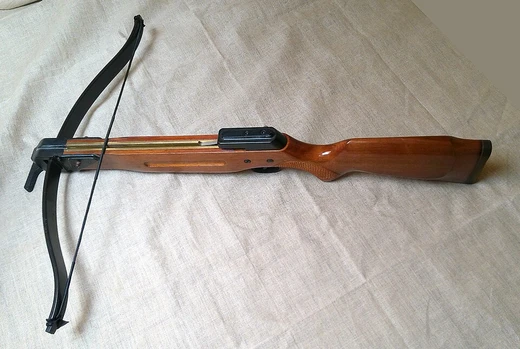
A crossbow is a mechanical ranged weapon that launches a short bolt (called a quarrel) along a horizontal rail using stored energy in its limbs, released by a trigger. Think of it as a bow mounted sideways on a stock, with a mechanical latch replacing the archer's hand.
How does a crossbow differ from a traditional bow?
The key distinction is that a crossbow uses a mechanical trigger and latch to hold and release the string, so the shooter never has to maintain full-draw strength by hand. This makes it more accessible to beginners but generally slower to cock and reload than a recurve or compound bow.
Where did the crossbow originate?
The earliest confirmed crossbows come from ancient China, with physical artifacts and literary references dating to roughly the 4th century BCE. The design later appeared independently in Europe by the medieval era, where it became a dominant infantry weapon.
What are the main categories of crossbows?
Crossbows are typically grouped by limb geometry—recurve (curved), compound (pulley-and-cam driven), and flat-limb—along with historical military models and modern sport or hunting variants. Compound crossbows dominate today's recreational market because of their high efficiency and compact size.
What role did crossbows play in medieval warfare?
Medieval armies prized the crossbow for its ability to punch through chainmail and even early plate armor at moderate range, making it a staple of both field engagements and siege operations. Notable battles such as Crécy (1346) and Bapheus (1302) featured crossbowmen as decisive elements.
What are the core components of a crossbow?
The essential parts are the stock (the body you grip), the prod or limbs, the string, the rail or track that guides the bolt, the string latch, and the trigger assembly. Most modern models add a safety catch, a scope mount, and in compound designs, a set of cams at the limb tips.
Are crossbows legal for hunting?
Yes; many U.S. states, Canadian provinces, and other countries permit crossbow hunting, either during a dedicated season or year-round for hunters with qualifying disabilities. Their compact profile and the ability to aim while braced on a shoulder or tree stand make them popular in dense-wood hunting.
What is a quarrel, and how is it different from an arrow?
A quarrel is the short, dense bolt a crossbow fires, usually wood or carbon with a metal tip and a small vane or fin at the rear for flight stability. Compared to a feathered arrow, it is shorter, heavier for its length, and lacks the long fletching because the rail does much of the stabilization work.
What are some common misconceptions about crossbows?
One persistent myth is that a crossbow is merely a bow with a trigger attached; in reality, the cam geometry, rail alignment, and energy transfer make it a distinct mechanical system. Another is that crossbows are inherently slow—modern compound models routinely exceed 350 feet per second, matching or surpassing many traditional bows.
Where should a newcomer begin learning about crossbows?
Start by memorizing the basic anatomy and safety mechanisms, then watch reputable manufacturer or archery-instruction videos on proper cocking, aiming, and maintenance routines. Joining a local archery club or an online crossbow community gives you hands-on guidance and a network of experienced shooters to ask questions.