Maharashtra
Land of the Deccan Plateau and India's financial heart

Own work based on user:Chumwa · CC BY-SA 4.0
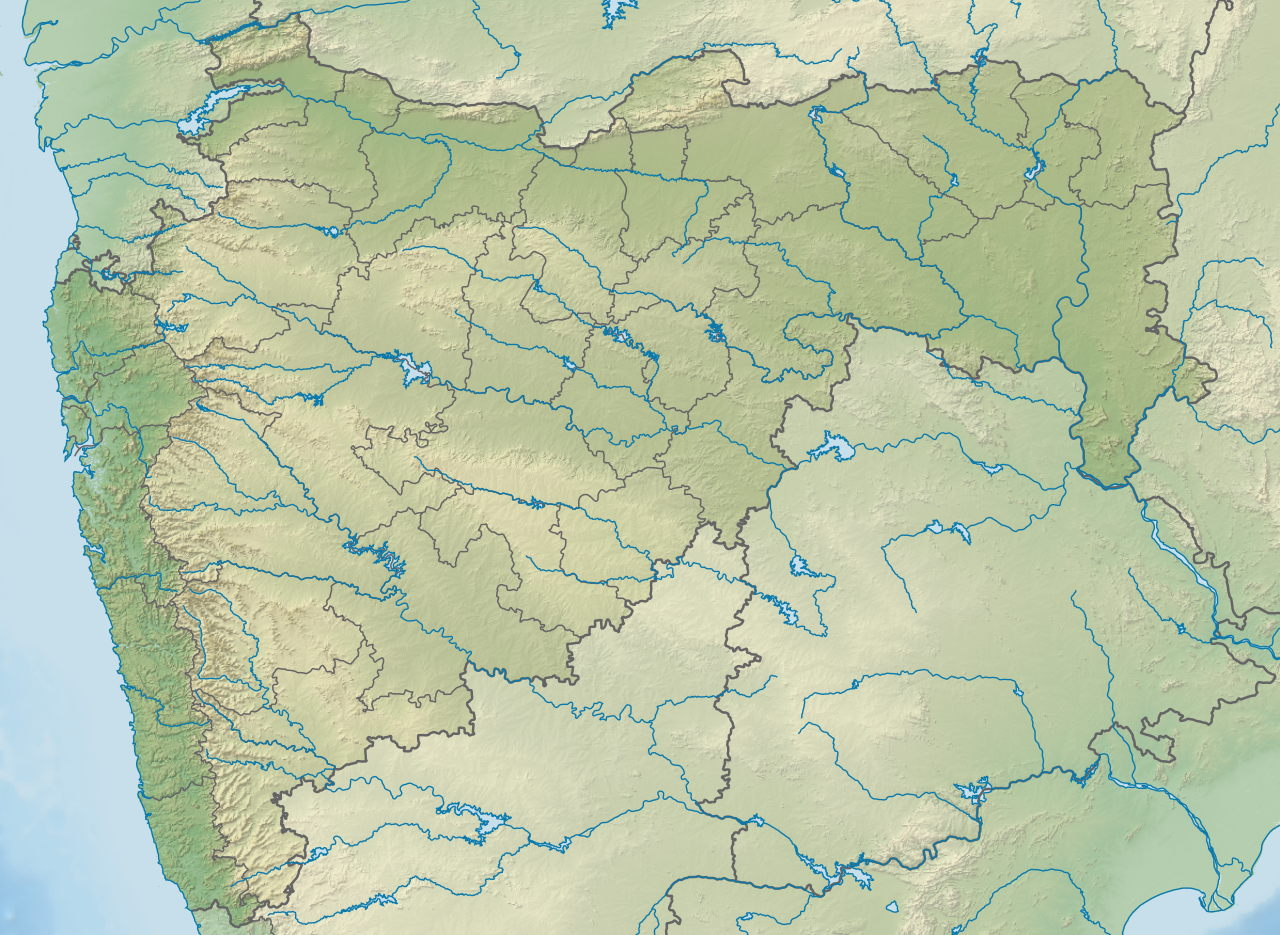
Maharashtra is a state in the western peninsular region of India, covering a large part of the Deccan Plateau. Its borders touch the Arabian Sea to the west, Karnataka and Goa to the south, Telangana to the southeast, Chhattisgarh to the east, Gujarat and Madhya Pradesh to the north, and the union territory of Dadra and Nagar Haveli and Daman and Diu to the northwest. It ranks as the second most populous state in India, the third most populous country subdivision in South Asia, and the fourth most populous in the world.
The area now known as Maharashtra has been inhabited for millennia, with numerous Late Harappan and Chalcolithic sites from the Jorwe culture found across the state. Historically, many powerful dynasties ruled here, including the Mauryas, Satavahanas, Chalukyas, Rashtrakutas, Mughals, and others. In the early 1800s, the region was split between the Peshwa’s Maratha Confederacy and the Nizamate of Hyderabad. The British East India Company then defeated the Marathas, bringing most of the area under its direct or indirect control through princely states, with the British crown taking over after 1858. Following Indian independence in 1947, the Bombay Presidency became Bombay State, which later absorbed Berar and other territories. The movement for a separate Marathi-speaking state succeeded on 1 May 1960, when Bombay State was divided into Maharashtra and Gujarat.
The state is organized into 6 divisions and 36 districts. Its capital, Mumbai, is India’s most populous urban area, while Nagpur serves as the winter capital. Major rivers include the Godavari and Krishna, and forests cover about 16.47% of the land. Maharashtra has the largest economy in India, contributing 14% of the nation’s nominal GDP, with the service sector dominating output. Despite agriculture employing nearly half the population, it accounts for only 12% of the state’s GDP. The state is highly industrialized, with 395 municipal councils and 29 municipal corporations. Mumbai hosts the Bombay Stock Exchange, India’s largest and Asia’s oldest, as well as the National Stock Exchange. Maharashtra is considered a leader in agriculture, industry, trade, transport, and education, and ranks ninth among Indian states on the human development index. It contains seven UNESCO World Heritage Sites, including the Ajanta and Ellora Caves, Chhatrapati Shivaji Terminus, and the Western Ghats.
Quick Facts
- Official name
- State of Maharashtra
- Nickname
- "Gateway of India"
- Anthem
- Jai Jai Mahārāṣṭra Mājhā ("Victory to My Maharashtra!")
- Region
- West India
- Before was
- State of Bombay (1950–1960)
- Capital
- Mumbai
- Winter capital
- Nagpur
- Metro
- Mumbai Metropolitan Region
Facts from the source article.
Lore & Background
The region that encompasses the modern state has a history going back many millennia. Notable dynasties that ruled the region include the Asmakas, the Mauryas, the Satavahanas, the Western Satraps, the Abhiras, the Vakatakas, the Chalukyas, the Rashtrakutas, the Western Chalukyas, the Seuna Yadavas, the Khaljis, the Tughlaqs, the Bahamanis and the Mughals. In the early 19th century, the region was divided between the Dominions of the Peshwa in the Maratha Confederacy and the Nizamate of Hyderabad. Early in the 19th century, the British East India Company defeated the Marathas and brought most of present-day Maharashtra under its control, both directly and indirectly through many princely states. After 1858, the British crown assumed control of the area from the company. During the periods of Company and British rule, the region was divided between the Bombay Presidency, the Central Provinces, Berar, and many princely states including Hyderabad. After Indian independence in 1947, the Bombay Presidency became Bombay State in the Indian Union. Between 1950 and 1956, Berar, the Deccan states and the Gujarat states were annexed into Bombay State. Aspirations of a separate state for Marathi-speaking peoples were pursued by the United Maharashtra Movement; their advocacy eventually borne fruit on 1 May 1960, when the State of Bombay was bifurcated into the modern states of Maharasthra and Gujarat.
Reader's Guide
The state is divided into 6 divisions and 36 districts. Mumbai is the capital of Maharashtra and the most populous urban area in India, with Nagpur serving as the winter capital. The Godavari and Krishna are the state's two major rivers, and forests cover 16.47% of the state's geographical area. The economy of Maharashtra is the largest in India, with a gross state domestic product (GSDP) of and GSDP per capita of ; it is the single-largest contributor to India's economy, being accountable for 14% of all-India nominal GDP. The service sector dominates the state's economy, accounting for 69.3% of the value of the output of the country. Although agriculture accounts for 12% of the state GDP, it employs nearly half the population of the state. Maharashtra is one of the most industrialised states in India. It includes 395 municipal councils and 29 municipal corporations which are urban (cities) local bodies in the state. The state capital, Mumbai, is India's financial and commercial capital. The Bombay Stock Exchange, India's largest stock exchange and the oldest in Asia, is located in the city, as is the National Stock Exchange, which is the second-largest stock exchange in India and one of world's largest derivatives exchanges. The state has played a significant role in the country's social and political life and is widely considered a leader in terms of agricultural and industrial production, trade and transport, and education. Maharashtra is the ninth-highest ranking among Indian states in the human development index. The state is home to seven UNESCO World Heritage Sites: Ajanta Caves, Ellora Caves, Elephanta Caves, Chhatrapati Shivaji Terminus (formerly Victoria Terminus), the Victorian Gothic and Art Deco Ensembles of Mumbai, the Maratha Military Landscapes of India (shared with Tamil Nadu) and the Western Ghats, a heritage site made up of 39 individual properties, of which four are located in Maharashtra.
Did You Know?
- The term 'Maharashtra' may derive from 'the country of Mahars', according to pre-independence writers.
- The modern Marathi language evolved from Maharashtri Prakrit.
- The Buddhist Ajanta Caves in present-day Aurangabad display influences from the Satavahana and Vakataka styles.
- Malik Ambar is said to have introduced the concept of guerrilla warfare in the Deccan region.
Gallery
More in Countries And Regions
Spotted an error? Know more?
Reader corrections go straight into our review queue. Suggest an edit · How this site is sourced