Frequently Asked Questions
The most-asked questions about coral reefs.
What exactly is a coral reef?
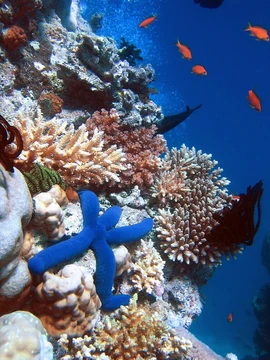
A coral reef is a living underwater structure built over centuries by colonies of tiny organisms called coral polyps. These polyps secrete calcium carbonate skeletons that accumulate into massive frameworks supporting an extraordinary range of marine life.
Where in the world can you find coral reefs?
Coral reefs thrive in warm, shallow, sunlit waters, with the highest concentrations in the tropics. The largest known reef system is the Great Barrier Reef off Australia's northeast coast, though significant reefs also exist in the Caribbean, the Red Sea, and across the Indo-Pacific.
Are corals actually plants?
No—corals are animals, specifically tiny polyps related to jellyfish and sea anemones. They obtain energy both by filtering plankton and through a symbiotic partnership with photosynthetic algae called zooxanthellae that live inside their tissues.
How big can a coral reef get?
Individual reef structures can span hundreds of square kilometers, and the Great Barrier Reef stretches roughly 2,300 kilometers along Australia's coast. Collectively, coral reefs cover less than one percent of the ocean floor yet support around a quarter of all known marine species.
What is coral bleaching?
Bleaching occurs when stressed corals expel the symbiotic algae that give them color and most of their nutrition, leaving the white calcium carbonate skeleton visible. Prolonged thermal stress, pollution, or ocean acidification can trigger the event, and if conditions do not improve the corals starve and die.
How fast do coral reefs grow?
Most reef-building corals add only a few millimeters to a couple of centimeters of skeleton per year, depending on the species. A mature reef structure therefore represents thousands to tens of thousands of years of accumulated growth.
What kinds of animals live in coral reefs?
A single healthy reef can host thousands of fish species alongside sharks, rays, sea turtles, octopuses, crustaceans, mollusks, and countless invertebrates. This density of biodiversity is unmatched by any other habitat on Earth.
What is the Great Barrier Reef and why is it famous?
The Great Barrier Reef is the world's largest living structure visible from space, composed of roughly 2,900 individual reef systems and 900 islands off Queensland, Australia. It was designated a UNESCO World Heritage Site in 1981 and remains one of the most studied and visited ecosystems on the planet.
How do coral reefs actually form?
Reef formation begins when free-swimming coral larvae settle on a hard substrate and start depositing calcium carbonate skeletons. Over millennia, successive generations of polyps build upward and outward while wave action, erosion, and other organisms like sponges and algae shape the mature structure.
Why do coral reefs matter to humans?
Coral reefs buffer coastlines against storm surges and erosion, underpin fisheries that feed hundreds of millions of people, and serve as a source of compounds used in pharmaceutical research. Their loss would trigger cascading ecological collapse affecting food security, tourism economies, and the health of the broader ocean.