Predictive failure analysis
Predictive failure analysis anticipates hardware failure to enable proactive maintenance.

Predictive failure analysis (PFA) encompasses techniques that forecast when a system or component—whether software or hardware—is about to fail. These methods can then trigger actions to prevent or mitigate the failure, or schedule maintenance before the breakdown occurs. One common example involves computer systems that track patterns in corrected errors to anticipate future hardware or memory failures, then proactively activate avoidance mechanisms.
Originally, the term "PFA" was a proprietary label for an IBM technology that assessed the likelihood of hard disk drive failure, though it has since become a generic term for various technologies that judge imminent failure in CPUs, memory, and I/O devices.
IBM introduced its PFA technology in 1992, specifically for its 0662-S1x drive, a 1052 MB Fast-Wide SCSI-2 disk running at 5400 rpm. This technology measured several key mechanical parameters of the drive, such as the flying height of the heads. The drive’s firmware compared these measurements against predefined thresholds to evaluate the drive’s health. If the drive appeared likely to fail soon, it sent a notification to the disk controller.
Major drawbacks of this early technology included its binary result—the host only knew whether a notification was present or absent—and its unidirectional communication, where only the drive firmware could send notifications. This technology later merged with IntelliSafe to become the Self-Monitoring, Analysis and Reporting Technology (SMART).
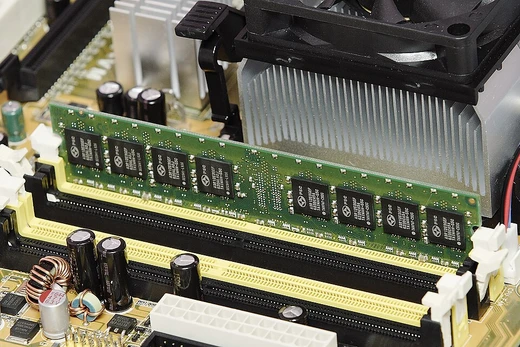
For processors and memory, high counts of corrected RAM intermittent errors detected by ECC can predict future DIMM failures. To avoid these errors, systems can automatically offline memory and CPU caches. For instance, under Linux, the mcelog daemon removes from use memory pages that show excessive corrections, and also removes processor cores that exhibit too many correctable cache errors.
On optical media such as CDs, DVDs, and Blu-ray discs, failures from media degradation can be predicted, and low-quality manufacturing can be detected before data loss occurs. This is done by measuring the rate of correctable data errors using software like QpxTool or Nero DiscSpeed. However, not all optical drive models or vendors allow error scanning.
- Introduced by
- IBM
- Year introduced
- 1992
- First reference drive
- 0662-S1x drive (1052 MB Fast-Wide SCSI-2 disk, 5400 rpm)
- Original context
- hard disk drives
- Merged into
- Self-Monitoring, Analysis and Reporting Technology (SMART)
Lore & Background
IBM introduced the term 'PFA' and its technology in 1992, with reference to its 0662-S1x drive, a 1052 MB Fast-Wide SCSI-2 disk operating at 5400 rpm. The technology relied on measuring several key mechanical parameters of the drive unit, such as the flying height of heads. The drive firmware compared the measured parameters against predefined thresholds and evaluated the health status of the drive. If the drive appeared likely to fail soon, the system sent notification to the disk controller.
Major drawbacks of the technology included the binary result—the only status visible to the host was presence or absence of a notification—and the unidirectional communications, with the drive firmware sending notification only. The technology later merged with IntelliSafe to form the Self-Monitoring, Analysis and Reporting Technology (SMART).
Beyond disks, predictive failure analysis applies to processors and memory. High counts of corrected RAM intermittent errors by ECC can be predictive of future DIMM failures, so automatic offlining for memory and CPU caches can be used to avoid future errors. Under the Linux operating system, the mcelog daemon automatically removes from usage memory pages showing excessive corrections and removes from usage processor cores showing excessive cache correctable memory errors. On optical media such as CD, DVD and Blu-ray, failures caused by degradation of media can be predicted and media of low manufacturing quality can be detected prior to data loss by measuring the rate of correctable data errors using software such as QpxTool or Nero DiscSpeed, though not all vendors and models of optical drives allow error scanning.
Reader's Guide
Predictive failure analysis is significant because it introduced a proactive approach to hardware reliability, shifting from reactive failure handling to early warning and avoidance. Originally a proprietary IBM technology for hard disk drives, it established the concept of monitoring internal drive parameters—such as head flying height—against thresholds to predict imminent failure. Its major drawbacks, including a binary result and unidirectional communication, were addressed when the technology merged with IntelliSafe to form SMART, which became a widely adopted industry standard for disk self-monitoring.
The legacy of PFA extends beyond disks to processors and memory, where ECC error correction counts are used to predict future DIMM or cache failures. The Linux mcelog daemon exemplifies this by automatically offlining failing memory pages and processor cores. On optical media, error rate scanning with tools like QpxTool and Nero DiscSpeed allows prediction of media degradation before data loss occurs. While not all optical drives support such scanning, the principle of using correctable error rates as a predictive indicator remains central. Overall, PFA's core idea—using internal measurements to forecast hardware failure—has become embedded in modern storage and computing reliability practices.
Did You Know?
- IBM introduced the term 'PFA' in 1992 for its 0662-S1x hard disk drive.
- PFA originally provided only a binary result: notification present or absent.
- The Linux mcelog daemon uses PFA principles to automatically offline memory pages and processor cores with excessive correctable errors.
More in Computer Storage, Part 3 1-24
Spotted an error? Know more?
Reader corrections go straight into our review queue. Suggest an edit · How this site is sourced