Video camera
Optical instrument that captures video for live or recorded use.

A video camera is an optical device that captures moving images, differing from a movie camera, which records onto film. Originally created for television broadcasting, these cameras are now used in many other fields.
Video cameras operate in two main ways. The first, common in early broadcasting, is live television, where the camera sends real-time images directly to a screen for immediate viewing. While some cameras still serve live TV production, most live feeds today are used for security, military, tactical, and industrial purposes that require remote or hidden observation. The second mode records images to a storage device for archiving or later processing. For many years, videotape was the primary recording format, but it was gradually replaced by optical discs, hard drives, and then flash memory. Recorded video is used in television production and, more often, in surveillance and monitoring tasks where unattended recording is needed for later review.
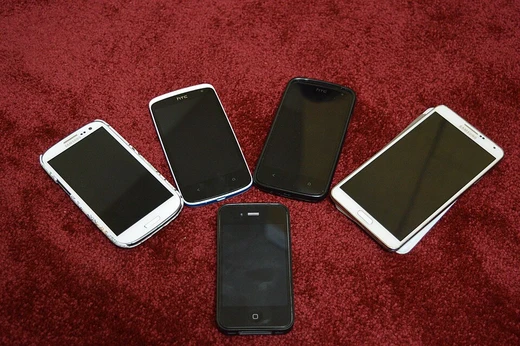
Modern video cameras come in many designs. Professional video cameras, used in television production, can be studio-based or mobile for electronic field production (EFP). They typically offer very detailed manual controls and often use three sensors to capture red, green, and blue separately. Camcorders combine a camera and a recording device in one unit; they are portable and were widely used for TV production, home movies, electronic news gathering (ENG), and citizen journalism. Since the shift to digital video, most cameras have built-in recording media, making them camcorders. Action cameras often record with a 320-degree field of view. Closed-circuit television (CCTV) commonly uses pan-tilt-zoom (PTZ) cameras for security and monitoring. These cameras are designed to be small, easily hidden, and able to operate unattended, and those used in industrial or scientific settings are often hardened for hostile environments like radiation, high heat, or toxic chemicals. Webcams stream a live video feed to a computer. Many smartphones have built-in video cameras, and even high-end models can capture 4K resolution video. Special camera systems are used for scientific research, such as on satellites or space probes, in artificial intelligence and robotics, and in medicine. These cameras are often tuned for non-visible radiation, like infrared for night vision or heat sensing, and X-ray for medical and video astronomy.
The earliest video cameras used a mechanical Nipkow disk and were used in experimental broadcasts from the 1910s through the 1930s. All-electronic designs based on the video camera tube, such as Vladimir Zworykin's Iconoscope and Philo Farnsworth's image dissector, replaced the Nipkow system by the 1930s. These tube cameras remained widely used until the 1980s, when solid-state image sensors like the charge-coupled device (CCD) and later the CMOS active-pixel sensor eliminated common tube problems such as image burn-in and streaking, and made digital video workflow practical because the sensor output is digital and does not need analog conversion. The basis for solid-state image sensors is metal-oxide-semiconductor (MOS) technology, which came from the invention of the MOSFET at Bell Labs in 1959. This led to semiconductor image sensors, including the CCD and later the CMOS active-pixel sensor. The first semiconductor image sensor was the CCD, invented at Bell Labs in 1969, based on MOS capacitor technology. The NMOS active-pixel sensor was invented at Olympus in 1985, leading to the CMOS active-pixel sensor at NASA's Jet Propulsion Laboratory in 1993. Practical digital video cameras were also made possible by advances in video compression, because uncompressed video requires impractically high memory and bandwidth. The most important compression algorithm here is the discrete cosine transform (DCT), a lossy compression technique first proposed in 1972. Practical digital video cameras were enabled by DCT-based video compression standards, including the H.26x and MPEG standards introduced from 1988 onward. The transition to digital television boosted digital video cameras, and by the early 21st century, most video cameras were digital. With digital video capture, the distinction between professional video cameras and movie cameras disappeared because the intermittent mechanism became the same. Today, mid-range cameras used exclusively for television and other work (except movies) are called professional video cameras.
Early video could not be directly recorded. The first somewhat successful attempt was in 1927 with John Logie Baird’s disc-based Phonovision, though the discs were unplayable with the technology of the time; later advances allowed the video to be recovered in the 1980s. The first experiments with recording a video signal on tape took place in 1951. The first commercially released system was Quadruplex videotape from Ampex in 1956. Two years later, Ampex introduced a system capable of recording color video. The first recording systems designed to be mobile (usable outside the studio) were the Portapak systems, starting with the Sony DV-2400 in 1967. This was followed in 1981 by the Betacam system.
- field
- Optical instruments, television, video recording
- known_for
- Capturing and recording video for live and recorded use
- types
- Professional video cameras, camcorders, CCTV, webcams, smartphone cameras, special camera systems
Lore & Background
The earliest video cameras used a mechanical spinning disk called a Nipkow disk for experimental broadcasts from the 1910s through the 1930s. These were replaced by all-electronic designs that relied on video camera tubes, such as the Iconoscope and the image dissector, which became standard by the 1930s. Tube-based cameras remained common until the 1980s, when solid-state image sensors like the charge-coupled device (CCD) and later the CMOS active-pixel sensor eliminated frequent problems such as image burn-in and streaking, and made digital video workflows practical. The basis for these solid-state sensors is metal–oxide–semiconductor (MOS) technology, originating from the invention of the MOSFET in 1959. The CCD was invented in 1969, followed by the NMOS active-pixel sensor in 1985, and the CMOS active-pixel sensor in 1993. Practical digital video cameras also depended on advances in video compression, particularly the discrete cosine transform (DCT), a lossy compression technique proposed in 1972, which enabled the H.26x and MPEG standards introduced from 1988 onward. The transition to digital television further boosted digital video cameras, and by the early 21st century, most video cameras were digital. The distinction between professional video cameras and movie cameras has since disappeared, as the intermittent mechanism became the same; mid-range cameras used for television and other work (excluding movies) are now termed professional video cameras.
Reader's Guide
Video cameras have evolved from mechanical Nipkow disk systems to all-electronic tube cameras and then to solid-state digital sensors, fundamentally changing how visual information is captured and distributed. Initially developed for live television broadcasting, they now serve two primary modes: live feeds for immediate observation (used in security, military, and industrial operations) and recorded video for archiving or later analysis (used in television production, surveillance, and monitoring). The transition from analog to digital, driven by solid-state sensors and video compression standards, made digital video workflow practical and led to the widespread adoption of digital video cameras by the early 21st century. The distinction between professional video cameras and movie cameras has disappeared as the intermittent mechanism has become the same, with mid-range cameras used for television termed professional video cameras. Recording media evolved from early disc-based systems to videotape (Quadruplex, Betacam), then to optical disc, hard disk, and flash memory.
Did You Know?
- The earliest video cameras were based on the mechanical Nipkow disk and used in experimental broadcasts through the 1910s–1930s.
More in Communication And Media 1-21
Spotted an error? Know more?
This is a living reference — every entry is fact-audited, and reader corrections feed straight into our audit queue. Suggest an edit · See this site's audit record