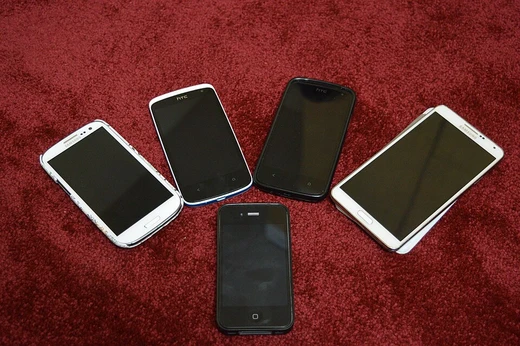
Social media
Last updated
Social media are interactive technologies that enable users to create, share, and aggregate content within virtual communities and networks.[1] Social media differs from traditional media by operating in a dialogic transmission system from many sources to many receivers.[2] User-generated content can be shared, co-created, discussed, and modified on interactive platforms by individuals, communities, businesses, and organizations.[3]
Quick Facts
- Key feature
- Dialogic transmission (many sources to many receivers)
Facts from the source article.
Key facts and history
The PLATO system, launched in 1960 at the University of Illinois, offered early social media features like message forums and instant messaging.[4] A 2015 review identified four unique features of social media: Web 2.0 applications, user-generated content, user profiles, and social networks formed by connections.[5] By 2022, around 3.96 billion people were using social media globally, up from 3.6 billion in 2020.[6] Social media has been criticized for negative impacts on children, including exposure to inappropriate content and mental health issues.[7]
On February 16, 1978, the Computer Bulletin Board System in Chicago launched, bringing BBSs into the mainstream.[8] BlackPlanet (1999) preceded Friendster and Myspace, with Facebook, YouTube, and Twitter following, as social media platforms became widely popular in the early 2000s.[9] Content that triggers negative emotions like anger and outrage is more likely to be prioritized by algorithms that track user engagement, according to the American Psychological Association.[10]
What the cited sources add
Saudi Arabia hired Instagram influencers to post travel shots shortly after the murder of journalist Jamal Khashoggi.[11] A Verdict report noted that the global technology industry saw a 46% decline in social media-related patent applications in Q3 2024 compared to the previous quarter.[12] Snap filed the most social media patents in the technology industry in Q3 2024, with 63 filings.[12] In January 2021, The Guardian reported that Egypt's information ministry had chosen 20 Instagram influencers for a "new media ambassadors programme" intended to counter negative coverage of the country's human rights record.[11]
A University of Illinois communications page quotes a developer who described PLATO as "the first major social computing environment."[13]
References
- Wikipedia, "Social media" (CC BY-SA 4.0), which cites: Kietzmann, "Social media? Get serious! Understanding the functional building blocks of social media", Business Horizons, 2011, p. 241–251; Obar, "Social media definition and the governance challenge: An introduction to the special issue", Telecommunications Policy, 2015, p. 745–750; Obar, "Social media definition and the governance challenge: An introduction to the special issue", Telecommunications Policy, 2015, p. 745–750 (original not read by us) en.wikipedia.org
- Wikipedia, "Social media" (CC BY-SA 4.0), which cites: Agichtein, "Finding high-quality content in social media", WISDOM – Proceedings of the 2008 International Conference on Web Search and Data Mining, 2008, p. 183–193; Tao, "Special issue on knowledge management of web social media", Web Intelligence, 18 November 2016, p. 273–274 (original not read by us) en.wikipedia.org
- Wikipedia, "Social media" (CC BY-SA 4.0), which cites: Schivinski, "Exploring the Role of Social Media Use Motives, Psychological Well-Being, Self-Esteem, and Affect in Problematic Social Media Use", Frontiers in Psychology, 2020, p. 3576; Boyd, "Social Network Sites: Definition, History, and Scholarship", Journal of Computer-Mediated Communication, 2007, p. 210–30; Kietzmann, "Social media? Get serious! Understanding the functional building blocks of social media", Business Horizons, 2011, p. 241–251; O'Keeffe, "The Impact of Social Media on Children, Adolescents, and Families", Pediatrics, A en.wikipedia.org
- Wikipedia, "Social media" (CC BY-SA 4.0), which cites: Communications, "PLATO", grainger.illinois.edu (we also read that source) en.wikipedia.org
- Wikipedia, "Social media" (CC BY-SA 4.0), which cites: Obar, "Social media definition and the governance challenge: An introduction to the special issue", Telecommunications Policy, 2015, p. 745–750; Obar, "Social media definition and the governance challenge: An introduction to the special issue", Telecommunications Policy, 2015, p. 745–750; Kaplan, "Users of the world, unite! The challenges and opportunities of Social Media", Business Horizons, January 2010, p. 59–68; Obar, "Social media definition and the governance challenge: An introduction to the special issue", Telecommunications Policy en.wikipedia.org
- Wikipedia, "Social media" (CC BY-SA 4.0), which cites: "Number of global social network users 2017-2025 Statista", Statista (original not read by us) en.wikipedia.org
- Wikipedia, "Social media" (CC BY-SA 4.0), which cites: "How Social Media Affects Your Teen's Mental Health: A Parent's Guide", Yale Medicine; "Social Media and Teen Mental Health", The Annie E. Casey Foundation, 2023-08-10; Usher, "Media Capture: How Money, Digital Platforms, and Governments Control the News", Columbia University Press, 2021-06-22, p. 155-; Zaid, "Shifting Power Dynamics: Media Capture and Platform Dominance in Journalism", Digital Journalism, 9 August 2025, p. 1311–1330; Asialink, "The 2025 Southeast Asia Oration with Maria Ressa", YouTube, 2025-09-03 (original not read by us en.wikipedia.org
- Wikipedia, "Social media" (CC BY-SA 4.0), which cites: Edwards, "The Lost Civilization of Dial-Up Bulletin Board Systems", The Atlantic, November 4, 2016 (original not read by us) en.wikipedia.org
- Wikipedia, "Social media" (CC BY-SA 4.0), which cites: Giorgis, "The Homepage of the Black Internet", The Atlantic, 2024-04-12; "BlackPlanet's founder talks MySpace, why he was sceptical of Twitter, and if Facebook may have peaked", Complex, 2011-03-23; "Social media" (original not read by us) en.wikipedia.org
- Wikipedia, "Social media" (CC BY-SA 4.0), which cites: "How and why does misinformation spread?", American Psychological Association, 2024-03-01 (original not read by us) en.wikipedia.org
- Michaelson, "Sugar-coated propaganda? Middle East taps into power of influencers", The Guardian, 2021-01-29. facts only, no text reused. theguardian.com
- "Q3 2024 update: social media related patent activity in the technology industry", Verdict, 2023-05-29. facts only, no text reused. verdict.co.uk
- Communications, "PLATO", grainger.illinois.edu. facts only, no text reused. grainger.illinois.edu
Each numbered sentence above was checked against the source it cites before publication. Sentences citing Wikipedia adapt text from the English Wikipedia article Social media (contributors), used under CC BY-SA 4.0; this entry is available under the same licence. Other sources were used for facts only; no text or images are copied from them.
More in Communication And Media
Sources
Compiled from Wikipedia and the sources listed below. Text from Wikipedia is available under CC BY-SA 4.0; this entry is adapted from it.
- Wikipedia: Social media (CC BY-SA 4.0).
Spotted an error? Know more?
Reader corrections go straight into our review queue. Suggest an edit · How this site is sourced