Frequently Asked Questions
The most-asked questions about colombian cuisine.
What defines Colombian cuisine as a whole?
Colombian cuisine is a blend of Indigenous, Spanish, African, and Arab culinary traditions that varies dramatically by region. It centers on corn, rice, beans, plantains, and a wide variety of tropical fruits, with each of the country's 32 departments developing its own distinct food identity.
How many distinct regional cuisines does Colombia have?
Colombia is often described as having at least four or five major culinary regions, including the Andean highlands, the Caribbean coast, the Pacific coast, and the Llanos plains. Each region has its own signature dishes, ingredients, and cooking techniques that set it apart from the others.
What is a bandeja paisa and why is it famous?
A bandeja paisa is a large platter from the Antioquia region that typically includes fried eggs, chicharrón, red beans, rice, black pudding (morcilla), a fried plantain, and an arepa. It is one of the most recognized Colombian dishes internationally and is often cited as the country's unofficial national plate.
What role does corn play in Colombian cooking?
Corn is the foundational grain of Colombian cuisine, appearing as arepas, tamales, hoganos, and countless other preparations. Nearly every region has its own way of grinding, shaping, and cooking corn, making it the single most versatile ingredient on the Colombian table.
What is sancocho and how does it differ from other Latin American stews?
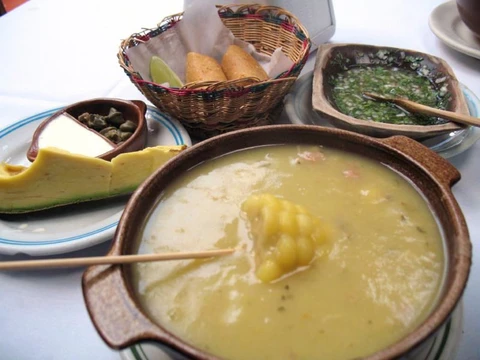
Sancocho is a hearty broth-based stew of chicken, root vegetables like yuca and potato, and plantain, slow-simmered until the vegetables break down into the liquid. Unlike many neighboring-country stews, the Colombian version is typically served as a complete meal with rice and a fried egg on the side rather than as a standalone soup.
How does Colombian coffee culture extend beyond just drinking?
While Colombia is world-famous for its coffee, the bean also appears in desserts, sauces, and savory pairings in some regional recipes. Coffee-farm communities in the Eje Cafetero region have built entire food traditions around the harvest, including coffee-chocolate desserts and coffee-flavored sweets.
What are the most common street foods in Colombia?
Popular street foods include empanadas (fried corn-dough pastries), patacones (twice-fried green plantains), grilled chorizo, and the sweet treat called buñuelos (fried cheese balls). These snacks are found at nearly every corner vendor, market, and park across the country.
What makes Pacific-coast Colombian food distinctive?
The Pacific region contributes some of Colombia's most distinctive ingredients, including coconut, mangrove shrimp, and a wide array of tropical fruits not found elsewhere in the country. Dishes like frito de pescado and the heavy use of achiote paste as a base flavor are hallmarks of this coastal tradition.
How does Colombian cuisine differ from its neighbors' cuisines?
Colombian food tends to rely more heavily on corn-based preparations and beans as everyday staples, while neighboring Peru emphasizes potatoes and Ecuador leans on seafood and rice. The African and Arab influences along the Caribbean and Pacific coasts also give Colombia a spice and ingredient profile that sets it apart from its Andean neighbors.
Where should a newcomer start exploring Colombian cuisine?
A good entry point is learning to make a simple arepa, a basic bean-and-rice plate, and a sancocho, as these three dishes introduce the core grains, proteins, and cooking methods. From there, exploring one regional specialty at a time—such as a Caribbean arroz con coco or a Paisa empanada—builds a well-rounded understanding of the country's food landscape.