Frequently Asked Questions
The most-asked questions about cocktails with vermouth.
What exactly is vermouth and why is it central to this cocktail family?
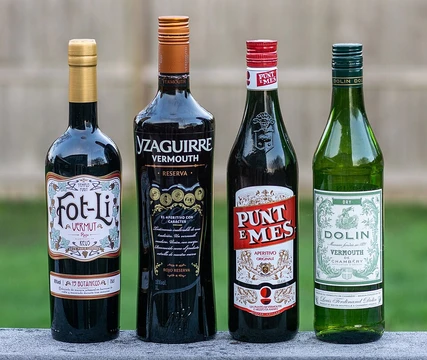
Vermouth is a wine that has been fortified with grape spirits and flavored with a blend of botanicals such as herbs, spices, and roots. It serves as the defining ingredient in a family of cocktails ranging from the Martini to the Negroni, giving each of them its distinctive aromatic backbone.
What's the difference between dry and sweet (red) vermouth?
Dry vermouth, associated with France, uses lighter botanicals and pairs with gin in a Martini, while sweet or red vermouth, rooted in Italy, carries a richer, spicier profile and anchors drinks like the Manhattan and Negroni. That flavor and origin distinction is the single most important variable when choosing a recipe.
Where should a complete beginner start?
The Negroni is often recommended as the gateway drink because its equal parts of gin, sweet vermouth, and Campari make it approachable and easy to remember. From there, the Americano (the same ratio minus the gin) and the Martini (a spirit-forward dry vermouth drink) offer a natural progression.
Who are the key historical figures behind these cocktails?
The Negroni is traditionally attributed to Count Camillo Negroni in 1919 Florence, while the Manhattan's origins trace to barrooms in late-1800s New York. The Martini's shift from a sweet to a dry profile is generally linked to Prohibition-era American bartenders who favored gin and reduced the vermouth proportion.
How long does an opened bottle of vermouth last?
Because vermouth is a fortified wine rather than a pure spirit, it oxidizes and loses its aromatic freshness within roughly four to six weeks of opening. Most bartenders refrigerate it and discard the bottle once the nose turns flat or brownish.
What makes the vermouth cocktail family distinct from, say, whiskey sours or rum drinks?
Every core recipe in this family treats vermouth not as a garnish or minor modifier but as a structural co-ingredient that defines the drink's identity. The interplay between the botanical complexity of the vermouth and a base spirit creates a flavor architecture that is hard to replicate with any other wine-based liqueur.
What are the most iconic cocktails in this category?
The Martini, Manhattan, Negroni, Americano, and Boulevardier are generally considered the five pillars of the vermouth cocktail canon. Each has spawned countless regional variations, but these five remain the reference points in both bar menus and cocktail literature.
Is vermouth a spirit, a wine, or something else?
Technically vermouth sits in a hybrid category: it starts as a base wine, is fortified with a grape spirit to around 15–20% ABV, and then infused with botanicals. This middle-ground status is precisely what allows it to bridge the aromatic world of wine with the structural world of spirits in a cocktail.
What are common mistakes people make when making these drinks at home?
The two most frequent errors are using vermouth that has been sitting open for months and over-stirring, both of which flatten the delicate botanical aromatics. Choosing a quality bottle and stirring gently for about thirty seconds preserves the nose that makes the drink work.
Are there modern or contemporary variations worth exploring?
Yes—bartenders now experiment with vermouth in highballs, as a glass rinse, or paired with non-traditional spirits like mezcal or Japanese whisky. The vermouth-forward trend in craft bartending has also revived lesser-known recipes such as the Vesper and the Last Word, keeping the family feeling actively evolving.