Frequently Asked Questions
The most-asked questions about classic fighter planes.
What does 'classic fighter planes' refer to in enthusiast circles?
The term generally points to piston-engine and early-jet military aircraft from roughly the 1930s through the 1960s, with the heaviest focus on World War II and the early Cold War. It is a broad hobby and study area rather than a single franchise, so 'classic' functions as an affectionate label rather than a strict technical category.
Which aircraft are considered the most iconic?
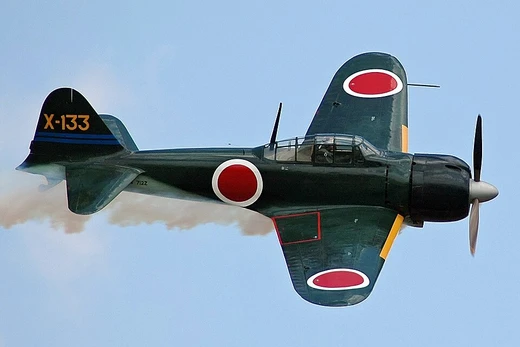
The Supermarine Spitfire, North American P-51 Mustang, Mitsubishi A6M Zero, and Messerschmitt Bf 109 are the four names that surface most often in books, model kits, and fan forums. They represent the major air powers of WWII and remain the default starting subjects for newcomers.
Who are the key figures a newcomer should know?
Designers such as R.J. Mitchell (Spitfire) and the engineering teams behind the P-51 and Zero are central, but aces like Erich Hartmann, Richard Bong, and Jimmy Doolittle are equally prominent in the community. Most fan encyclopedias dedicate sections to both the engineers and the pilots.
Where should a beginner start reading or watching?
A solid entry point is a general aviation-history overview or a documentary series covering the major air campaigns of WWII, followed by aircraft-specific deep dives once a particular model grabs your interest. Model-building forums and flight-simulator communities also serve as welcoming, jargon-light on-ramps.
What era does 'classic' usually cover?
Most fan resources treat the window as roughly 1935 to 1965, spanning the late biplane era, the monoplane dominance of the 1940s, and the first generation of jets like the F-86 Sabre and MiG-15. Anything from the Vietnam War onward is typically filed under 'modern' or 'contemporary' rather than 'classic.'
What distinguishes a 'fighter' from other military aircraft?
A fighter is purpose-built for air-to-air combat, prioritizing speed, maneuverability, and cannon or missile armament over the payload capacity of a bomber or the transport role of a cargo plane. In the classic era the line was cleaner because most fighters carried only light bombs as a secondary role.
What are some of the most-cited dogfights or campaigns?
The Battle of Britain (1940), the P-51's long-range escort missions over Germany, and the Pacific island-hopping air battles around Midway and the Marianas are the three events fans reference most. The Korean War's 'MiG Alley' over the Yalu River is the go-to example for the jet-age transition.
Why do many fans prefer piston-engine fighters over jets?
The propeller-driven era is often called the 'golden age' because the aircraft were mechanically simpler, pilots had more direct tactile control, and the visual profile—open cockpits, radial engines, fabric panels—is instantly recognizable. That said, early jets like the F-86 and the MiG-15 are firmly in the 'classic' canon for most communities.
Are there common misconceptions newcomers should watch out for?
Two big ones: the idea that the Zero was universally outclassed (it was highly effective at range but vulnerable in close turns), and the myth that the Spitfire was the single best fighter of the war (it excelled in the defense of Britain but was outperformed by the Mustang on range and by the Focke-Wulf 190 in some roles). Most serious fan resources encourage nuance over 'best plane' debates.
Where can fans find the most detailed technical data?
National archives in the U.S., U.K., and Germany hold original design drawings, service logs, and test reports. For a more accessible route, manufacturer heritage pages, the International Committee of Aeronautics databases, and well-regarded warbird-registry sites are good starting points.