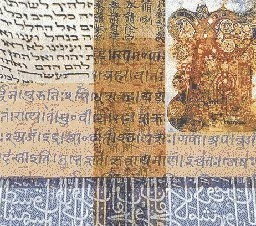
Book of Daniel
Biblical apocalypse set in the 6th century BC, written in the 2nd century BC.
Last updated
The Book of Daniel is a biblical apocalypse set in the 6th century BC but considered by mainstream scholars to have been written in the 2nd century BC.[1] It divides into six court tales in chapters 1–6 and four apocalyptic visions in chapters 7–12, with the Hebrew Bible placing it among the Ketuvim and Christian canons grouping it with the major prophets.[2] The Dead Sea Scrolls community, the writers of the canonical gospels, and the author of the Book of Revelation all engaged with themes present in the Book of Daniel.[3]
Quick Facts
- Field
- Biblical apocalypse; prophetic literature
- Language
- Biblical Aramaic
- Late Biblical Hebrew
- Koine Greek (Septuagint additions)
- Known for
- Court tales and apocalyptic visions
- vaticinium ex eventu
- influence on later religious movements
Facts from the source article.
Key facts and history
Nebuchadnezzar's dream of a statue with a head of gold, silver, bronze, iron, and clay symbolizes four successive kingdoms crushed by God's eternal kingdom.[4] Daniel's companions Shadrach, Meshach, and Abednego survive a fiery furnace after refusing to bow to a golden statue.[4] Belshazzar's feast ends with a mysterious hand writing on the wall, interpreted by Daniel as the kingdom's fall to the Medes and Persians.[5] Daniel survives a night in the lions' den after continuing to pray to God despite a royal edict.[6]
The visions of chapters 7–12 reflect the crisis of 167–164 BC when Antiochus IV Epiphanes threatened Jewish worship in Jerusalem.[7] The book was composed between the desecration of the Temple in 167 BC and Antiochus' death in 164 BC.[8] Porphyry of Tyre in the 3rd century AD is the earliest source to claim Daniel was a later work from the Maccabean period.[9]
What the cited sources add
The Open Library record for "Oxford Handbook of Millennialism" lists its publisher as Oxford University Press and its publication year as 2016.[10] The Open Library record for "The Jewish Study Bible" lists its publisher as Oxford University Press and its publication year as 2014.[11] The Open Library record for "Daniel" lists its publisher as Fortress Press and its publication year as 1993.[12]
References
- Wikipedia, "Book of Daniel" (CC BY-SA 4.0), which cites: Reid 2000, p. 315; Collins 1984, p. 34–36; Brettler 2005, p. 218 (original not read by us) en.wikipedia.org
- Wikipedia, "Book of Daniel" (CC BY-SA 4.0), which cites: Bandstra 2008, p. 445; Collins 2002, p. 2; Cross Livingstone 2005, p. 452; Collins, "Daniel: A Commentary on the Book of Daniel", Fortress Press, 1993, p. 56 (we also read that source) en.wikipedia.org
- Wikipedia, "Book of Daniel" (CC BY-SA 4.0), which cites: Towner 1984, p. 2–3; Tabor, "The Oxford Handbook of Millennialism", Oxford University Press, p. 256; Tabor, "The Oxford Handbook of Millennialism", Oxford University Press, p. 256; Wills, "The Jewish Study Bible", Oxford University Press, 2014, p. 1636 (we also read that source) en.wikipedia.org
- Wikipedia, "Book of Daniel" (CC BY-SA 4.0), which cites: Seow 2003, p. 19–20 (original not read by us) en.wikipedia.org
- Wikipedia, "Book of Daniel" (CC BY-SA 4.0), which cites: Hammer 1976, p. 57–60; Darius the Mede: No such person is known to history (see Levine, 2010, p. 1245, footnote 31). "Darius" is in any case a Persian, not a Median, name. The Persian (original not read by us) en.wikipedia.org
- Wikipedia, "Book of Daniel" (CC BY-SA 4.0), which cites: Levine 2010, p. 1241 (original not read by us) en.wikipedia.org
- Wikipedia, "Book of Daniel" (CC BY-SA 4.0), which cites: Harrington 1999, p. 119–120 (original not read by us) en.wikipedia.org
- Wikipedia, "Book of Daniel" (CC BY-SA 4.0), which cites: Collins 1993, p. 29; Collins 1984, p. 34–36; Redditt 2008, p. 177; Redditt 2008, p. 177; Collins 1984, p. 34–36 (original not read by us) en.wikipedia.org
- Wikipedia, "Book of Daniel" (CC BY-SA 4.0), which cites: Berchman, "Porphyry Against the Christians", Brill, 2005, p. 115; Coşkun, "The Chronology of the Desecration of the Temple and the Prophecies of "Daniel" 7-12 Reconsidered", Historia: Zeitschrift für Alte Geschichte, 2019, p. 436–462 (original not read by us) en.wikipedia.org
- Open Library record, ISBN 9780190611941 ("Oxford Handbook of Millennialism"). CC0 (metadata); book content not read. openlibrary.org
- Open Library record, ISBN 9780199978465 ("The Jewish Study Bible"). CC0 (metadata); book content not read. openlibrary.org
- Open Library record, ISBN 9780800660406 ("Daniel"). CC0 (metadata); book content not read. openlibrary.org
Each numbered sentence above was checked against the source it cites before publication. Sentences citing Wikipedia adapt text from the English Wikipedia article Book of Daniel (contributors), used under CC BY-SA 4.0; this entry is available under the same licence. Other sources were used for facts only; no text or images are copied from them.
More in Christian Sacred Texts
Sources
Compiled from Wikipedia and the sources listed below. Text from Wikipedia is available under CC BY-SA 4.0; this entry is adapted from it.
- Wikipedia: Book of Daniel (CC BY-SA 4.0).
Spotted an error? Know more?
Reader corrections go straight into our review queue. Suggest an edit · How this site is sourced