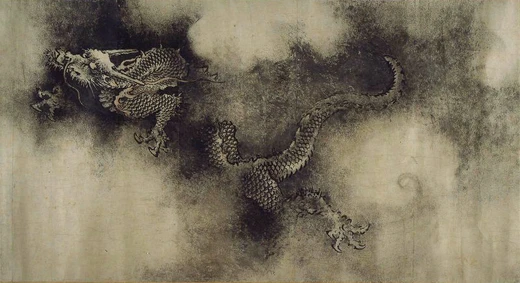
The Foolish Old Man Removes the Mountains
A fable of perseverance inspiring collective action across centuries.
The Foolish Old Man Removes the Mountains is a fable from Chinese mythology that emphasizes perseverance and willpower. It first appeared in the Liezi, a Daoist text from the 4th century BC, and was later retold by the Confucian scholar Liu Xiang. The story was notably invoked by Mao Zedong in a 1945 speech.
Quick Facts
- First appeared
- Book 5 of the Liezi, 4th century BC
- Retold by
- Liu Xiang in the Garden of Stories, 1st century BC
- Mountains mentioned
- Taihang and Wangwu mountains, in Yu Province
- Protagonist age
- 90 years
- Food carried
- Chaoqi
- Used by mao zedong
- Speech at Yan'an, 11 June 1945
Facts from the source article.
Story
A 90-year-old man lived near two mountains, sometimes named as the Taihang and Wangwu in Yu Province. Annoyed by their obstruction, he decided to dig through them using hoes and baskets. He could make only one round trip per year, and sustained himself on Chaoqi. When questioned about the impossibility of the task, he replied that although he might not finish it, his children and their descendants would continue until the mountains were removed. The gods, impressed by his perseverance, ordered the mountains separated.
Mao's speech
In a speech at Yan'an on 11 June 1945, Mao Zedong retold the fable as a call for collective action. He described two mountains weighing on the Chinese people: imperialism and feudalism. The Chinese Communist Party, he said, had resolved to dig them up through unceasing perseverance, and would touch God's heart—the God being the masses of the Chinese people. Academic Cai Xiang notes that Mao's usage illustrates the power of people to reshape their relationship with nature and can be seen as part of a socialist-era environmental philosophy.
The speech was later published as an essay and became required reading for workers during the Third Front campaign. Along with Serve the People and Memory of Norman Bethune, it was one of the Three Constantly Read Articles, included in Quotations from Chairman Mao Zedong, and memorized by schoolchildren during the Cultural Revolution. It is the only text reproduced in full in the Quotations, concluding the section on 'Self-Reliance and Arduous Struggle'.
More in Chinese Mythology
Spotted an error? Know more?
Reader corrections go straight into our review queue. Suggest an edit · How this site is sourced