Frequently Asked Questions
The most-asked questions about chinese fantasy films.
What counts as a 'Chinese fantasy film'?
The umbrella term covers xianxia (immortal-hero) and wuxia (martial-arts) cinema, as well as stories adapted from classical Chinese mythology such as Journey to the West or the Investiture of the Gods. These films typically feature cultivation systems, magical weaponry, and ethereal landscapes set in ancient or mythological China.
Who are the most influential directors in the genre?
Tsui Hark is widely credited with reshaping the visual grammar of wuxia through Iron Monkey (1993) and The Promise (2005), while Zhang Yimou and Chen Kaige brought the genre's aesthetics to international prestige. More recently, the creative teams behind the Journey to the West reboot series and the Ne Zha animated features have kept the genre commercially dominant.
Where should a newcomer start watching?
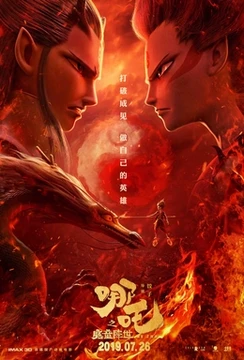
A common suggestion is to open with Crouching Tiger, Hidden Dragon (2000) for its accessible narrative and breathtaking choreography, then follow up with The Promise (2005) for a more mythological tone. Viewers drawn to spectacle often jump straight to the 2019 animated Ne Zha or the 2013 live-action Journey to the West: Conquering the Demons.
What is the difference between xianxia and wuxia on screen?
Wuxia stories center on human martial artists navigating codes of honor and political intrigue, whereas xianxia pushes into the supernatural with flying cultivators, elemental magic, and immortal realms. In practice, most modern Chinese fantasy films blend both traditions, so the boundary is often blurred.
Which Chinese fantasy films have been the biggest box-office hits?
The 2019 animated Ne Zha: Birth of the Demon Child crossed five billion RMB, becoming one of the highest-grossing animated films ever made. On the live-action side, The Promise (2005), The Warlords (2008), and the Journey to the West adaptations have each earned hundreds of millions domestically.
What recurring themes define the genre?
Frequent motifs include the tension between personal desire and cosmic duty, the idea that true power emerges from inner cultivation rather than external force, and the high cost of immortality. Stories also explore loyalty, betrayal, and the friction between mortal and celestial hierarchies.
Which actors are most closely associated with Chinese fantasy cinema?
Tony Leung Chiu-Wai, Zhang Ziyi, and Donnie Yen have become global names through wuxia and xianxia roles spanning the 1990s to the present. In the animated and mythological space, the voice cast behind Ne Zha and the Journey to the West films has built its own dedicated fan following.
How do these films relate to their literary sources?
Many are adapted from classical texts like Journey to the West or the Investiture of the Gods, though filmmakers routinely restructure plots and character arcs for contemporary audiences. The 2019 Ne Zha, for instance, flips the original character's villain role into that of a sympathetic, rebellious protagonist.
What are some landmark moments in the genre's history?
The 1993 release of Iron Monkey is often cited as the spark that launched the modern Chinese fantasy film wave, and Crouching Tiger, Hidden Dragon's 2000 Oscar sweep introduced the style to a global audience. The 2019 Ne Zha's record-breaking domestic run demonstrated that animated fantasy could rival live-action blockbusters at the box office.
How does Chinese fantasy cinema differ from Western fantasy films?
Rather than centering on a single hero's quest against a dark lord, these films often emphasize ensemble dynamics, philosophical combat, and the interplay between mortal and celestial bureaucracies. The visual language leans toward ink-wash aesthetics, wire-fu choreography, and vast mountain landscapes instead of medieval European settings.