
Alcohol (chemistry)
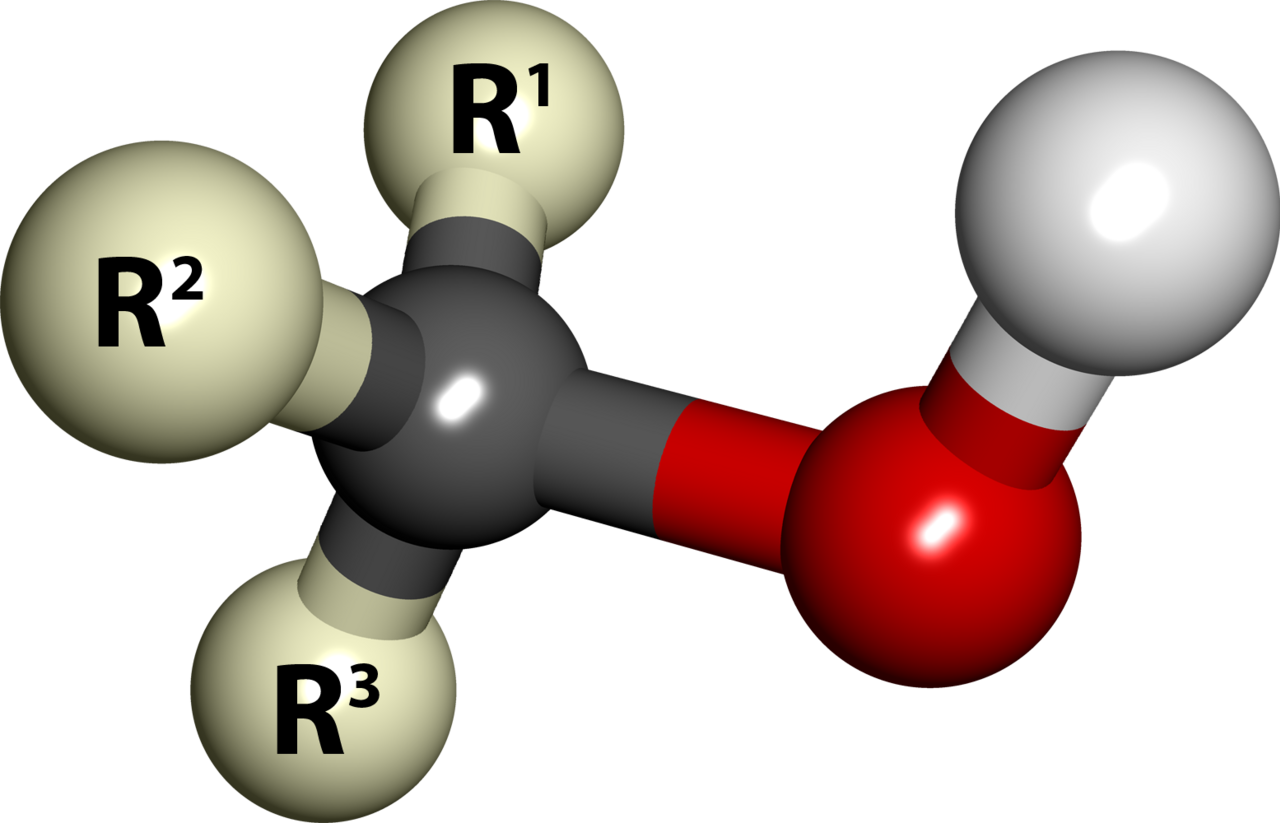
Organic compounds with a hydroxyl group on a saturated carbon atom.
Last updated

Job I · Public domain
Alcohols are a class of organic compounds characterized by the presence of at least one hydroxyl (−OH) functional group bound to a saturated carbon atom. They range from simple substances like methanol and ethanol to complex ones like sugar alcohols and cholesterol, and their properties are strongly modified by the hydroxyl group, which confers hydrophilic characteristics and provides a site for many chemical reactions. The flammable nature of vapors from wine was noted by ancient philosophers such as Aristotle, Theophrastus, and Pliny the Elder, though the isolation of alcohol did not immediately follow. Early distillation techniques in Roman Egypt did not yield alcohol, but a key insight, attributed to the ninth-century scholar Jābir ibn Ḥayyān, was that adding salt to boiling wine increased the volatility of its vapors, enhancing flammability.

The distillation of wine is documented in Arabic works by al-Kindī, al-Fārābī, and al-Zahrāwī. By the twelfth century, Latin texts described producing aqua ardens by distilling wine with salt, and by the late thirteenth century, this substance was widely known among Western European chemists. Taddeo Alderotti later devised a method using repeated fractional distillation through a water-cooled still to achieve alcohol of 90% purity.
Etymology
The medicinal properties of ethanol were studied by Arnald of Villanova and John of Rupescissa, the latter viewing it as a life-preserving aqua vitae capable of preventing all diseases. The term "alcohol" itself derives from the Arabic kohl, a fine powder of antimony trisulfide used as an eyeliner. Its meaning expanded to include any distilled substance before narrowing to ethanol, and in modern chemistry, the class of compounds known as alcohols was formally recognized after 1850. The suffix -ol is used in IUPAC nomenclature for substances where the hydroxyl group is the highest priority functional group, while the prefix hydroxy- is used when a higher priority group is present.
Quick Facts
- Definition
- Organic compound with at least one hydroxyl group on a saturated carbon
- Toxicity note
- Simple alcohols have low acute toxicity; methanol and ethylene glycol are more toxic
Facts from the source article.
Lore & Background
The flammable nature of wine vapors was known to ancient philosophers such as Aristotle, Theophrastus, and Pliny the Elder, but the isolation of alcohol did not immediately follow. An important advance came in ninth-century writings attributed to Jābir ibn Ḥayyān, noting that adding salt to boiling wine enhanced the flammability of the vapors. Distillation of wine is attested in works by al-Kindī, al-Fārābī, and al-Zahrāwī. By the twelfth century, Latin works described producing aqua ardens ('burning water') by distilling wine with salt, and by the late thirteenth century, alcohol was widely known among Western European chemists.
Reader's Guide
The term 'alcohol' originally referred to a fine powder from the sublimation of stibnite, used as an antiseptic and cosmetic. Its meaning later extended to distilled substances in general, then narrowed to ethanol. Alcohols are classified as primary, secondary, or tertiary based on the carbon bearing the hydroxyl group.

They have diverse applications: methanol is used for formaldehyde production and as a fuel additive; ethanol is used in beverages, as a solvent, and for sterilization; higher alcohols serve as plasticizers and detergent precursors. The IUPAC naming system uses the suffix -ol for alcohols, with prefixes like hydroxy- when higher-priority groups are present. Phenols, with the hydroxyl on an aromatic ring, are classified separately.

More in Chemistry Fundamentals
Sources
Compiled from Wikipedia and the sources listed below. Text from Wikipedia is available under CC BY-SA 4.0; this entry is adapted from it.
- Wikipedia: Alcohol (chemistry) (CC BY-SA 4.0).
- Word definitions: the Codexery glossary, each quoted from its Wikipedia article.
Spotted an error? Know more?
Reader corrections go straight into our review queue. Suggest an edit · How this site is sourced