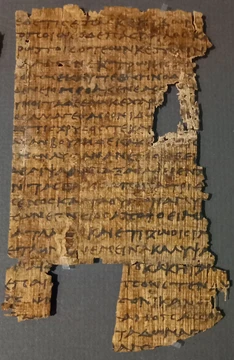
Eileithyia
Greek goddess of childbirth and midwifery, daughter of Zeus and Hera.
Last updated
Eileithyia, also known as Ilithyia, is the Greek goddess of childbirth and midwifery. She is the daughter of Zeus and Hera, and her cult is connected with the chthonic aspect of Poseidon. In Crete, she was associated with the annual birth of the divine child.
Etymology
The earliest attested form of the name is the Mycenaean Greek e-re-u-ti-ja, written in Linear B. Ilithyia is the Latinisation of Εἰλείθυια. The etymology is debated: R. S. P. Beekes suggests a non-Indo-European origin, and Nilsson believed the name is Pre-Greek.
Nineteenth-century scholars derived it from the Greek verb eleutho, meaning 'to bring', making the goddess 'the Bringer'. Walter Burkert considered the name pure Greek, but the prefix ἐλεύθ also appears in pre-Greek toponyms like Eleutherna, so a pre-Greek origin is possible. The name Elysia in Laconia and Messene may relate to Eleusis and the month Eleusinios.
Origins
The goddess shows a clear connection to a preexisting Minoan goddess and an earlier Neolithic concept. To Homer, she is the goddess of childbirth; the Iliad depicts her alone or multiplied as the Eileithyiai. Hesiod described Eileithyia as a daughter of Hera by Zeus, and the Bibliotheca and Diodorus Siculus agreed. A poem in the Greek Anthology also calls her Hera's daughter.
However, Pausanias reported an earlier poet, the Lycian Olen, who styled her as 'the clever spinner' and identified her with the Fates, making her older than Cronus. Pindar likewise makes no mention of Zeus. For the Classical Greeks, she is closely associated with Artemis and Hera but develops no character of her own. In the Orphic Hymn to Prothyraia, Artemis is given an epithet relating to Eileithyia.
In classical Greek art, she is most often depicted assisting childbirth; vase-painters illustrating the birth of Athena from Zeus' head may show two assisting Eileithyiai. A fragment by Callimachus has Eileithyia assist her full-sister Hebe in labour.
Cult
As the primary goddess of childbirth along with Artemis, Eileithyia had numerous shrines in many locations in Greece dating from Neolithic to Roman times. People prayed and left offerings for fertility, safe childbirth, or gave appreciation for a successful birth. Terracotta votive figurines of children found at shrines suggest she was a kourotrophic divinity. Midwives had an essential role in ancient Greek society; more highly educated midwives were called iatrenes.
She was invoked by women in labour to ease pain and further birth. Callimachus recorded a hymn to her. She was strongly connected with Artemis and Hekate, sharing chthonic elements with the latter. Pausanias described a sanctuary in Aigion where her image was covered in drapery, with face, hands, and feet of Pentelic marble; one hand held a torch.
He also noted temples in Boura and Pellene in Achaea, and two sanctuaries in Arcadia: one in Kleitor, where she was worshipped alongside Demeter and Asklepios, and another in Tegea.
More in Characters in the Odyssey
Sources
Compiled from Wikipedia and the sources listed below. Text from Wikipedia is available under CC BY-SA 4.0; this entry is adapted from it.
- Wikipedia: Eileithyia (CC BY-SA 4.0).
Spotted an error? Know more?
Reader corrections go straight into our review queue. Suggest an edit · How this site is sourced