Hugh Capet
Founder of the Capetian dynasty and King of the Franks.

via Wikipedia: Hugh Capet · see source
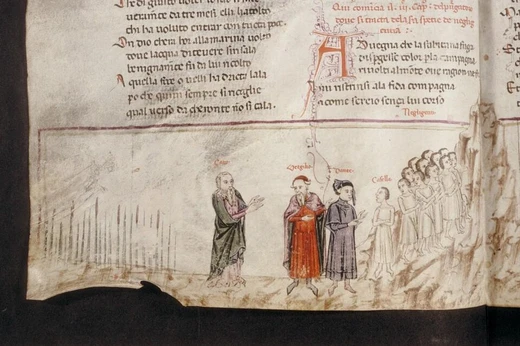
Hugh Capet (c. 941 – 24 October 996) was the King of the Franks from 987 to 996 and the founder of the House of Capet. He was elected as the successor of the last Carolingian king, Louis V, and his dynasty ruled France for nearly nine centuries: from 987 to 1328 in the senior line, and until 1848 via cadet branches (with an interruption from 1792 to 1814 and briefly in 1815). Hugh Capet appears as a character in Dante Alighieri's Divine Comedy, where he is encountered on the fifth terrace of Mount Purgatory.
Quick Facts
- Reign
- 1 June 987 – 24 October 996
- Coronation
- 1 June 987
- Noyon; 3 July 987
- Paris
- Cor type
- France
- Predecessor
- Louis V
- Successor
- Robert II
- Spouse
- Adelaide of Aquitaine (m. 969)
- Issue
- Hedwig, Countess of Mons
- Gisèle, Countess of Ponthieu
- Robert II, King of the Franks
- House
- Robertian dynasty; Capet (founder)
Facts from the source article.
Did You Know?
- Hugh Capet was descended from Charlemagne's son Pepin of Italy through his paternal grandmother Béatrice of Vermandois.
- He was the nephew of Otto the Great, Holy Roman Emperor, through his mother Hedwige of Saxony.
- His son Robert was crowned on 25 December 987, just months after Hugh's own coronation.
Hugh, Duke of the Franks
In 956, Hugh inherited his father's estates, making him one of the most powerful nobles in West Francia, though his mother acted as guardian due to his youth. Neighbors took advantage: Theobald I of Blois, a former vassal, seized Chartres and Châteaudun, while Fulk II of Anjou carved out a principality at Hugh's expense. Royal diplomas of the 960s show nobles loyal to King Lothair as well as to the Duke of the Franks, and some fought against Normandy on Lothair's behalf.
Hugh's position as second man in the kingdom slipped; charters from 968 and 980 refer to Herbert III, Count of Vermandois, bearing the title 'Count of the Franks' and 'count of the palace.' Lothair also lost power with the rise of the Ottonian monarchy, but after Emperor Otto I died in 973, Lothair sought to recover Lorraine. Otto II appointed his cousin Charles, brother of Lothair, as Duke of Lower Lorraine, angering both Lothair and Hugh, whose sister Beatrice was regent for the young Duke Theodoric I of Upper Lorraine. In 978, Hugh supported Lothair in opening a war against Otto.
Reign of Louis V
With the support of Adalberon of Reims, Hugh became the new leader of the kingdom; Gerbert d'Aurillac stated that 'Lothair is king of France in name alone; Hugh is, however, not in name but in effect and deed. In 979, Lothair sought to ensure his succession by associating his eldest son with the throne, and Hugh Capet supported him by summoning the great nobles. The ceremony at Compiègne, with King Lothair, Arnulf, and Archbishop Adalberon present, saw the congregation acclaim Louis V, and the archbishop anointed the new king.
The following year, Lothair reconciled with Emperor Otto II by renouncing Lorraine, but Hugh opposed this, seizing the fortress of Montreuil and then going to Rome to meet the emperor and pope with his confidants. Tension mounted: Lothair married his 15-year-old son Louis to Adelaide of Anjou, then over 40, who brought Auvergne and the county of Toulouse to pincer Robertian territories, but the couple separated after two years. Lothair died in March 986.
Louis V declared he would take Hugh's counsels, but sources are vague on Hugh's role; Louis summoned the archbishop of Reims to Compiègne but died in a hunting accident on 22 May 987.
Hugh elected King of Franks
In May 987, chroniclers wrote that in Senlis 'died the race of Charles,' though a Carolingian claimant remained: Charles, Duke of Lower Lorraine, brother of Lothair and uncle of Louis V, and first cousin of Hugh Capet through their mothers. The Robertians had previously supported Carolingian claims, but by 987 Hugh had openly competed against his king and subjected the great vassals. Charles of Lorraine was accused of wanting to usurp the crown in 978, allying with the emperor against his brother, and defaming Queen Emma.
Archbishop Adalberon convened the lords at Senlis, denounced Charles for not maintaining his dignity, having become a vassal of Otto II and marrying a lower-class noblewoman, and promoted Hugh: 'Crown the Duke. He is most illustrious by his exploits, his nobility, his forces. The throne is not acquired by hereditary right; no one should be raised to it unless distinguished not only for nobility of birth, but for the goodness of his soul.' Hugh was crowned rex Francorum on 1 June in Noyon and again on 3 July 987 in Paris.
He then pushed for the coronation of his son Robert; the archbishop hesitated, but Hugh claimed he planned an expedition against Moorish armies harassing Borrel II, Count of Barcelona, and needed stability. Ralph Glaber attributed Hugh's request to old age and inability to control the nobility, while modern scholarship often imputes a motive of establishing a dynasty. Robert was crowned on 25 December that same year.
Legacy
Hugh Capet died on 24 October 996 and was interred in the Basilica of Saint-Denis; his son Robert continued to reign. Most historians regard the beginnings of modern France as having initiated with Hugh's coronation, as Count of Paris made the city his power centre, beginning a long process of exerting control from there. He is regarded as the founder of the Capetian dynasty; the direct Capetians ruled France from 987 to 1328, and cadet branches continued until 1848.
All French kings through Louis Philippe, and all royals since, have belonged to the dynasty, and cadet branches continue to reign in Spain and Luxembourg. All monarchs from Hugh to Philip II were titled 'King of the Franks'; documents during Philip II's reign began using 'King of France.' Dante Alighieri features Hugh Capet in Purgatorio, where the pilgrim meets him on the fifth terrace among souls doing penance for avarice. Capet acknowledges himself as the 'root of the obnoxious plant that shadows all the Christian lands,' and Dante condemns him as a main source of evil in the French monarchy, likely stemming from the French crown's interference in Florentine politics and Pope Boniface VIII.
More in Characters in the Divine Comedy
Spotted an error? Know more?
Reader corrections go straight into our review queue. Suggest an edit · How this site is sourced