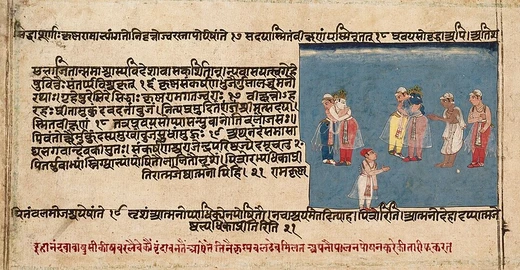
Narakasura
Last updated
Narakasura, also called Naraka, was a mythical asura king and the legendary founder of the Bhauma dynasty of Pragjyotisha. He is considered the progenitor of all three historical dynasties of Kamarupa and is known for being slain by Krishna and Satyabhama.
Literary development of the Narakasura story
Naraka and his kingdom Pragjyotisha appear in the Mahabharata and Ramayana in sections written no earlier than the first century, where he is not depicted as Bhumi's son. The theme of Naraka as the son born from Varaha's contact with Bhumi first appears in Book II of the Harivamsa, assigned to the fifth century. This is expanded in the Vishnu Purana and further in the Bhagavata Purana. The 7th-century Nidhanpur copperplate inscription claims Naraka as the originator of the Varman dynasty, living three thousand years earlier.
Legend
In the Bhagavata Purana, Narakasura's previous birth is described as a king with 16,100 daughters. He later relented, allowing them to become the deity's wives in their next birth; that king became Narakasura, and the 16,000 daughters became the princesses he abducted. Naraka was born to Varaha and Bhumi, but became evil through association with the asura Banasura, gaining the suffix 'asura'.
Drunk with power, he conquered all earthly kingdoms and then attacked Svarga, forcing Indra to flee. He stole Aditi's earrings, usurped her territories, and kidnapped 16,100 women. The devas appealed to Vishnu, who promised to intervene when incarnated as Krishna.
Aditi, a relative of Satyabhama (an avatar of Bhumi), approached Satyabhama for help. Enraged, Satyabhama obtained Krishna's permission to wage war. Krishna also killed Narakasura's general Mura, earning the name Murari.
Did You Know?
- Narakasura requested a boon from Satyabhama that everyone should celebrate his death with colourful lights, leading to Naraka Chaturdashi.
- Narakasura is associated with the shakti goddess and the worship site Kamakhya.
More in Characters in the Bhagavata Purana
Sources
Compiled from Wikipedia and the sources listed below. Text from Wikipedia is available under CC BY-SA 4.0; this entry is adapted from it.
- Wikipedia: Narakasura (CC BY-SA 4.0).
Spotted an error? Know more?
Reader corrections go straight into our review queue. Suggest an edit · How this site is sourced