British big cats
Reported sightings of non-native big cats in the UK.
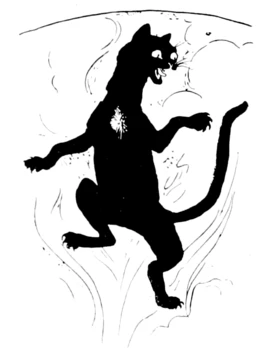
British big cats are a subject of folklore and urban legend in the United Kingdom, involving reported sightings of non-native wild felines such as panthers, pumas, or black cats. These reports have persisted despite a lack of convincing evidence for a breeding population, with experts and the British government rejecting their existence. Folklorists have described the phenomenon as a media artifact driven by journalistic practices in the 1970s and 1980s, where misidentification of domestic cats and media-generated interest encouraged rumour and exaggeration.
Quick Facts
- Earliest recorded sighting
- 1760s
- Notable captured animal
- Eurasian lynx captured in Cricklewood, North London, 2001
- Recent capture
- Two lynx captured near Kingussie
- Scotland
- January 2025
Facts from the source article.
Reported sightings and attacks
A medieval Welsh poem in the Black Book of Carmarthen mentions a Cath Palug, a cat that roamed Anglesey until slain by Cei, and the Welsh Triads describe it as offspring of the monstrous sow Henwen. The New Forest folktale of the Stratford Lyon tells of John de Stratford pulling a giant, red, antlered lion from the ground at South Baddesley in 1400, first recorded in an 18th-century bible; late 20th-century sightings occurred near the Red Lion Pub, Boldre. William Cobbett recalled seeing a cat as big as a middle-sized spaniel dog climb into a hollow elm tree at Waverley Abbey near Farnham in the 1760s, later comparing it to a Canada lynx he saw in New Brunswick. Since the early 2000s, several individuals in different parts of the UK have claimed attacks by supposed big cats, including an eleven-year-old boy in Monmouthshire, a man in southeast London, a 74-year-old woman in the Scottish Highlands, and a man in Cornwall, though no substantive evidence has proven these were non-domestic species. Phantom big cats have formed the basis of local urban legends such as the Beast of Bodmin Moor and the Cotswolds Big Cat, where unexplained livestock deaths were blamed on imagined creatures. Physical evidence, such as a skull from the River Fowey presented for the Beast of Bodmin, was found to have been cut from a leopard skin rug, while predator DNA from the Cotswolds case was only from foxes.
Proven captures and remains
A Canadian lynx shot in Devon in 1903, now in the Bristol Museum, had teeth suggesting significant time in captivity before its death. In 1980, a puma captured in Inverness-shire, Scotland, was placed in the Highland Wildlife Park zoo and named Felicity; the zoo director noted it had been tamed and enjoyed being tickled. Jungle cats have been found dead after being hit by a car on two separate occasions, likely escaped from private ownership. In 1996, police in Fintona, County Tyrone, Northern Ireland, shot a cat reported as a caracal, though a police report described it as a lynx. In a well-reported 2001 case known as the Beast of Barnet, a young female Eurasian lynx was captured alive in Cricklewood, North London, after a chase across school playing fields and into a block of flats; named Lara, it was placed in London Zoo and later transferred to a zoo in France to breed, and was found to be only 18 months old but considerably larger than an average domestic cat. In 2006, the Department for Environment, Food and Rural Affairs published a list of predatory cats typically kept as exotic pets that had escaped in the United Kingdom, though most were recaptured. On 9 January 2025, two lynx were captured near Kingussie, Scotland, after being sighted in the Drumguish area; they were put in quarantine at Highland Wildlife Park with plans to transfer them to Edinburgh Zoo, and are believed to have been illegally released due to their tameness, with bedding found in a nearby layby. The following day, two more lynx were spotted in the same area and believed linked to the first two.
More in Cats in Folklore
Spotted an error? Know more?
Reader corrections go straight into our review queue. Suggest an edit · How this site is sourced