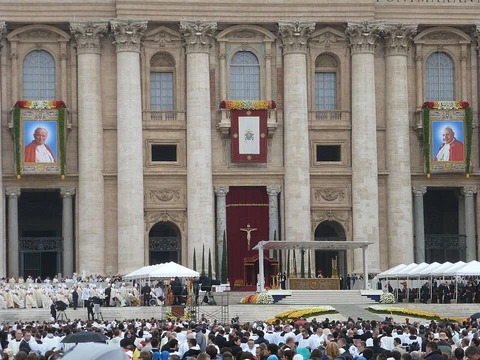
John of Ávila
Spanish priest, preacher, mystic, and Doctor of the Church.

Selbymay · CC BY-SA 3.0 es
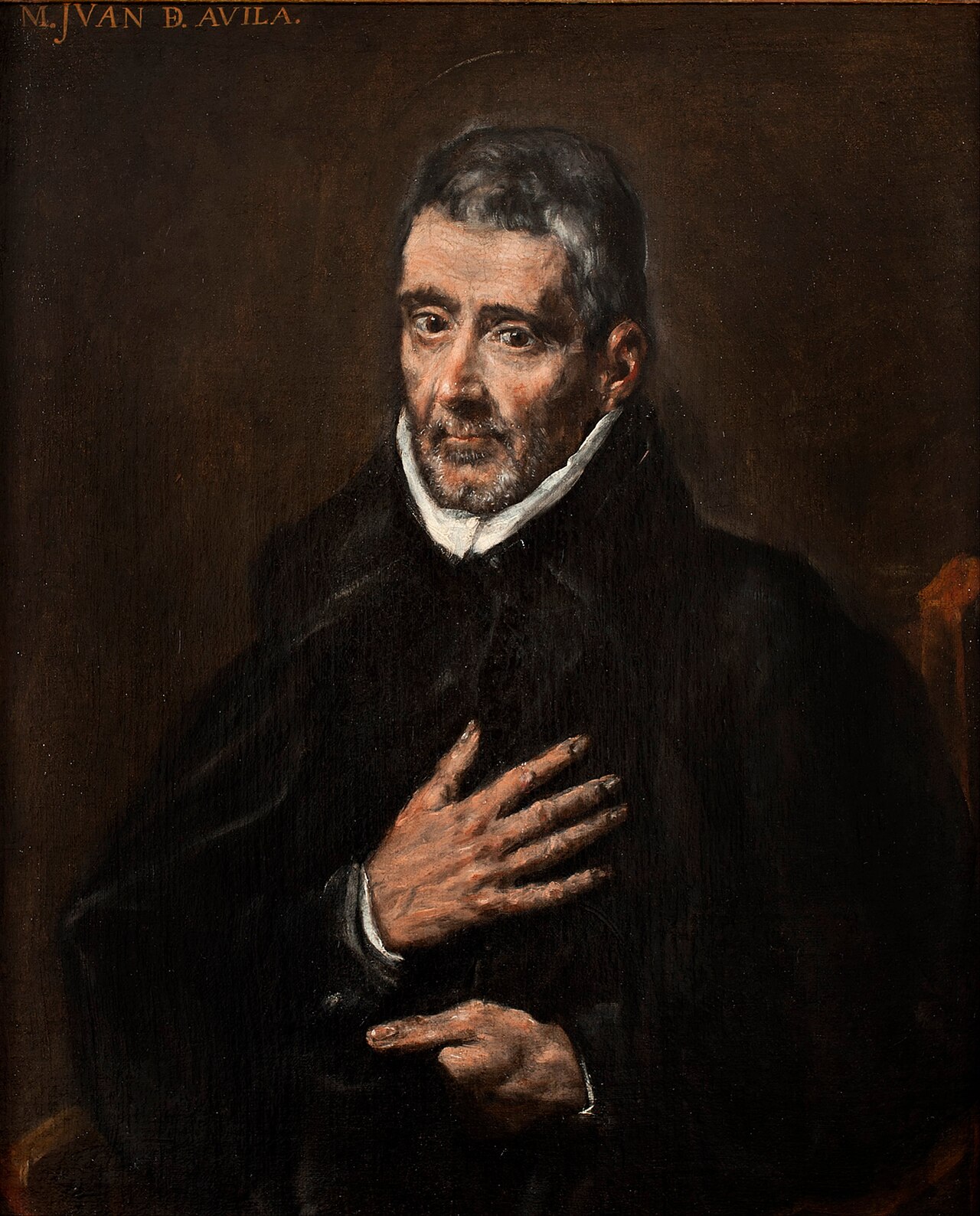
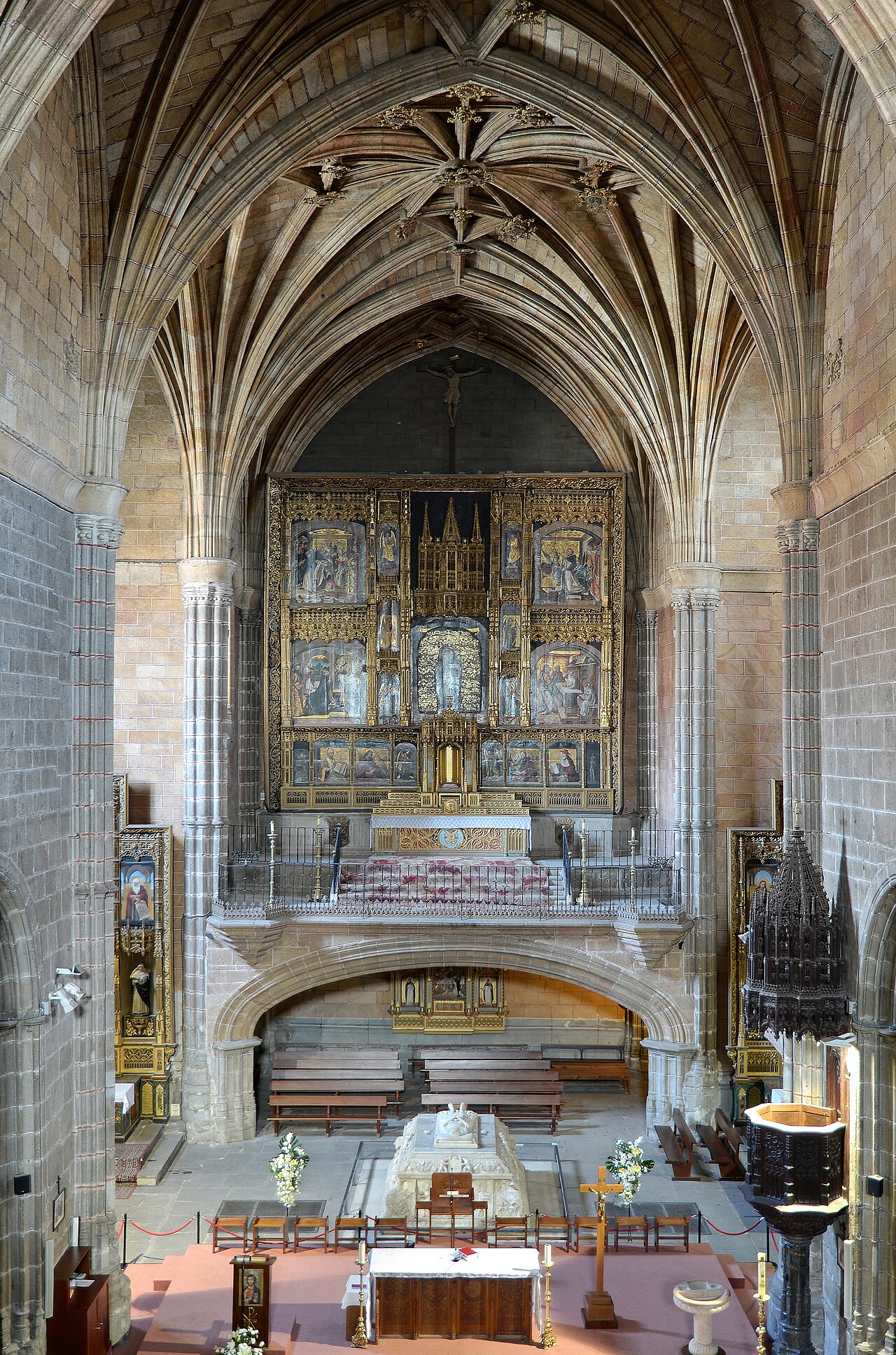
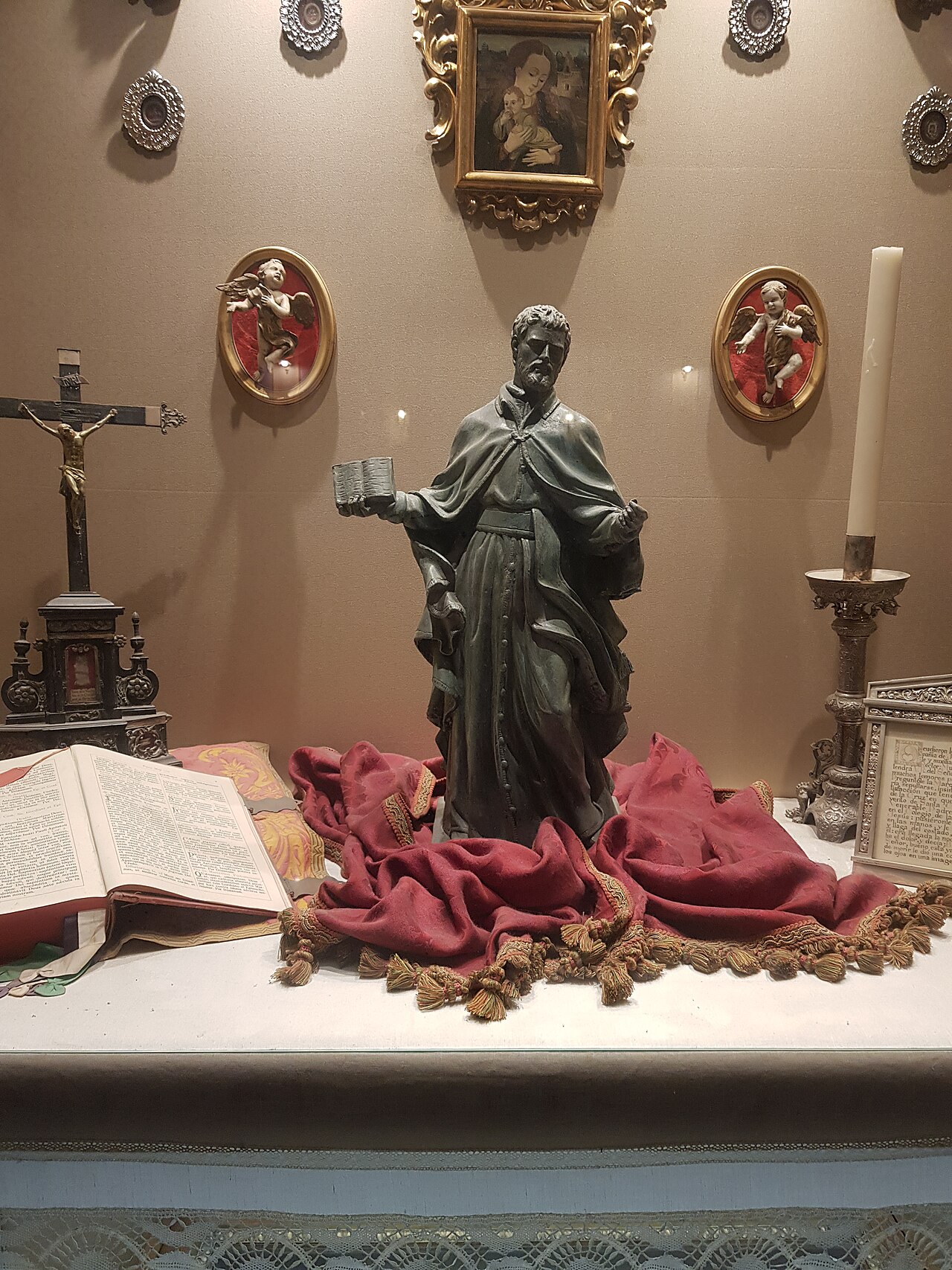
John of Ávila was a Spanish priest, preacher, scholastic author, and religious mystic. Born in Almodóvar del Campo to a wealthy couple of Jewish converso descent, he initially studied law at the University of Salamanca but left without a degree. After a period of austere piety at home, he resumed studies in philosophy and theology at the University of Alcalá de Henares, where his teacher was the Dominican friar Domingo de Soto; he earned a bachelor’s degree but left before completing the licentiate. Following the death of both parents, he was ordained in spring 1526, celebrated his first Mass in the church where they were buried, sold the family property, and gave the proceeds to the poor. He planned to become a missionary in Mexico and traveled to Seville in 1527 to await departure. There, his devotion in celebrating Mass and his skills in catechesis and preaching caught the attention of a local priest, who brought him to the Archbishop of Seville. The archbishop persuaded him to remain in Andalusia instead. John lived in Seville with another priest and disciples, and in 1527 began writing the *Audi, filia* at the request of a disciple’s sister. His first sermon in July 1529 established his reputation, and for nine years he preached across Andalusia to large crowds. His denunciations of aristocratic behavior led to his imprisonment by the Inquisition in 1532; he was declared innocent and released in 1533. He was later incardinated into the Diocese of Córdoba, making that city his base. He helped establish the University of Baeza in 1538, serving as its first rector, and it became a model for seminaries and Jesuit schools. From 1551, poor health forced him into semi-retirement in Montilla, where he died in 1569 and was buried in the Jesuit Church of the Incarnation. His works include two redactions of the *Audi, filia*, 82 sermons, biblical commentaries, 257 letters, and treatises on reform. He corresponded with several future saints, including Ignatius of Loyola, John of God, and Teresa of Ávila.
- field
- Preaching, theology, mysticism
- nationality
- Spanish
- known_for
- Apostle of Andalusia; Doctor of the Church; reformer of clergy; founder of University of Baeza
Lore & Background
John of Ávila was a Spanish priest, preacher, and mystic, known as the “Apostle of Andalusia.” In appearance, he was a cleric of modest bearing, whose intense personal piety and devotion in celebrating Mass drew immediate attention. His defining characteristic was his extraordinary skill in catechesis and preaching; his first sermon in 1529 instantly established his reputation, and for nine years crowds packed churches throughout Andalusia to hear him. His sermons strongly denounced the behavior of the aristocracy and called for reform, which led to his denunciation to the Inquisition in 1531 and a brief imprisonment. He was declared innocent and released in 1533. His range of activity centered on Andalusia, particularly the cities of Córdoba, Granada, Baeza, Montilla, and Zafra, where he preached and established schools and colleges. He served as the first rector of the University of Baeza, founded in 1538, which became a model for seminaries and Jesuit schools. His habitat included a small house in Seville with disciples, later a base in Córdoba, and finally semi-retirement in Montilla, where he died in 1569. He wrote extensively, including the work *Audi, filia*, sermons, biblical commentaries, and 257 letters to prelates and saints such as Ignatius of Loyola and Teresa of Ávila.
Reader's Guide
John of Ávila’s significance stems from his extensive ministry as a preacher and reformer in Andalusia, where he earned the title “Apostle of Andalusia.” His sermons drew large crowds, but his forceful calls for reform and criticism of aristocratic behavior led to his denunciation to the Inquisition in 1531 and imprisonment in 1532; he was declared innocent and released the following year. He established schools and colleges in cities such as Granada, Baeza, Montilla, and Zafra, and served as the first rector of the University of Baeza, founded by papal bull in 1538, which became a model for seminaries and Jesuit institutions. His spiritual writings include the *Audi, filia*, begun in 1527 and expanded until his death, along with sermons, biblical commentaries, and 257 letters. He corresponded with and influenced notable figures including Ignatius of Loyola, John of God, and Teresa of Ávila. Although he initially considered founding a community of apostolic priests, from 1551 onward he encouraged his disciples to join the Jesuits, and around thirty did so. His legacy endures through his role as a clerical reformer, educator, and spiritual guide, and he is recognized as a saint and Doctor of the Church.
Did You Know?
- John of Ávila was of Jewish converso descent through his father.
A Childhood Forged by Faith and Fear
Teresa Sánchez de Cepeda Dávila y Ahumada was born on 28 March 1515, in either Ávila or the nearby village of Gotarrendura. Her family bore a hidden wound: her paternal grandfather, Juan Sánchez de Toledo, had been a converso, a Jew forced to convert under threat of exile. The Inquisition later condemned him for allegedly reverting to Judaism, though he eventually reasserted his Catholic identity. Teresa's father, Alonso, made his fortune in the wool trade and purchased a knighthood, anchoring the family in Ávila's Christian social order. Her mother, Beatriz de Ahumada, raised Teresa in a household of intense personal piety. That devotion surfaced at a startlingly young age: at seven, Teresa and her brother Rodrigo crept out of the house hoping to die as martyrs fighting the Moors, only to be spotted by an uncle at the town walls. Beatriz's death when Teresa was fourteen left the girl grief-stricken, and she turned to the Virgin Mary as a surrogate spiritual mother. In those formative years she also devoured the popular chivalric and horticultural fiction of the day, before her schooling at the Augustinian nuns' convent in Ávila redirected her restless spirit toward something far more demanding.
The Wound That Became a Door
After completing her education, Teresa initially resisted any notion of a religious vocation, but a stay with her uncle and extended relatives gradually softened her resistance. In 1534, at twenty, she entered the Carmelite Convent of the Incarnation in Ávila—a house built on land that had once served as a Jewish burial ground—much to the dismay of her austere, pious father. There she immersed herself in contemplative reading, particularly Osuna's Third Spiritual Alphabet and the meditative treatise of Peter of Alcantara. Her fervent practice of self-mortification soon drove her to the brink of death; she lay ill for nearly a year, terrifying her community and family. She credited her recovery to the intercession of Saint Joseph. In the aftermath, she began experiencing episodes of religious ecstasy, progressing through what she later described as stages from simple recollection to the devotions of silence and finally to ecstatic union with God, often accompanied by what she called the blessing of tears. A Spanish translation of Augustine's Confessions, received around this period, became a lifeline against her bouts of scruple, and she confessed a particular fondness for the saint precisely because he, too, had once been a hardened sinner.
The Seraph and the Golden Lance
By the mid-1550s, Teresa's deepening mystical knowledge had attracted suspicion. Friends whispered that her visions might be diabolical rather than divine, and she responded by subjecting her body to harsher mortifications. Her confessor, the Jesuit Francis Borgia, ultimately reassured her that her interior experiences bore the mark of genuine divine inspiration. The pivotal moment came on St. Peter's Day in 1559, when Teresa became convinced that Christ had presented himself to her in bodily form, though invisible. These visions continued almost without interruption for over two years. Among them was the experience she would call the transverberation: a seraph appeared holding a long golden spear tipped with fire, and he drove its point repeatedly through her heart, piercing her entrails. When he withdrew it, he seemed to carry her innermost self with him, leaving her ablaze with an overwhelming love of God. The pain was so intense that she moaned, yet its sweetness was so surpassing that she could not wish to be freed from it. This single vision would later inspire one of Gian Lorenzo Bernini's most celebrated sculptures, the Ecstasy of Saint Teresa.
A Legacy That Outlived Centuries
Teresa's influence extended far beyond the walls of her convent. Active during the Counter-Reformation, she became the driving force behind a sweeping movement of spiritual and monastic renewal, reforming the Carmelite orders for both women and men. The younger mystic and friar John of the Cross joined her cause, and together they established the Discalced Carmelites, a reform branch formally recognized by papal decree in 1580. Her literary output cemented her authority: The Life of Teresa of Jesus, written partly as a defense of her ecstatic experiences, maps four stages of the soul's ascent from mental prayer through the prayer of quiet, absorption in God, and finally ecstatic consciousness. The Interior Castle, composed as a guide for her Carmelite sisters, organizes the soul's journey through seven mansions. The Way of Perfection further elaborates her vision of the spiritual life. Forty years after her death in 1582, Pope Gregory XV canonized her in 1622. Then, on 27 September 1970, Pope Paul VI proclaimed Teresa the first woman ever named a Doctor of the Church, a recognition of her centuries-long spiritual legacy to Catholicism.
Gallery
Frequently Asked Questions
Why is John of Ávila called the 'Apostle of Andalusia'?
He earned that nickname because he devoted the bulk of his ministry to preaching, teaching, and spiritual renewal across the Andalusian region of Spain. His sustained effort to revitalize faith and clergy there made the title a natural fit.
What did John of Ávila do to reform the clergy?
He concentrated on educating and spiritually renewing priests, insisting that a well-formed clergy was the backbone of the Church's broader renewal. He also helped establish the University of Baeza to train better-prepared ministers.
Why is John of Ávila important in Catholic history?
As a Doctor of the Church and a major voice of the Counter-Reformation, his writings on prayer, mysticism, and pastoral care shaped Catholic spirituality for generations. His insistence on interior devotion and rigorous priestly formation left a lasting imprint on the Church.
More in Catholic Saints & Popes 1-24
Spotted an error? Know more?
This is a living reference — every entry is fact-audited, and reader corrections feed straight into our audit queue. Suggest an edit · See this site's audit record