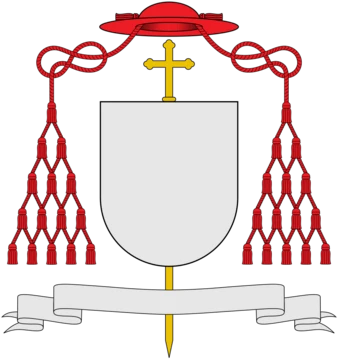
Pope Benedict XVI
Pope emeritus who resigned in 2013 and died in 2022
Last updated

via Wikipedia: Resignation of Pope Benedict XVI · see source
Joseph Alois Ratzinger, who became Pope Benedict XVI, was born on 16 April 1927 in Marktl, Bavaria, and died on 31 December 2022. He led the Catholic Church and ruled Vatican City from 2005 until he stepped down in 2013, after which he used the title "pope emeritus" until his death.
Archbishop of Munich and Freising: 1977–1982
Ordained a priest in Bavaria in 1951, Ratzinger quickly built a reputation as a top theologian, becoming a full professor at age 31 in 1958. After teaching at several German universities, he was made Archbishop of Munich and Freising and a cardinal by Pope Paul VI in 1977—a rapid rise for someone with little pastoral experience and who had been a bishop for less than a month.
Pope emeritus: 2013–2022
In 1981, he took over the Congregation for the Doctrine of the Faith, a key Vatican office, and in 2002 became Dean of the College of Cardinals. For a quarter-century before becoming pope, he was a major force in the Vatican, deeply influencing church priorities as a close advisor to John Paul II. After John Paul II died on 2 April 2005, the conclave elected Ratzinger on 19 April; he chose the name Benedict XVI in honor of Benedict XV and Saint Benedict of Nursia.
Benedict wrote extensively, defending traditional Catholic teachings, values, and liturgy. He started as a liberal theologian but shifted to conservative views after 1968.
Legacy
As pope, he pushed for a return to core Christian values to fight growing secularism in the West, arguing that relativism—especially the denial of objective moral truths—was the 21st century's central problem. He revived older traditions, expanded use of the Tridentine Mass, promoted Latin, and reintroduced classic papal vestments, earning the nickname "the pope of aesthetics." He also set up personal ordinariates for Anglicans and Methodists converting to Catholicism. His handling of sexual abuse cases in the Church and his opposition to condom use in areas with high HIV transmission drew criticism from public health officials, AIDS activists, and victims' groups.
Resignation
Citing his advanced age and health, Benedict resigned on 28 February 2013, the first pope to do so since Gregory XII in 1415 and the first without external pressure since Celestine V in 1294. He retired to the renovated Mater Ecclesiae Monastery in Vatican City.
The 2013 conclave elected Francis as his successor on 13 March. Besides German, he spoke French, Italian, English, and Spanish, and also knew Portuguese, Latin, Biblical Hebrew, and Biblical Greek. He belonged to several social science academies, including the French Académie des Sciences Morales et Politiques.
Ratzinger was born on Holy Saturday, 16 April 1927, at 8:30 a.m. in his family home in Marktl, and was baptized that same day. He was the youngest of three children of Joseph Ratzinger Sr., a police officer, and Maria Ratzinger; his grand-uncle was the priest-politician Georg Ratzinger.
His mother's family came from South Tyrol. His older brother, Georg, became a priest and directed the Regensburger Domspatzen choir. His sister, Maria, never married and ran his household until her death in 1991.
At age five, Ratzinger was among children greeting Cardinal Michael von Faulhaber with flowers; impressed by the cardinal's robes, he declared he wanted to be a cardinal. He attended elementary school in Aschau am Inn (renamed after him in 2009) and, at 12, entered a minor seminary in Traunstein in 1939. The seminary closed for military use in 1942, and he returned home.
Ratzinger's family, especially his father, strongly opposed the Nazis, leading to demotions and harassment. After turning 14 in 1941, he was forced into the Hitler Youth by law but was an unenthusiastic member who skipped meetings. That same year, a 14-year-old cousin with Down syndrome was taken and murdered in the Nazi eugenics program. In 1943, while still in seminary, he was drafted into the anti-aircraft corps and later trained as an infantryman.
In 1945, as Allied forces neared, he deserted to his family home in Traunstein after his unit dissolved. American troops set up headquarters in the Ratzinger home. As a German soldier, he was held in US prisoner-of-war camps, first in Neu-Ulm, then at Bad Aibling, where he was on Victory in Europe Day, and was released on 19 June 1945.
Ratzinger and his brother Georg entered Saint Michael Seminary in Traunstein in November 1945, later studying at the Ducal Georgianum in Munich.
Lore & Background
Ordained as a priest in 1951 in Bavaria, Ratzinger embarked on an academic career and established himself as a highly regarded theologian by the late 1950s. He was appointed a full professor in 1958 when aged 31. After a long career as a professor of theology at several German universities, he was appointed Archbishop of Munich and Freising and created a cardinal by Pope Paul VI in 1977. In 1981, he was appointed Prefect of the Congregation for the Doctrine of the Faith.
In 2002, he also became Dean of the College of Cardinals. Following the death of John Paul II on 2 April 2005, a conclave elected Ratzinger as his successor on 19 April; he chose Benedict XVI as his papal name. Benedict's writings were prolific and generally defended traditional Catholic doctrine, values, and liturgy.
He was originally a liberal theologian but adopted conservative views after 1968. During his papacy, Benedict advocated a return to fundamental Christian values. He viewed relativism's denial of objective truth as the central problem of the 21st century. Benedict also revived several traditions and permitted greater use of the Tridentine Mass.
He strengthened the relationship between the Catholic Church and art, promoted the use of Latin, and reintroduced traditional papal vestments. He also established personal ordinariates for former Anglicans and Methodists joining the Catholic Church. Citing health reasons due to his advanced age, Benedict resigned as pope on 28 February 2013.
He became the first pope to resign from office since Gregory XII in 1415, and the first without external pressure since Celestine V in 1294. He subsequently moved into the newly renovated Mater Ecclesiae Monastery in Vatican City for his retirement. In addition to his native German language, Benedict had proficiency in French, Italian, English, and Spanish. He also knew Portuguese, Latin, Biblical Hebrew, and Biblical Greek.
Reader's Guide
Joseph Alois Ratzinger was born on 16 April 1927 at Schulstraße 11 at 8:30 in the morning in his parents' home in Marktl, Bavaria, Germany. He was baptised the same day. He was the third and youngest child of Joseph Ratzinger Sr., a police officer, and Maria Ratzinger. His elder brother, Georg, became a Catholic priest.
His sister, Maria, managed her brother Joseph's household until she died in 1991. Aged five, Ratzinger was in a group of children who welcomed the visiting Cardinal Archbishop of Munich, Michael von Faulhaber, with flowers. He attended the elementary school in Aschau am Inn.
Wartime and ordination
In 1939, aged 12, he enrolled in a minor seminary in Traunstein. This period lasted until the seminary was closed for military use in 1942. Following his 14th birthday in 1941, Ratzinger was conscripted into the Hitler Youth—as membership was required by law for all 14-year-old German boys after March 1939—but was an unenthusiastic member, according to his brother. In 1941, one of Ratzinger's cousins, a 14-year-old boy with Down syndrome, was taken away by the Nazi regime and murdered during the Aktion T4 campaign.
In 1943, while still in seminary, he was drafted into the German anti-aircraft corps as Luftwaffenhelfer. Ratzinger then trained in the German infantry. As the Allied front drew closer to his post in 1945, he deserted back to his family's home in Traunstein after his unit had ceased to exist. As a German soldier, he was interned in US prisoner of war camps and released on 19 June 1945.
Ratzinger and his brother Georg entered Saint Michael Seminary in Traunstein in November 1945, later studying at the Ducal Georgianum of the Ludwig-Maximilians-Universität München. They were both ordained in Freising on 29 June 1951 by Cardinal Michael von Faulhaber of Munich. Ratzinger's 1953 dissertation, earning him a Doctor of Theology degree from the Ludwig-Maximilians-Universität München, was on Augustine of Hippo.
Encounter with Romano Guardini
His habilitation was on Bonaventure, completed in 1957, and he became a professor at Freising College in 1958. From 1946 to 1951, he pursued studies in philosophy and theology at the Ludwig-Maximilians-Universität München and at the Philosophisch-Theologische Hochschule in Freising. During this time, Ratzinger was deeply influenced by the ideas of Italian-German philosopher Romano Guardini. Ratzinger began as assistant pastor at the parish St.
Frequently Asked Questions
Who is Pope Benedict XVI?
Benedict XVI, born Joseph Alois Ratzinger on 16 April 1927, served as head of the Catholic Church and sovereign of Vatican City from 2005 to 2013. He was a German philosopher and theologian who held the papal throne for roughly eight years before stepping down.
What is Pope Benedict XVI known for?
As pope, he held supreme authority over the worldwide Catholic Church, acting as its spiritual leader and the sovereign head of the Vatican City State. In that capacity he could issue encyclicals, appoint cardinals, and set doctrinal direction for over a billion Catholics.
What is Pope Benedict XVI best known for?
He is widely recognized as a leading 20th- and early-21st-century theologian who consistently defended traditional Catholic teaching against modernist reinterpretations. His papacy is also remembered for the landmark act of a pope choosing to resign rather than serve until death.
Also in the Codexery
More in Catholic Popes & Cardinals
Related in Catholic Popes & Cardinals
Links follow this subject's own source article.
Sources
Compiled from Wikipedia and the sources listed below. Text from Wikipedia is available under CC BY-SA 4.0; this entry is adapted from it.
- Wikipedia: Pope Benedict XVI (CC BY-SA 4.0).
Spotted an error? Know more?
Reader corrections go straight into our review queue. Suggest an edit · How this site is sourced