A Night at the Opera (Blind Guardian album)
Blind Guardian's seventh album, named after a Queen album.
Last updated
A Night at the Opera is the seventh studio album by the German power metal band Blind Guardian, released in 2002. Its title references the 1975 Queen album of the same name, which itself takes its name from the Marx brothers film. The album marks a stylistic shift from power metal toward a more progressive sound, featuring layered vocals, choirs, and orchestral elements, a change that led drummer Thomen Stauch to leave the group due to dissatisfaction with the direction.
Track listing
| No. | Title | Writer(s) | Length |
|---|---|---|---|
| 1 | Precious Jerusalem | 6:22 | |
| 2 | Battlefield | Olbrich • Kürsch • Thomen Stauch | 5:37 |
| 3 | Under the Ice | 5:44 | |
| 4 | Sadly Sings Destiny | 6:04 | |
| 5 | The Maiden and the Minstrel Knight | 5:30 | |
| 6 | Wait for an Answer | 6:30 | |
| 7 | The Soulforged | Olbrich • Kürsch • Stauch | 5:18 |
| 8 | Age of False Innocence | 6:05 | |
| 9 | Punishment Divine | 5:45 | |
| 10 | And Then There Was Silence | 14:06 |
Track listing from the source article.
Lyrical references
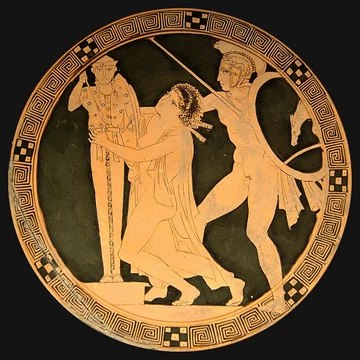
Blind Guardian's album revisits their signature blend of historical warfare and religious imagery. "Precious Jerusalem" depicts Jesus Christ's desert temptation and his final days. The old German epic "Song of Hildebrandt," where a father and son are forced into a lethal duel, provides the foundation for "Battlefield." Cassandra's fate after the Trojan War, drawn from "The Oresteia," is the focus of "Under the Ice."
"Sadly Sings Destiny" takes the perspective of an unwilling participant in the Old Testament messianic prophecies, who builds the True Cross and weaves the Crown of Thorns. "The Maiden and the Minstrel Knight" adapts a scene from the "Tristan und Isolde" legend. Nazi propaganda machinery is allegorically critiqued in "Wait for an Answer." The mage Raistlin Majere from the Dragonlance saga inspires "The Soulforged."
Galileo Galilei's story is told in "Age of False Innocence." "Punishment Divine" follows Friedrich Nietzsche's descent into madness, where he envisions a saintly court judging him. Finally, "And Then There Was Silence" centers on Cassandra's prophecies of the Trojan War, drawing from Homer's "Iliad" and "Odyssey," as well as Virgil's "Aeneid."
Did You Know?
- There are six different studio versions and two official live versions of "Harvest of Sorrow".
- Versions of "Harvest of Sorrow" exist in English, Spanish ("Mies Del Dolor", "La Cosecha Del Dolor"), Italian ("Frutto Del Buio"), and French ("Moisson de Peine").
- The song "Battlefield" is featured as the music in the heavy metal edition of the Adult Swim game Robot Unicorn Attack.
Frequently Asked Questions
When was A Night at the Opera (Blind Guardian album) released?
A Night at the Opera was released on 25 March 2002.
Which label released A Night at the Opera (Blind Guardian album)?
A Night at the Opera was released by Virgin/Century Media.
Who produced A Night at the Opera (Blind Guardian album)?
A Night at the Opera was produced by Charlie Bauerfeind.
How long is A Night at the Opera (Blind Guardian album)?
A Night at the Opera runs 67:01.
More in Cassandra
Sources
Compiled from Wikipedia and the sources listed below. Text from Wikipedia is available under CC BY-SA 4.0; this entry is adapted from it.
- Wikipedia: A Night at the Opera (Blind Guardian album) (CC BY-SA 4.0).
Spotted an error? Know more?
Reader corrections go straight into our review queue. Suggest an edit · How this site is sourced