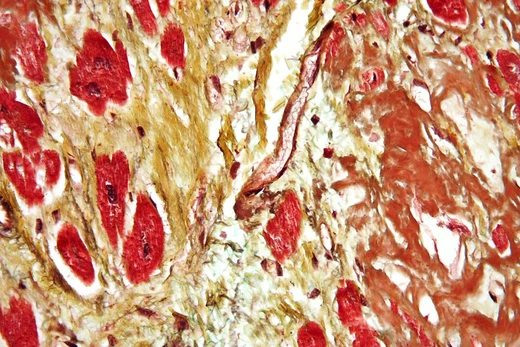
Cardiovascular disease
Cardiovascular disease is the top global killer, largely preventable.

Cardiovascular disease (CVD) refers to any disorder affecting the heart or blood vessels. This broad category includes conditions such as coronary artery disease (manifesting as angina or heart attack), heart failure, hypertensive heart disease, rheumatic heart disease, cardiomyopathy, arrhythmia, congenital heart disease, valvular heart disease, carditis, aortic aneurysms, peripheral artery disease, thromboembolic disease, and venous thrombosis. The underlying mechanisms differ by condition; for instance, atherosclerosis—a buildup of plaques in arteries—underlies coronary artery disease, stroke, and peripheral artery disease. This process can be driven by factors like high blood pressure, smoking, diabetes, lack of exercise, obesity, high cholesterol, poor diet, excessive alcohol, and inadequate sleep. Dietary risks alone are linked to roughly 53% of CVD deaths, while high blood pressure accounts for about 13%, tobacco for 9%, and diabetes and lack of exercise each for 6%. Rheumatic heart disease, in contrast, can follow untreated strep throat. Up to 90% of CVD may be preventable through lifestyle changes such as healthy eating, regular exercise, avoiding tobacco, and limiting alcohol. Treating risk factors like high blood pressure, abnormal blood lipids, and diabetes also helps, as does antibiotic treatment for strep throat to prevent rheumatic heart disease. CVD is the leading cause of death globally except in Africa, causing 17.9 million deaths (32.1%) in 2015, up from 12.3 million (25.8%) in 1990. Death rates at a given age have declined in most developed nations since the 1970s but have risen in much of the developing world. Coronary artery disease and stroke together cause 80% of CVD deaths in men and 75% in women. Most CVD affects older adults; in high-income countries, the average age at first diagnosis is about 70 (73 for women, 68 for men), while the average age of death from coronary artery disease is around 80 in developed regions versus 68 in developing ones. Men are about 50% more likely than women to develop CVD at the same age and are typically diagnosed seven to ten years earlier.
- field
- Medicine (Cardiology)
- known_for
- Leading cause of death globally; up to 90% preventable; 53% of deaths linked to dietary risk factors
- deaths_2015
- 17.9 million (32.1% of all deaths)
- deaths_1990
- 12.3 million (25.8% of all deaths)
- preventable_estimate
- Up to 90%
- age_risk
- Risk triples with each decade of life; 82% of coronary heart disease deaths are age 65+
Lore & Background
Cardiovascular disease includes a wide range of conditions affecting the heart and blood vessels, such as coronary artery disease, stroke, heart failure, and rheumatic heart disease. The underlying mechanisms differ; for example, atherosclerosis—caused by high blood pressure, smoking, diabetes, lack of exercise, obesity, high cholesterol, poor diet, excessive alcohol, and poor sleep—underlies coronary artery disease, stroke, and peripheral artery disease. Rheumatic heart disease may follow untreated strep throat. High blood pressure accounts for about 13% of CVD deaths, tobacco for 9%, diabetes and lack of exercise for 6% each, and obesity for 5%.
Reader's Guide
Cardiovascular disease is the leading cause of death worldwide except Africa, with 17.9 million deaths in 2015. Its significance lies in its high preventability—up to 90%—through improving risk factors like healthy eating, exercise, avoiding tobacco, and limiting alcohol. Treating high blood pressure, blood lipids, and diabetes, as well as using antibiotics for strep throat, can reduce risk. The disease disproportionately affects older adults, with mean age at first diagnosis around 70 in high-income countries, and men are about 50% more likely to develop CVD than women at the same age. Coronary artery disease and stroke account for 80% of CVD deaths in males and 75% in females. While rates have declined in most developed countries since the 1970s, deaths at a given age have increased in much of the developing world. The legacy of CVD research emphasizes modifiable risk factors and the importance of prevention, though the benefit of aspirin in healthy people remains unclear.
Did You Know?
- Dietary risk factors are associated with 53% of CVD deaths.
- High blood pressure accounts for approximately 13% of CVD deaths.
- Men are about 50% more likely to develop CVD than women at the same age.
- Rheumatic heart disease may follow untreated strep throat.
More in Cardiovascular & Blood 1-24
Spotted an error? Know more?
This is a living reference — every entry is fact-audited, and reader corrections feed straight into our audit queue. Suggest an edit · See this site's audit record