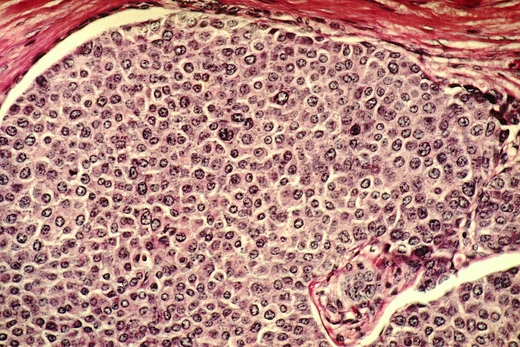
NCI-60
A panel of 60 human cancer cell lines for drug screening.
The NCI-60 is a panel of 60 human cancer cell lines used by the National Cancer Institute for screening compounds to detect potential anticancer activity. It is notable for its role in the NCI-60 Human Tumor Cell Lines Screen, a service of the Developmental Therapeutics Program. The panel's diversity allows comparison of tested compounds by their effect patterns.
Quick Facts
- Number of cell lines
- 60
- Date of database figures
- 2017 01 06
Facts from the source article.
Did You Know?
- The panel holds cell lines representing leukemia, melanoma, non-small-cell lung carcinoma, and cancers of the brain, ovary, breast, colon, kidney, and prostate.
- All cell lines but one (as of 2017 01 06) are available to other laboratories, including the additional cell lines.
Purpose
The screening procedure rates each cell line for cytostatic and cytotoxic impact of tested substances. Because the cell lines are diverse, compounds can be compared by their effect patterns, with high correlation potentially indicating similar mechanisms. The COMPARE tool provides automated comparison against a database of over 88,000 pure compounds and over 34,000 crude extracts, ranking substances by Pearson correlation coefficients. The same panel is used in the Molecular Target Program to characterize molecular targets through protein levels, RNA measurements, mutation status, and enzyme activity levels.
Misidentification and Misclassification
Starting around the turn of the millennium, several cell lines were found to be misidentified or misclassified. MDA-MB-435, originally classified as breast cancer, was identified as a melanoma cell line; further investigation showed it derived from the same individual as cell line M14, with the mixup occurring very early in its history. NCI/ADR-RES, originally classified as breast cancer, was identified as an ovarian tumor cell line and appears to have been derived from OVCAR-8; it was renamed from MCF-7/ADR-RES.
Two brain cancer lines, SNB-19 and U251, were discovered to come from the same person, making a mixup likely. A 61st cell line, MDA-N, was confirmed to be derived from the misclassified MDA-MB-435, so it is also a melanoma line, though the official website still lists it as breast cancer as of 2018 01 06; this cell line is not available as of that date. The International Cell Line Authentication Committee maintains a list of contaminated cell lines, including those reported above, though reporting dates are often later than the first concerns.
As of 2014, hundreds of research studies still used MDA-MB-435 as a model of breast cancer, even after its official reclassification in 2007, and similar issues persist for other misidentified lines.
More in Cancer Cell Lines
Spotted an error? Know more?
Reader corrections go straight into our review queue. Suggest an edit · How this site is sourced