All Our Wrong Todays
A time-travel novel about a man from a utopia stranded in our reality.

All Our Wrong Todays, a science fiction novel published in 2017, is the debut work of Canadian screenwriter Elan Mastai. It was first released in February 2017 in the United States by Dutton, in Canada by Doubleday Canada, and in the United Kingdom the following month by Michael Joseph. The story follows a man who originates from a utopian alternate reality and becomes trapped in our own world following a mishap with time travel.
The book received nominations for the 2018 Sidewise Award for Alternate History and the 2018 Sunburst Award for Canadian Literature of the Fantastic, and was longlisted for the 2019 CBC Canada Reads competition. It has been translated into 24 languages, including French by Jean Bonnefoy as *Tous nos contretemps* (published by Bragelonne in September 2017) and German by Rainer Schmidt as *Die beste meiner Welten* (published by Goldmann in April 2018). The French translation won the 2018 Prix Bob Morane for Best Foreign Novel.
Mastai began writing at age 26 after his mother’s death. He credited her with motivating him to make the most of his time and stop creating barriers to his goals, saying, “I started writing because of that. I started going from wanting to be a writer to actually writing.” After a decade writing screenplays in Hollywood—including *Alone in the Dark*, *The Samaritan*, and *The F Word* (also released as *What If*)—he started a story about a man stuck in an alternate reality. He realized it was a novel, not a screenplay, and saw it as a new challenge and a chance to write about his mother. “I had never really written too much about that experience of losing my mom. I didn’t want to write some sort of grim and depressing memoir about it either … So on one level I was writing about my mother’s death, but I used time machines … to do it.” Writing the novel also allowed him to break free from screenplay limitations and experiment.
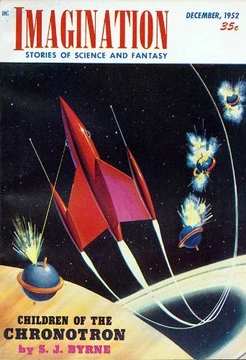
Some ideas came from Mastai’s grandfather, who owned a large collection of 1950s and 1960s science fiction magazines with “wild, weird stories and … garishly painted covers of robots and rocket ships, mad scientists and nifty technology.” As a child, Mastai wondered why that imagined future never happened. Years later, the premise struck him: what if that future did happen, but the protagonist, Tom Barren, traveled back in time and erased it?
Quick Facts
- Author
- Elan Mastai
- Country
- United States / Canada
- Language
- English
- Genre
- Science fiction
- Publisher
- Dutton (US) / Doubleday Canada (CA)
- Pub Date
- February 7, 2017
- Media Type
- Hardback
- Pages
- 373 (US) / 384 (CA)
- Award
- Prix Bob Morane · fr
- Isbn
- 978-1-101-98513-7
- Isbn Note
- (US) / 978-0-385-68684-6 (CA)
Facts from the source article.
Lore & Background
Mastai started writing at 26 after his mother died, who motivated him to make the most of his time. He worked in Hollywood for a decade writing screenplays for films including Alone in the Dark, The Samaritan, and The F Word (also released as What If). He then began a story about a man stuck in an alternate reality, realizing it was a novel, not a screenplay. Mastai saw this as a chance to write about his mother's death using time machines. Some ideas came from his grandfather's collection of 1950s and 1960s science fiction magazines, which made Mastai wonder why that imagined future never happened. The premise occurred to him: what if that future did happen, but the protagonist traveled back in time and wiped it out? He started writing in July 2014, secured a $1.25 million book deal with Dutton in 2015, and finished in May 2016.
Reader's Guide
All Our Wrong Todays gained attention as a debut novel that uses time travel to explore alternate realities and personal loss. It was nominated for the 2018 Sidewise Award for Alternate History and the 2018 Sunburst Award for Canadian Literature of the Fantastic, and longlisted for the 2019 Canada Reads competition. The book has been translated into 24 languages, with the French translation winning the 2018 Prix Bob Morane for Best Foreign Novel. Critical reception noted its playful handling of science fiction tropes, with Paul Di Filippo comparing it to Kurt Vonnegut and classics like Heinlein's By His Bootstraps. Kayti Burt called it a fun, thought-provoking ride with an unusual memoir structure, while Keith Donohue described it as a dazzling, complex novel. August C. Bourré found it clever but felt some philosophizing hindered its potential. A month after publication, Paramount Pictures and Amy Pascal secured screen rights for $1.25 million, and in January 2021, Peacock announced a TV series adaptation with Seth MacFarlane and Pascal producing, with Mastai writing the script.
Did You Know?
- The novel was Mastai's debut, published in February 2017 in the US and Canada, and March 2017 in the UK.
- The French translation, Tous nos contretemps, won the 2018 Prix Bob Morane for Best Foreign Novel.
- A month after publication, Paramount Pictures and Amy Pascal bought the screen rights for $1.25 million.
Origins and the Drive to Write
Elan Mastai did not set out to become a novelist. For a decade he worked in the Hollywood film industry, penning screenplays for projects including Alone in the Dark, The Samaritan, and The F Word. It was only at twenty-six, after the death of his mother, that he shifted from wanting to be a writer to actually writing. He credited her with pushing him to stop building barriers around his ambitions and to use his remaining time boldly. The story he began in July 2014 was, in part, a way to process that loss without producing what he called a grim, depressing memoir; instead he wrapped his grief inside a time-travel framework. Another seed came from his grandfather, whose shelves held a trove of 1950s and 1960s science-fiction magazines with garish covers of robots, rocket ships, and mad scientists. As a child, Mastai had always wondered why the dazzling futures those pages promised never materialized. That question ultimately became the engine of his novel. He secured a $1.25 million deal with Dutton in 2015 and finished the manuscript in May 2016.
The Premise: A Utopia Erased
The novel's central conceit is deceptively simple: a man from a utopian alternate timeline accidentally destroys it. In Tom Barren's world, Lionel Goettreider's 1965 invention of the Goettreider Engine granted humanity unlimited free energy, producing a 2016 of jet packs, hovercars, and active space colonization. Tom's domineering father, Victor, builds a time machine and selects the ambitious Penelope Weschler as the first chrononaut, with Tom as her understudy. A romantic entanglement between Tom and Penelope—ending in an unplanned pregnancy—disqualifies her, Victor scraps the experiment, and Penelope takes her own life. Grief-stricken, Tom hijacks the machine and travels to 1965 to witness Lionel activate the Engine. His cloaking device fails, he materializes in Lionel's room, and the startled inventor switches the Engine off. That single gesture erases the utopian timeline. Tom wakes as John, a successful architect in our technologically modest 2016, where his mother is alive, his father is gentle, and he has a sister. He falls for Penny, a quiet bookstore owner, and must track down the reclusive Lionel in Hong Kong, who has secretly reactivated the Engine and built his own time machine to send Tom back and fix the mistake.
Critical Reception and Literary Comparisons
Critics responded to the novel with enthusiasm, frequently drawing comparisons to established literary and science-fiction voices. In Locus magazine, Paul Di Filippo hailed it as a great and exceptional find, praising Mastai's playful fluency with the genre and noting that the book makes not a single misstep with its speculations or language. Di Filippo singled out the protagonist's early admiration of Kurt Vonnegut, arguing the novel's punchy, demotic, self-denigrating prose and its fascination with human self-sabotage make it pure Vonnegut. He also placed its elaborate paradoxes and causal loops in the company of classics like Heinlein's By His Bootstraps. Kayti Burt, writing for Den of Geek, called it a fun, fast-paced, thought-provoking ride and highlighted its unusual structure: a science-fiction novel rendered as a memoir, giving it a literary texture she felt was closer to Niffenegger's The Time Traveler's Wife than to Wells's Time Machine. She also appreciated the unreliable, often unlikable narrator. American novelist Keith Donohue, reviewing in The Washington Post, described the book as a dazzling and complex novel.
Awards, Translations, and Global Reach
The novel's reception extended well beyond initial reviews. It earned nominations for both the 2018 Sidewise Award for Alternate History and the 2018 Sunburst Award for Canadian Literature of the Fantastic, and it was longlisted for the 2019 edition of the Canadian Broadcasting Corporation's Canada Reads competition. Its international footprint grew quickly: the book has been translated into twenty-four languages. The French edition, rendered by Jean Bonnefoy under the title Tous nos contretemps and published by Bragelonne in September 2017, went on to win the 2018 Prix Bob Morane for Best Foreign Novel. The German translation by Rainer Schmidt, titled Die beste meiner Welten, appeared through Goldmann in April 2018. The original English editions launched in February 2017 with Dutton in the United States and Doubleday Canada in Canada, followed by a March 2017 UK release through Michael Joseph. For a debut novel from a former screenwriter, that constellation of nominations, a major international prize, and two dozen language editions speaks to the story's broad, cross-cultural resonance.
Frequently Asked Questions
Who wrote All Our Wrong Todays and when was it published?
Elan Mastai, a Canadian screenwriter, penned this debut novel, which hit shelves in February 2017 through Dutton in the US and Doubleday Canada, with the UK edition following in March via Michael Joseph.
What is the basic premise of All Our Wrong Todays?
The story centres on a man from a utopian alternate timeline who, after a time-travel mishap, finds himself stranded in our less-perfect version of reality and must navigate a world where everything he took for granted has gone wrong.
How does All Our Wrong Todays end?
The protagonist ultimately chooses to stay in our flawed world rather than return to his idealized alternate timeline, embracing the imperfections of our reality as something worth fighting for.
In what languages is All Our Wrong Todays available?
The novel has been translated into 24 languages, with notable editions in French as Tous nos contretemps and in German as Die beste meiner Welten.
More in Canadian science fiction novels 1-24
Spotted an error? Know more?
Reader corrections go straight into our review queue. Suggest an edit · How this site is sourced