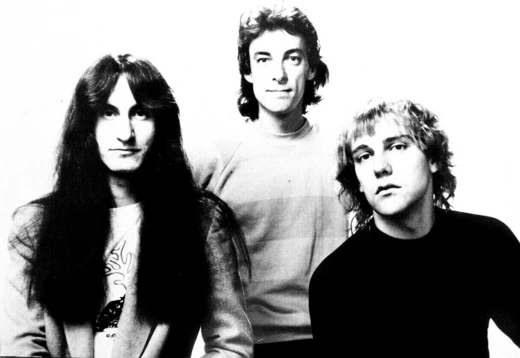
The Smalls
Alberta hard rock/metal band with eclectic punk and jazz influences.
The Smalls, a Canadian hard rock and metal band, got their start in Edmonton, Alberta in 1989. Their sound drew from jazz, hardcore punk, speed metal, and country. They rose to become a key Alberta act in the second wave of the west coast DIY scene, a movement first brought to the province by the influential hardcore punk group SNFU during the mid-1980s.
Quick Facts
- Origin
- Edmonton, Alberta, Canada
- Genre
- Heavy metal, hardcore punk
- Years active
- 1989–2001, 2014
- Label
- Cargo; Outside Music
- Past members
- Mike Caldwell
- Corb Lund
- Dug Bevans
- Terry Johnson
Facts from the source article.
Did You Know?
- The band announced a reunion through their official Facebook page on May 27, 2014, to perform at Edmonton's Sonic Boom Festival in August.
- The Smalls were to take part in Calgary's annual X-Fest in August 2014 alongside artists such as Jack White, Arctic Monkeys, Death Cab for Cutie, Foster the People, Cage the Elephant, etc.
Overview
The band's later stable lineup was made up of Mike Caldwell on vocals and Corb Lund on bass, both from Taber, Alberta; guitarist Dug Bevans from Leduc, Alberta; and drummer Terry Johnson from La Glace, Alberta. They met at Grant MacEwan College in Edmonton, where Caldwell, Lund, and Johnson were music students while Bevans studied art. Right from the start, the group showed strong technical skill, with Dug Bevans’ fast, buzzing guitar work and Mike Caldwell’s wide-ranging, soaring vocals. Caldwell’s range stands out on the band’s cover of Natural Woman, which appeared on their final album, My Dear Little Angle. He was known for his singing ability and a quiet stage presence, never chatting with the crowd. Corb Lund later gained fame with his country and roots act, Corb Lund and the Hurtin’ Albertans. The band is best described as hard rock or metal, but because they were tied to the 1980s and 1990s DIY punk scene, the punk label stuck. Despite that, every album included a straight jazz piece or faithful covers of rock standards like the Pretenders’ Middle of the Road, plus country, swing, and salsa-style jazz breaks woven into their core hard rock and metal sound. Near the end, Lund said they had outlasted many scenes people tried to place them in, but they never considered themselves part of any scene.
Career highlights
The Smalls sold over 40,000 albums over twelve years and built a rabid fan base, particularly in western Canada, almost entirely independent of any label or industry support. They were friends with and toured Quebec several times with GrimSkunk. In western Canada their high energy shows made them a touring success, filling large halls when headlining at venues such as Vancouver's Commodore Ballroom, and they also toured extensively in outlying areas. In Kamloops, British Columbia they were banned from performing after a riot that occurred when a promoter severely overfilled a small venue and the Royal Canadian Mounted Police attempted to clear the hall. In 1999 the Smalls became the first Canadian act to perform in the Balkans after conflict engulfed the area in the mid-nineties. Bassist Corb Lund said it was important to play in these areas for real cultural exchange. The band announced its disbanding in 2001 and finished with a farewell tour, with a two-night send-off in Calgary on October 19, 2001, at MacEwan Hall, and Edmonton on October 20, 2001, at Red's.
Recording history
The Smalls first caught the music industry’s attention in 1990 with their self-produced debut, the smalls. They quickly signed on with S.L. Feldman & Associates, a major Canadian touring and management firm. Their follow-up, To Each a Zone (1992), was helmed by Vancouver punk producer Cecil English, known for engineering and producing records for NoMeansNo and DOA, including a Jello Biafra collaboration. MuchMusic gave steady rotation to videos for the singles “Payload” and “On the Warpath.” In 1993, English helped remix and remaster the band’s first recording, which was re-released with three new tracks.
For their third album, Waste and Tragedy (1995), the band switched to producer Joel van Dyke, whose work with Wide Mouth Mason and Colin James pointed toward a cleaner sound. Two videos came from this release: one for “It’s Gonna be Fast” and another for the lead single “Pity the Man with the Fast Right Hand,” a track that blended country elements with hard rock and metal. The Smalls never landed a major-label deal, instead releasing Waste and Tragedy through Cargo Records after signing a production and distribution agreement with label owner Randy Boyd in 1995. Boyd had capitalized on the growing indie rock scene, becoming the first Canadian distributor for many Sub Pop artists and Epitaph Records. Not long after, Boyd sold Cargo Records Canada to Alan Fox, a successful entrepreneur with no background in music. Three years later, the company went bankrupt, leaving the Smalls among many creditors unpaid when payments defaulted. The band moved its catalog to Outside Music.
Despite these financial troubles, the Smalls secured European distribution and embarked on their first tour there. Footage from that tour, along with their return to Canada to record a final album, appears in the documentary The Smalls... Er Whatever, directed by John Stiles and edited by Ian Harvey. That final album, My Dear Little Angle (1998), was produced by Glenn Robinson, whose credits include Gwar, Voivod, Tori Amos, and The Tea Party. It was distributed by Outside Music.
After the Smalls
Corb Lund, the band's bassist, now fronts Corb Lund and the Hurtin' Albertans, a roots-country group that has won a Juno Award and sold gold records. Dug Bevans works on Edmonton-area projects, including producing and playing on Steve Hobbins' recording "Wizard of Words," and served as Art Director, Composer, and 'Man with the Vision' for the Burning Man 2011 Trojan Horse art installation. Terry Johnson performed with Edmonton hardcore band Secret Rivals. Mike Caldwell later sang in an Edmonton country cover band called Texas Mikey.
More in Canadian Heavy Metal Musical Groups
Spotted an error? Know more?
Reader corrections go straight into our review queue. Suggest an edit · How this site is sourced