Bannock (British and Irish food)
Last updated

Carl Steinbeißer · CC BY-SA 3.0
The word derives from northern English and Scots dialects, with the Oxford English Dictionary tracing it to the Latin terms panicium ("baked dough") or panis ("bread").[1]
Quick Facts
- Country
- British Isles
Facts from the source article.
Key facts and history
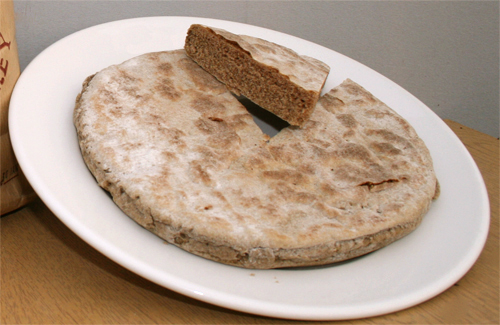
Original bannocks were heavy, flat cakes of unleavened barley or oatmeal dough, shaped round or oval and cooked on a griddle.[2] This variety takes its name from Selkirk in the Scottish Borders, where baker Robbie Douglas first made it after opening his shop in 1859.[3] Queen Victoria is reputed to have taken tea with a slice of Selkirk bannock when visiting Sir Walter Scott's granddaughter.[3] The earliest recorded form of the word "bannock" is "bannuc", which appears in glosses connected to Aldhelm, an author from the 8th century, while the first definition given for the term was in 1562.[1]
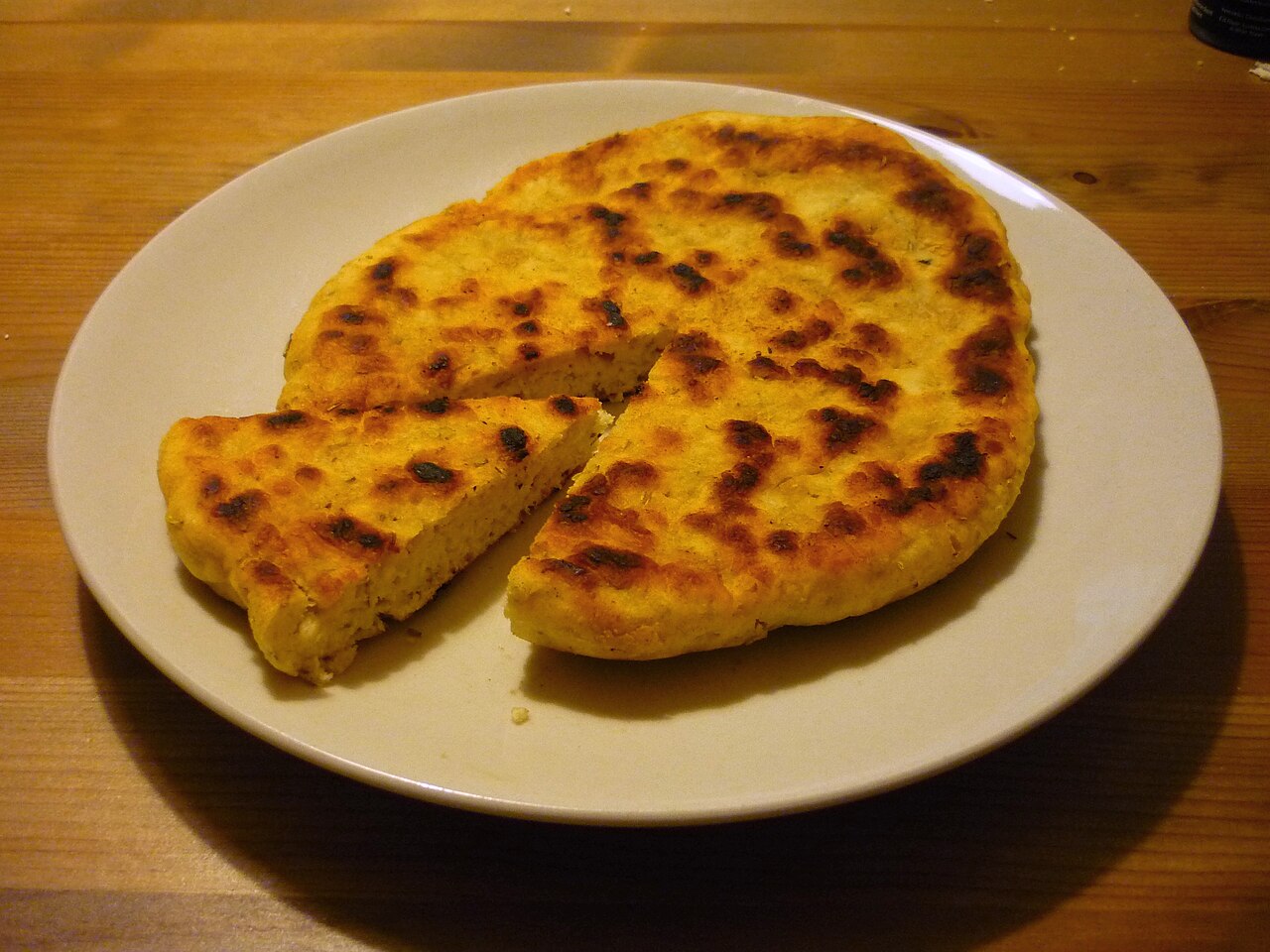
To achieve a light texture, contemporary bannocks typically rely on baking powder or baking soda as a leavening agent.[2] In his Epistle to James Tennant of Glenconner, the Scottish poet Robert Burns writes about a bannock, specifically in connection with Alexander Tennant.[4]
What the cited sources add
The Isle of Man website notes that whenever a recipe for Manx food is required, bonnag is usually offered.[5]
References
- Wikipedia, "Bannock (British and Irish food)" (CC BY-SA 4.0), which cites: Louis Goossens, The old English glosses of ms. Brussels, Royal Library, 1650 (Aldhelm's De laudibus virginitatis) (Brussels: Paleis der Academien, 1974), 2352. (original not read by us) en.wikipedia.org
- Wikipedia, "Bannock (British and Irish food)" (CC BY-SA 4.0), which cites: Feilden, "Bannock Stane at Aberdeen University's Virtual Museum", Aberdeen University, July 2017; "Bannock"; Ingram, "BREAD: the breads of the world and how to bake them at home", Hermes House, 2003, p. 54; Clayton, "Bernard Clayton's New Complete Book of Breads", Simon & Schuster, 2003, p. 555 (we also read that source) en.wikipedia.org
- Wikipedia, "Bannock (British and Irish food)" (CC BY-SA 4.0), which cites: "Selkirk Bannock" (original not read by us) en.wikipedia.org
- Wikipedia, "Bannock (British and Irish food)" (CC BY-SA 4.0), which cites: "Oxford English Dictionary, Second Edition", Clarendon Press, 1989; Burns, "Epistle To James Tennant Of Glenconner", The Complete Works of Robert Burns (original not read by us) en.wikipedia.org
- "Bonnag Recipes", www.isle-of-man.com. facts only, no text reused. isle-of-man.com
Each numbered sentence above was checked against the source it cites before publication. Sentences citing Wikipedia adapt text from the English Wikipedia article Bannock (British and Irish food) (contributors), used under CC BY-SA 4.0; this entry is available under the same licence. Other sources were used for facts only; no text or images are copied from them.
More in Canadian cuisine
Sources
Compiled from Wikipedia and the sources listed below. Text from Wikipedia is available under CC BY-SA 4.0; this entry is adapted from it.
- Wikipedia: Bannock (British and Irish food) (CC BY-SA 4.0).
Spotted an error? Know more?
Reader corrections go straight into our review queue. Suggest an edit · How this site is sourced