
Brian Elliott
Two-time NHL All-Star goaltender who played 16 NHL seasons.
Last updated

Sarah Connors · CC BY 2.0
Brian Elliott, born April 9, 1985, is a Canadian former professional ice hockey goaltender who spent parts of 16 seasons in the NHL. Selected by the Ottawa Senators with the 291st overall pick in the ninth round of the 2003 draft—the second-last player chosen that year—he was not expected to make the league. He went on to become a two-time NHL All-Star (2012, 2015) and played for the Senators, Colorado Avalanche, St. Louis Blues, Calgary Flames, Philadelphia Flyers, and Tampa Bay Lightning.

Junior
Growing up in Newmarket, Ontario, Elliott played minor hockey for the Newmarket Redmen AA and York-Simcoe Express AAA teams. Undrafted by an Ontario Hockey League team in 2001, he spent the next season in Major Midget with York-Simcoe. After a strong year in the Eastern AAA Hockey League, he joined the Ajax Axemen of the Ontario Provincial Junior A Hockey League for the 2002–03 season.
NCAA
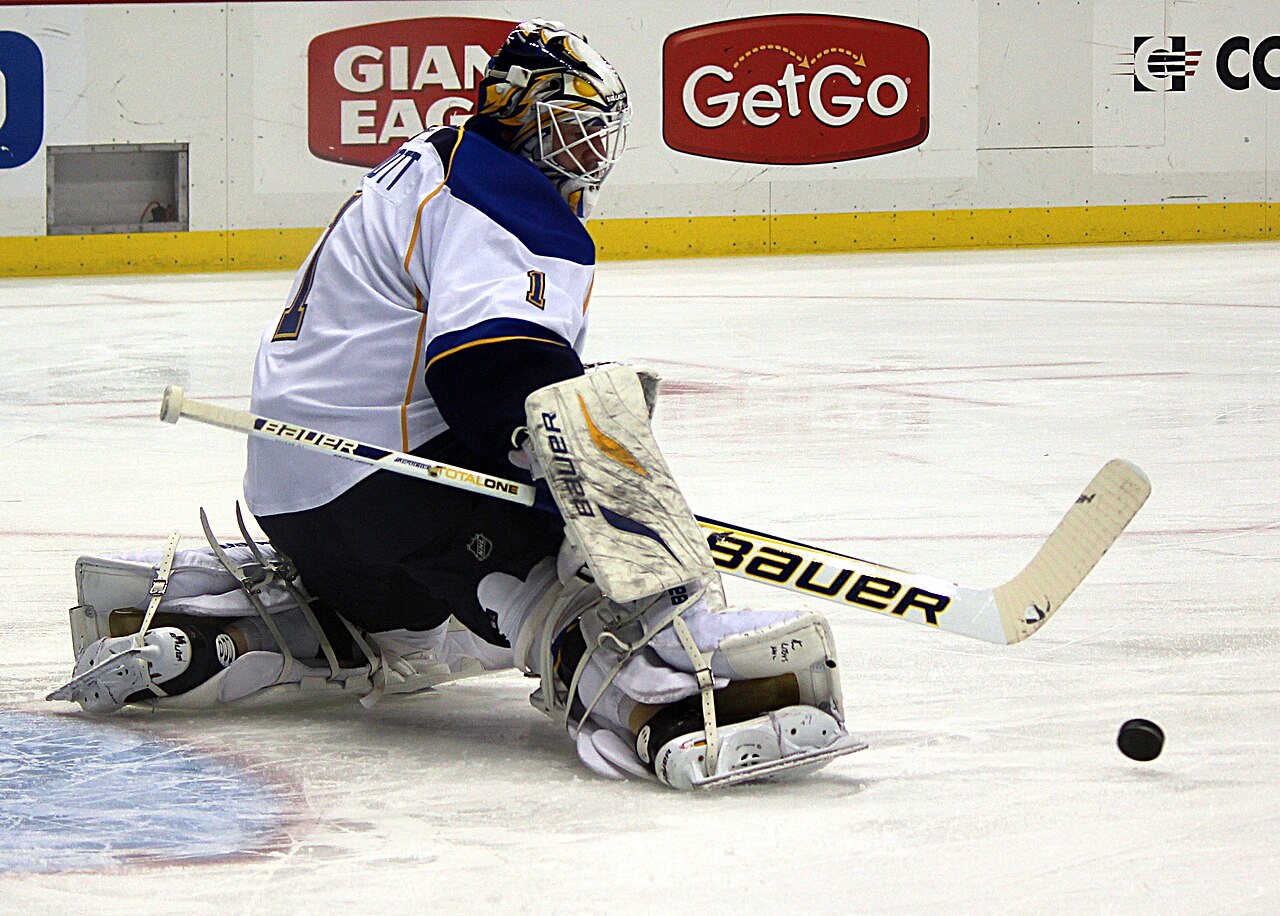
Following his standout junior season, Elliott was drafted by Ottawa. He then spent four years at the University of Wisconsin–Madison, serving as a backup for his first two seasons before becoming the starter in 2005–06. That year, he was a finalist for the Hobey Baker Memorial Award, recorded eight shutouts in 33 appearances, and led the Badgers to the 2006 NCAA National Championship. On March 23, 2007, he signed with the AHL’s Binghamton Senators, Ottawa’s affiliate, and played eight games for them late in the 2006–07 season.
Professional
Invited to Ottawa’s 2007–08 training camp, Elliott was assigned to Binghamton on September 25, 2007. Four days later, he was recalled to back up Martin Gerber while starter Ray Emery recovered from wrist surgery. On October 10, Elliott made his NHL debut and earned a win against the Atlanta Thrashers. After Emery returned, he was sent back to Binghamton, where he played 44 games that season.
On January 9, 2009, Elliott was recalled after being named AHL Goalie of the Month for December. He had posted an 18–8–1 record with a 2.31 goals-against average and .926 save percentage in Binghamton, earning the starting spot for the Canadian team in the 2009 AHL All-Star Game.
In Ottawa, he made an immediate impact, sharing duties with Alex Auld for the rest of the season. His strong play made Martin Gerber expendable, and Gerber was later claimed on waivers by Toronto. Elliott was nominated for NHL Rookie of the Month in March 2009 but lost to T. J. Oshie.
Lore & Background
Elliott grew up in Newmarket, Ontario, playing minor hockey for the Newmarket Redmen AA and York-Simcoe Express AAA teams. He was not drafted by an Ontario Hockey League team in 2001 and later played for the Ajax Axemen of the Ontario Provincial Junior A Hockey League. After being drafted 291st overall—the second-last pick—he spent four seasons at the University of Wisconsin–Madison, where he became the starting goaltender in 2005–06, was a finalist for the Hobey Baker Memorial Award, and led the Badgers to the 2006 NCAA National Championship.
He began his professional career with the AHL's Binghamton Senators. Elliott's NHL debut came with Ottawa on October 10, 2007, earning a win against the Atlanta Thrashers. He was traded to Colorado in 2011 but struggled, then revitalized his career with St. Louis, forming a tandem with Jaroslav Halák and setting the Blues' franchise record for shutouts.
He was traded to Calgary in 2016 but struggled early and was not re-signed. He later played for Philadelphia and Tampa Bay, playing his 500th NHL game on May 4, 2021. After the 2023–24 season unsigned, he returned to the Blues as a goaltending scout and development coach on June 17, 2024.

The Last Pick Who Refused to Stay There
Selected as the second-to-last player in the 2003 NHL entry draft—291st overall by the Ottawa Senators—Brian Elliott was a prospect the hockey world had essentially written off before he ever laced up skates. Growing up in Newmarket, Ontario, he went undrafted by an OHL team in 2001, bounced through the Eastern AAA Hockey League, and signed with the Ajax Axemen of the Ontario Provincial Junior A Hockey League for the 2002–03 season. That campaign changed everything.

He landed at the University of Wisconsin–Madison, spent two years as a backup, and then seized the starting net in 2005–06. That year he recorded eight shutouts in 33 appearances, was named a finalist for the Hobey Baker Memorial Award, and helped steer the Badgers to the 2006 NCAA National Championship. By March 2007 the Binghamton Senators had signed him, and the long, improbable road to the NHL had finally begun.
St. Louis: The Blueprint for a Career Peak
Signing a modest one-year, $600,000 contract with the St. Louis Blues in July 2011, Elliott found the setting that would define his professional best. Forming a formidable tandem with Jaroslav Halák, he revitalized his game, posting a 23–10–4 record with a 1.56 goals-against average and earning a spot in the 2012 NHL All-Star Game.
When Halák went down in the first round of the 2012 playoffs, Elliott stepped in and guided the Blues past the San Jose Sharks before falling to the eventual champion Los Angeles Kings. He locked in his future with a three-year extension carrying a $2.5 million average annual value in 2014, was named to the 2015 All-Star Game in Columbus, and broke the Blues' franchise shutout record in March 2015. His crowning achievement arrived in the 2016 postseason, where he started in all but two games and carried St. Louis to the Western Conference Finals for the first time since 2001.
A Career Forged in Constant Motion
Elliott's sixteen-season NHL journey carried him through six franchises, a path shaped as much by circumstance as by choice. After establishing himself in Ottawa—recalled from Binghamton in January 2009 after earning AHL Goalie of the Month honors—he was dealt to the Colorado Avalanche in February 2011 as part of a rebuild, swapped for goaltender Craig Anderson.
His time in Denver lasted barely a season; after managing just two wins in twelve starts with a 3.83 GAA, Colorado declined his qualifying offer and he became a free agent. A brief, difficult stretch with Calgary followed in 2016, where he was acquired in a trade that sent a second-round pick (Jordan Kyrou) back to St. Louis. He also suited up for the Philadelphia Flyers and the Tampa Bay Lightning, rounding out a career that spanned parts of sixteen NHL seasons across the league.
Game 7s and the Weight of Expectation
The 2016 Stanley Cup playoffs remain the emotional summit of Elliott's career. In the first round against the defending champion Chicago Blackhawks, he made 31 saves in a Game 7 victory on April 25, sending St. Louis to the second round. Facing the Western Conference's top-seeded Dallas Stars, the Blues again prevailed in seven games. Elliott's one stumble came in Game 6, when he was pulled after allowing three goals on seven shots, but he answered with 31 saves in a 6–1 Game 7 rout that carried St. Louis to the Western Conference Finals for the first time since 2001.
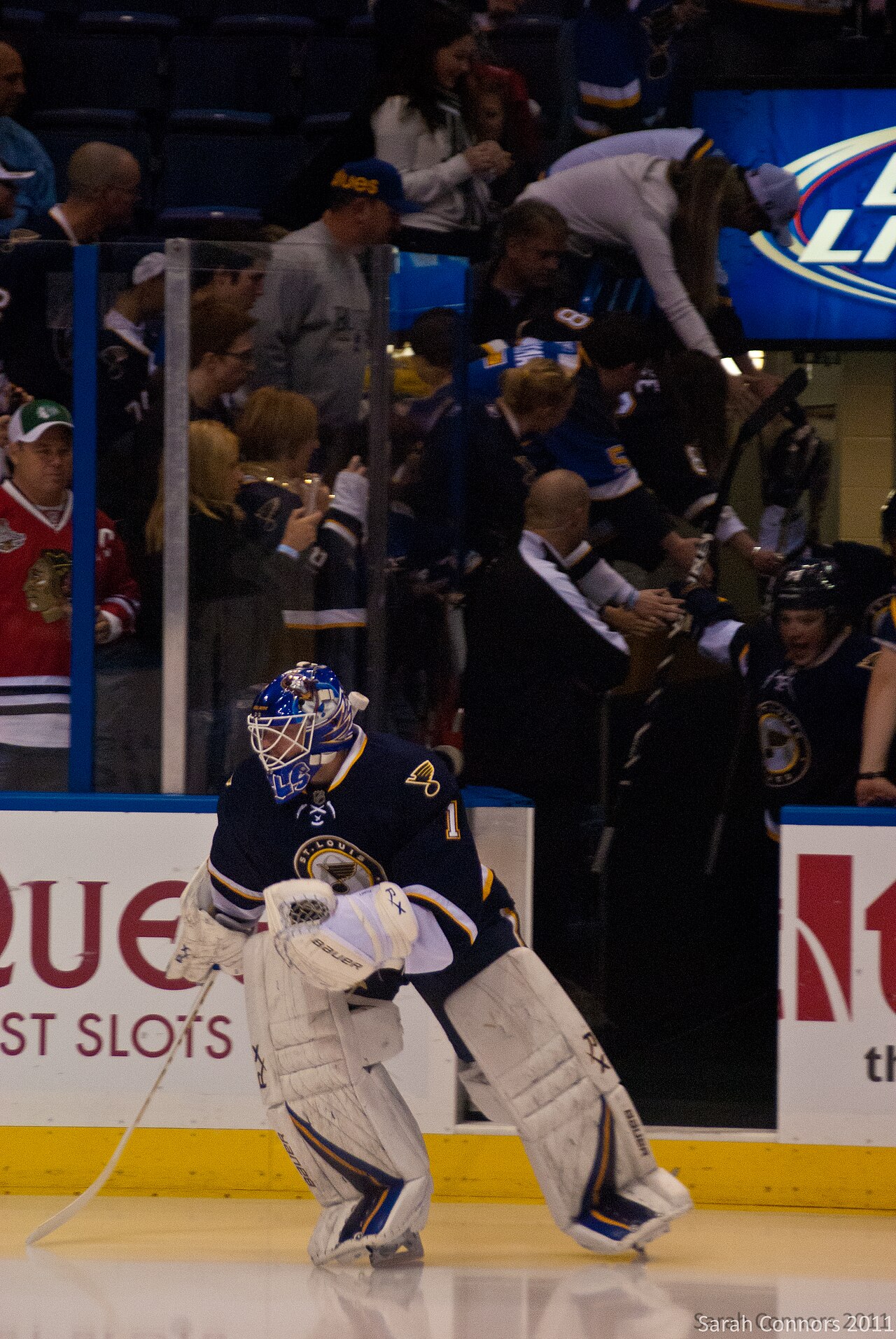
He started every game except two across that postseason. Earlier, in the 2012 playoffs, he had taken over for the injured Halák and delivered a series win over San Jose. Across those two postseasons, Elliott proved he could be the difference-maker on the biggest stage, even as the ultimate prize of the Stanley Cup remained just out of reach.
Reader's Guide
Brian Elliott's career is notable for its arc from a ninth-round draft pick—the second-last selection in 2003—to a two-time NHL All-Star and a goaltender who played 500 NHL games. His time with the St. Louis Blues was the peak of his career: he posted a 1.56 GAA in 2011–12, was named to the 2012 All-Star Game, and later set the Blues' franchise shutout record. He led the Blues to the Western Conference Finals in 2016, starting all but two playoff games.
His tenure with the Calgary Flames was brief and difficult; he started 3–9–1 with a 3.31 GAA and .885 save percentage before being told he would not return. Elliott's resilience is reflected in his ability to rebound from early struggles in Ottawa and Colorado to become a reliable starter in St. Louis, and later to reach the 500-game milestone. His post-playing career as a goaltending scout and development coach for the Blues underscores his lasting connection to the organization where he achieved his greatest success.
Career statistics and honours
Awards and honours
| Award | Year | |
|---|---|---|
| College | ||
| All-WCHA Second Team | 2005–06 | |
| AHCA West First-Team All-American | 2005–06 | |
| All-NCAA All-Tournament Team | 2006 | |
| All-WCHA Second Team | 2006–07 | |
| NHL | ||
| William M. Jennings Trophy | 2011–12 | |
| All-Star Game | 2012, 2015 | |
| Lowest GAA (1.56) | 2011–12 | |
Tables copied from the source article, totals included as the source gives them: Wikipedia: Brian Elliott (CC BY-SA 4.0). Wide tables scroll sideways.
Frequently Asked Questions
What position did Brian Elliott play for the Flames?
Elliott served as a goaltender, meaning his job was to stand in net and stop shots directed at the goal. He filled that defensive role for Calgary during one segment of his 16-season NHL career.
How did Brian Elliott get into the NHL despite a late draft pick?
The Ottawa Senators selected him 291st overall in the ninth round of the 2003 draft, making him the second-last player chosen that year. Against all expectations, he worked his way into the league and eventually earned two NHL All-Star nods in 2012 and 2015.
What are Brian Elliott's major career milestones?
He was named an NHL All-Star in both 2012 and 2015 while guarding the net for St. Louis. He also reached his 500th career NHL game on May 4, 2021, capping a long tenure that included stints with six different teams.
More in Calgary Flames Players
Test yourself
Three questions drawn from this entry’s sources. Pick an answer to check it.
Answers checked against the source article
Sources
Compiled from Wikipedia and the sources listed below. Text from Wikipedia is available under CC BY-SA 4.0; this entry is adapted from it.
- Wikipedia: Brian Elliott (CC BY-SA 4.0).
- Statistics, medals and awards: the tables of the source article.
- Word definitions: the Codexery glossary, each quoted from its Wikipedia article.
Spotted an error? Know more?
Reader corrections go straight into our review queue. Suggest an edit · How this site is sourced