Burmese salads
Hand-mixed salads balancing flavors and textures.
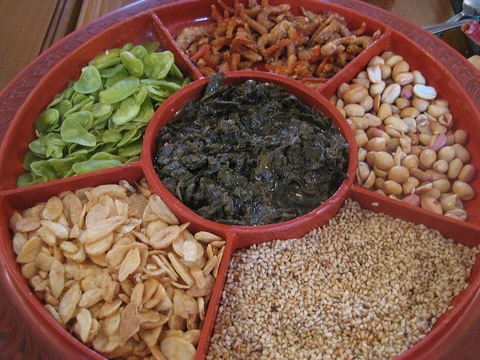
Burmese salads, known as athoke or athouk, are a diverse category of indigenous salads in Burmese cuisine. They are made from cooked and raw ingredients mixed by hand to balance a wide range of flavors and textures. These salads are eaten as standalone snacks, side dishes with curries, or entrees, with the iconic laphet thoke traditionally served as a palate cleanser at the end of a meal.
Quick Facts
- Course
- Snack
- Entree
- Side dish
- Country
- Myanmar
- National cuisine
- Burmese cuisine
- Served
- Cold or room temperature
- Similar dish
- Thai salads, Vietnamese salads
Facts from the source article.
Ingredients
Burmese salads are typically centered on one major ingredient, such as rice, noodles, cooked items like fritters, or raw fruits and vegetables. Common starches include rice, egg noodles, rice vermicelli, rice noodles, and potatoes. Raw vegetables and fruits like tomatoes, cabbage, onions, kaffir lime, long beans, and mangoes are used. Fermented ingredients such as lahpet, ngapi, pon ye gyi, and pickled ginger feature prominently. Dressings include chili oil, garlic oil, sesame oil, toasted chickpea flour, lime juice, fish sauce, tamarind paste, peanuts, and fried garlic, all mixed by hand. Aromatic herbs like coriander, mint, lime leaves, and green onions garnish the salads.
List of Burmese salads
Burmese salads are invariably suffixed with the word '-thoke' in Burmese and are typically named after the central ingredient. Common salads include gyin thoke (shredded pickled ginger with sesame seeds and assorted fried beans), laphet thoke (pickled tea leaves with fried chickpeas, peanuts, garlic, toasted sesame, fresh garlic, tomato, green chili, crushed dried shrimps, dressed with peanut oil, fish sauce, and lime), ngachin thoke (pressed sour fish with garlic, shallots, fresh chillies, and coriander), ngapi thoke (fermented fish paste), pon ye gyi thoke (fermented bean paste with raw diced onions, shallots, and dried shrimp), hsei be u thoke (century eggs with raw shallots, julienned cabbage and carrots), gazun ywet thoke (blanched water spinach with lime juice, fried garlic, garlic oil, roasted rice powder, and dried shrimp), khayanchin thi thoke (raw tomatoes with raw shallots and dried shrimp powder), khayan thi miphok thoke (fire-roasted eggplant with shallots and ngapi), kyaukpwint thoke (sour Rakhine salad with edible seaweed), magyi ywet thoke (blanched tamarind leaves with garlic, onions, roasted peanuts, and pounded dried shrimp), mezali phu thoke (Siamese cassia flower buds with boiled potatoes, sliced onions, peanuts, and sesame seeds, traditionally eaten during the full moon day of Tazaungmon), mon-la-u thoke (sliced radish with vinegar and chilis), myinkhwa ywet thoke (pennywort leaves with lime juice and fish sauce), pethi thoke (blanched green beans with fried onions), tama ywet thoke (bitter neem leaves), and shauk thi thoke (sliced lemon or kaffir lime with toasted chickpea flour, crushed roasted peanut, crushed dried shrimp, crushed dried chili, baked fish paste, and cooked oil with onions).
Regional adaptations
Mee kola, also known as Burmese-style noodles, is a Cambodian noodle dish that originated among the Kola people in Pailin Province, who descended from Burmese migrants. It consists of steamed rice vermicelli cooked with soy sauce and garlic chives, served with pickled vegetables, hard-boiled eggs, sweet garlic fish sauce, dried shrimp, and crushed peanuts, garnished with lime and chili flakes. Following the 1962 Burmese coup d'état, Burmese Indian refugees in Chennai sold a dish called atho, an adaptation of khauk swe thoke, made with noodles, shredded cabbage, and onions garnished with tamarind, salt, fried onions, chili flakes, garlic, and ajinomoto seasoning.
More in Burmese Cuisine
Spotted an error? Know more?
Reader corrections go straight into our review queue. Suggest an edit · How this site is sourced