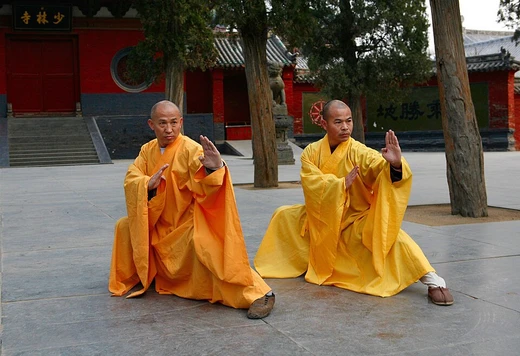
Dob-dob
Tibetan Buddhist monk fraternity known for fighting and monastery labor.
A dob-dob (or ldab ldob) is a member of a Tibetan Buddhist monk fraternity found in Gelug monasteries, historically at Sera Monastery and reportedly still present today. These monks were generally less academically inclined and more interested in sports, fighting, and worldly matters, giving them an ambiguous status within monastic life.
Quick Facts
- Alternate spelling
- ldab ldob
- Tradition
- Gelug
- Example monastery
- Sera Monastery
- Age of candidate (example)
- nearly 15
- Year of candidacy (example)
- 1951
- Typical club size (example)
- about 36 members
Facts from the source article.
Disruptive influences or peacemakers?
Dob-dobs sometimes acted as self-appointed policemen, as when Geshe Lama Konchog was beaten by his dob-dob uncle for being too eager to study. Sir Charles Alfred Bell described them as monks at ceremonies who were "bursting with superfluous energy, and spoiling for a fight." Yet they also contributed positive qualities to monastery life, according to José Ignacio Cabezón.
Life as a dob-dob
Tashi Khedrup became a candidate to join the dob-dobs in Sera in 1951 at nearly 15. His fraternity had about 36 members from different colleges, allowing him to meet many new friends. There was no entrance fee; members contributed what they could to a common fund for food, which they ate in one another's rooms. Meetings were held in the leader's room; the leader had been a famous jumper and fighter but was quiet and maintained discipline.
Such clubs, called kyidu, meaning everyone shares good and bad alike, could last many years or break up and reform. If a member died, a share of his property went to the kyidu, some to the men who cut up his body, and the rest to his college. Dob-dobs took pride in their clothes, favoring a dark, fine woollen cloth for their long skirt-like garment, which they pleated like a kilt and pressed by sitting on it under a board. They grew their hair long, with strict rules: the right side brushed down, the left bunched into a big curl, and they rubbed it regularly with Vaseline.
Monastery laborers
The main task of dob-dobs was performing essential domestic labor for the monastery's upkeep. Brian Harris recounted that at Thikse Monastery in Ladakh, Northern India, sixty dob-dobs would help mix porridge with a large wooden paddle. Genge Lobsang Samdup noted that at Ganden Monastery, a dob-dob played the thongchen (long horns) and provided the tent for the 14th Dalai Lama's visit.
More in Buddhist Martial Arts
Spotted an error? Know more?
Reader corrections go straight into our review queue. Suggest an edit · How this site is sourced