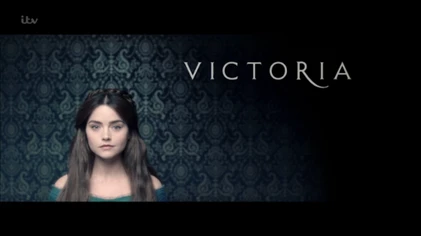
Albert and Victoria
A British sitcom about a domineering Victorian husband.

Albert and Victoria is a British sitcom that aired on ITV from 13 June 1970 to 17 September 1971. Starring Alfred Marks, it was written by Reuben Ship and produced by Yorkshire Television. The show follows Albert Hackett, a middle-class man in late 19th-century England, who is accustomed to having the final word over his wife Victoria and their nine children.
- Field
- Television sitcom
- Nationality
- British
- Known for
- Starring Alfred Marks, cast changes due to miscarriage
- Network
- ITV
- Production company
- Yorkshire Television
- Episodes
- 12
Lore & Background
Albert and Victoria was created by Reuben Ship and aired two series on ITV. The first series ran for six episodes from 13 June to 18 July 1970, airing Saturday evenings at 6.45pm. A Christmas special aired on 25 December 1970 as part of All-Star Comedy Carnival, but that short is now lost and thought destroyed. The second series of six episodes aired from 14 August to 17 September 1971, mostly at 5.40pm on Saturdays.
Reader's Guide
The sitcom is notable for its substantial cast changes between series. Zena Walker played Victoria in the first series, but was replaced by Barbara Murray for the second series. However, during filming, Murray suffered a miscarriage and was replaced by Frances Bennett for the final four episodes. The characters of Emma and Maud also changed actors between series. All regular episodes survived the wiping policy of the era, but the 1970 Christmas short is lost. The show remains a minor entry in British television history, remembered primarily for its behind-the-scenes casting disruptions.
Did You Know?
- Barbara Murray was replaced by Frances Bennett after suffering a miscarriage during filming of the second series.
- The 1970 Christmas special, part of All-Star Comedy Carnival, is lost and thought to have been destroyed.
- The show had a substantial change of cast between the two series, with new actors for Victoria, Emma, and Maud.
Narrative Arc Across Three Reigns
The series traces Queen Victoria's journey from an eighteen-year-old newly crowned monarch in 1837 through the early 1850s, a span of roughly fourteen years compressed into three eight-episode seasons. The first season captures her intense, almost romantic bond with Prime Minister Lord Melbourne, her courtship with the German Prince Albert, and the birth of their first child. The second season broadens the canvas considerably, weaving in the Anglo-Afghan War, the devastating Irish Famine of the 1840s, and the tangled loyalties between the English and German branches of the royal family. By the third season, the couple has reached their early thirties with six children and a marriage marked by recurring friction. Albert is on a mission to carve out a meaningful role for himself, a quest that culminates in the Great Exhibition of 1851, while simultaneously attempting to shape his eldest son into a future king. The season closes on a cliffhanger tied to Albert's deteriorating health, leaving the audience in suspense.
Ensemble Cast and Royal Web
Jenna Coleman anchors the production as the young Queen, with Tom Hughes bringing quiet intensity to Prince Albert. The surrounding cast is densely layered to reflect the sprawling royal network of the era. Rufus Sewell embodies Lord Melbourne as Victoria's political confidant, while Nigel Lindsay portrays Sir Robert Peel in the Prime Minister's chair. The wider family is richly populated: Alex Jennings plays King Leopold I of Belgium, Peter Firth appears as King Ernest Augustus of Hanover, and David Oakes takes on Prince Ernest, Albert's brother and the Queen's first cousin. As the series progresses, the ensemble shifts to mirror the passage of time. The second season introduces Diana Rigg and Eve Myles into the courtly circle, while the third brings Kate Fleetwood as the estranged half-sister Princess Feodora and Laurence Fox as the magnetic Lord Palmerston. The royal children are portrayed by different young actors between seasons, a practical choice that underscores how quickly the family is growing.
Production History and Broadcast Timeline
Daisy Goodwin created and principally wrote the series, which was publicly announced in September 2015 after Coleman made the decision to leave Doctor Who and take on the lead role. The first eight-episode season debuted on ITV in the United Kingdom on 28 August 2016, while PBS in the United States carried it as part of its Masterpiece anthology beginning 15 January 2017. A second series followed on ITV in 2017, accompanied by a Christmas special that December; PBS aired the main episodes from January 2018 and the special belatedly in March. In December 2017, the show received a renewal for a third eight-episode series, which premiered on PBS in January 2019 and on ITV in March of that year, running through 12 May. By July 2021, ITV confirmed there were no immediate plans to film further episodes, though it explicitly left the possibility open for a future return with the existing production team.
Political Turbulence and Personal Stakes
Beyond the intimate drama of a young queen learning the weight of her duties, the series embeds its story within the volatile political landscape of the 1830s through the 1850s. Victoria must navigate shifting relationships with successive Prime Ministers—Melbourne, Peel, and later the charismatic Palmerston—while managing international tensions with France under King Louis Philippe I. The second season confronts the audience with the Anglo-Afghan War and the catastrophic Irish Famine, forcing the monarch to weigh imperial responsibility against domestic suffering. The third season centers on Albert's struggle to establish relevance within a system that consistently marginalizes him, a tension that finds its resolution in his triumph at the Great Exhibition. Simultaneously, the series depicts his determination to mold his seven-to-nine-year-old son into a king. A forbidden romance between a lady-in-waiting and a footman adds a counterpoint of class tension, while the sudden arrival of Victoria's estranged maternal half-sister injects a sharp family conflict into the palace walls.
Frequently Asked Questions
What is Albert and Victoria?
It is a British sitcom set in late 19th-century England that centres on Albert Hackett, a middle-class husband who insists on keeping the upper hand over his wife Victoria and their nine children. The series ran for 12 episodes on ITV between 1970 and 1971.
Who stars in Albert and Victoria?
Alfred Marks plays the lead role of the domineering Albert Hackett. The scripts were written by Reuben Ship, and the production was handled by Yorkshire Television.
How many episodes of Albert and Victoria are there?
The sitcom consisted of a single run of 12 episodes. It aired on ITV from 13 June 1970 through 17 September 1971.
What is the premise of Albert and Victoria?
Each episode revolves around Albert Hackett's constant attempts to assert authority over his wife and their large brood in a typical Victorian household. The comedy comes from his stubborn refusal to yield the final word, no matter how absurd the situation becomes.
Why might Albert and Victoria be hard to find today?
As a short-lived, single-season ITV sitcom from the early 1970s, it never gained a large international following and has limited availability in modern streaming or home-video formats. Its niche appeal as a period domestic comedy keeps it a relative obscurity among British TV fans.
More in British historical television series 1-24
Spotted an error? Know more?
Reader corrections go straight into our review queue. Suggest an edit · How this site is sourced