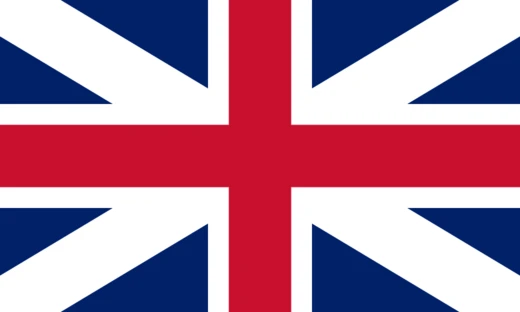
War Plan Red
US interwar plan for war with the British Empire.

Geordie Bosanko · via Wikipedia: War Plan Red · CC BY-SA 3.0
War Plan Red, sometimes called the Atlantic Strategic War Plan, was part of a series of color-coded contingency plans drawn up by the U.S. War Department between 1918 and 1939. It imagined a conflict with the British Empire—coded "Red" after the Red Ensign, red coats, and the traditional map color for British territory. Most of these plans were created by mid-level officers as training exercises to figure out logistics and troop needs. War Plan Red focused on how the United States could defend itself from a British invasion and also considered a two-front war against both Japan and Great Britain, known as War Plan Red-Orange.
The plan took shape after the 1927 Geneva Naval Conference. It was approved in May 1930 by Secretary of War Patrick J. Hurley and Secretary of the Navy Charles Francis Adams III, then updated in 1934–35. It was a routine hypothetical exercise and never needed or got approval from the president or Congress. When World War II broke out in 1939, officials decided to keep the plan on file but stop any further work on it. War Plan Red remained classified until 1974.
The plan laid out what the U.S. would need to do if war with the UK somehow broke out. It assumed the Royal Navy would give Britain the early advantage. The planners figured Britain would likely use Canada as a staging ground for an invasion of the United States. The U.S. would initially fight a defensive war, then try to defeat Britain by blockading Canadian ports and cutting off food supplies. Whether this strategy would have worked is debated; some think it might have ended in a stalemate.
The plan began by describing Canada’s geography, military resources, and transportation networks. It then evaluated a series of preemptive American invasions meant to seize key ports and railways before British reinforcements could arrive. The goal was to deny Britain use of Canadian resources, ports, and airbases. A central move was a joint Army-Navy attack to capture Halifax, Nova Scotia, cutting Canada off from Britain. Next came seizing power plants near Niagara Falls. After that, a full-scale invasion on three fronts: from Vermont into Montreal and Quebec, from North Dakota to take the railhead at Winnipeg, and from the Midwest to capture Ontario’s nickel mines. The Navy would also seize the Great Lakes and blockade Canada’s Atlantic and Pacific ports.
- Field
- Military war planning
- Nationality
- United States
- Known for
- Hypothetical invasion plan for war with the British Empire and Canada
- Created
- 1927–1935
- Declassified
- 1974
Lore & Background
War Plan Red outlined steps necessary to defend against any attempted invasion of the United States by British forces, and further discussed fighting a two-front war with both Japan and Great Britain simultaneously (as envisioned in War Plan Red-Orange). The plan assumed that Britain would use its base in Canada as a springboard for invasion, and that the US would initially fight a defensive battle before eventually defeating the British by blockading Canada's ports and cutting off its food supplies. It is debated whether this would have been successful, and if the plan would have ultimately resulted in a stalemate.
Reader's Guide
War Plan Red's significance lies in its detailed hypothetical planning for a conflict that never occurred, reflecting interwar US military thinking about the British Empire as a potential adversary. The plan outlined pre-emptive American campaigns to invade Canada, capture key ports and railways, and seize strategic resources such as the nickel mines of Ontario. It also considered the possibility of Canadian neutrality and advised against accepting it without permission to occupy Canadian ports. The plan was retained after the outbreak of World War II in 1939, though no further preparations were made. Its legacy includes illustrating the logistical and strategic calculations of mid-level officers training for worst-case scenarios, and the eventual declassification in 1974 revealed the extent of US contingency planning against an ally.
Did You Know?
- War Plan Red was one of the color-coded war plans created by the US Department of War during the interwar period of 1918–1939.
- The plan specified using poison gas in the first strike against the port city of Halifax to seize it and cut the undersea cable between Britain and Canada.
- American war planners had no thoughts of returning captured British territory, intending to prepare Canadian provinces to become US states upon peace.
- The British military never prepared a formal plan for war with the United States during the first half of the 20th century.
More in British Empire 1-24
Spotted an error? Know more?
Reader corrections go straight into our review queue. Suggest an edit · How this site is sourced