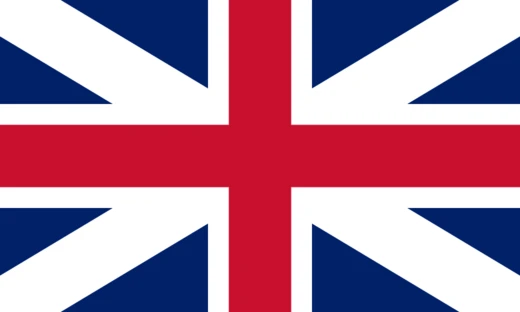
Malayan Emergency
A guerrilla war for Malayan independence and communist statehood.

Australian Government · via Wikipedia: Malayan Emergency · Public domain
The Malayan Emergency (1948–1960), also known as the Anti–British National Liberation War, was a guerrilla conflict in Malaya between the communist Malayan National Liberation Army (MNLA) and the military forces of the Federation of Malaya and the British Commonwealth. The MNLA sought independence from British colonial rule and the establishment of a communist state, while British and Commonwealth forces aimed to protect British economic and colonial interests and combat communism. The term 'Emergency' was used by the British to avoid insurance complications associated with civil wars.
Quick Facts
- Conflict
- Malayan Emergency / ms · Darurat Malaya / zh-hant · 馬來亞緊急狀態 / ta · மலாயா அவசரகாலம்
- Part Of
- the decolonization of Asia and Cold War in Asia
- Location
- British Malaya
- Result
- Commonwealth victory
Facts from the source article.
Lore & Background
The Malayan Emergency began on 17 June 1948 after British forces killed left-wing activists and retaliatory attacks on plantations led to a state of emergency. Chin Peng, leader of the Malayan Communist Party, fled into the jungle and formed the MNLA on 1 February 1949. Many MNLA fighters were veterans of the Malayan Peoples' Anti-Japanese Army, a communist guerrilla force previously trained and armed by the British during World War II. The MNLA gained support from many civilians, especially from the Chinese community, and from women and indigenous people inspired by communist ideals of class, ethnic, and gender equality. Hundreds of former Japanese soldiers also joined the MNLA.
The MNLA employed guerrilla tactics, attacking military and police outposts, sabotaging rubber plantations and tin mines, and destroying transport and communication infrastructure. Their supply network, the Min Yuen, provided food, medicine, intelligence, and recruits. The British responded with scorched earth policies including food rationing, killing livestock, aerial spraying of Agent Orange, and forced relocation of a million civilians into 'new villages' (concentration camps). British units committed extrajudicial killings, most infamously the Batang Kali massacre, and the 1952 British Malayan headhunting scandal involved widespread decapitation of suspected guerrillas.
Reader's Guide
The Malayan Emergency is significant as a protracted low-intensity insurgency that shaped British counterinsurgency doctrine and has often been compared to the Vietnam War due to similar tactics and terrain. Unlike the Vietnam War, which involved large field armies and over 100,000 insurgents, the MNLA never numbered more than 8,000 members at a time. Nevertheless, some 11,000 people died in the emergency, and British armed forces suffered well over a thousand casualties, making it Britain's deadliest operational theatre since World War II. The conflict highlighted the tension between colonial economic interests—Malaya's rubber and tin were vital for Britain's post-war recovery—and the push for independence. The British aimed to hand power to a subservient government that would allow British businesses to control Malaya's natural resources, while denying citizenship to 90% of ethnic Chinese. The emergency officially ended in 1960, but communist leader Chin Peng renewed the insurgency against the Malaysian government in 1968, lasting until the dissolution of the MCP in 1989. The legacy includes debates over British atrocities, the use of Agent Orange, and the ethical implications of forced resettlement and extrajudicial killings.
Did You Know?
- The term 'Emergency' was used by the British to avoid London-based insurers refusing to pay out in instances of civil wars.
- Many MNLA fighters were veterans of the Malayan Peoples' Anti-Japanese Army, which the British had trained and armed during World War II.
- The British used aerial spraying of the herbicide Agent Orange during the emergency.
- The Batang Kali massacre has been referred to by the press as 'Britain's My Lai'.
More in British Empire 1-24
Spotted an error? Know more?
Reader corrections go straight into our review queue. Suggest an edit · How this site is sourced