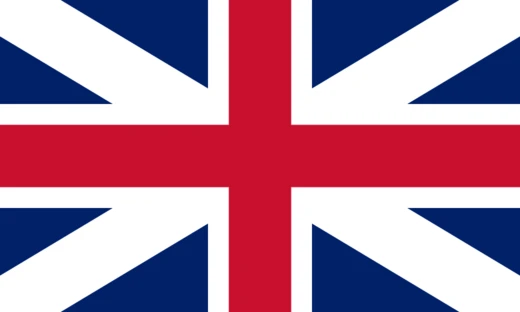
Imperial Federation
Unadopted plan for a federal superstate replacing the British Empire.
The Imperial Federation was a series of proposals in the late 19th and early 20th centuries to create a federal superstate that would replace the existing British Empire. Presented as an alternative to colonial imperialism, the scheme envisioned a single state with an imperial parliament headquartered in London, governing internal trade, foreign relations, and defence. No such proposals were ever adopted, but various plans were popular in Australia, Canada, New Zealand, and other colonial territories.
- Field
- Political proposal
- Known for
- Proposed federal superstate to replace the British Empire
Lore & Background
By the 1880s the British Empire covered a quarter of the world's land area and included a fifth of its population. There was agreement that opportunities were wasted because politically and constitutionally there was no unity, no common policies, no agreed central direction. The Imperial Federation League was founded in London in 1884, with branches later established in Canada, Australia, New Zealand, Barbados, and British Guiana. The League could not agree on its primary role of focusing on either defence or trade, and was dissolved in 1893.
Many proposals were put forward, but none commanded majority support. The new parliament was envisioned to cooperatively deal with internal trade, foreign relations, defence, and other issues affecting the entire federation. India would be ruled directly, while dominions such as Australia, Canada, New Zealand, Newfoundland, and South Africa, as well as crown colonies like Cyprus, Gibraltar, Malta, and Singapore, would have internal self-government accountable to the new parliament in London. Ireland would also have self-government, which was expected to reduce demand for independence there.
Supporters regarded the United Kingdom as having two possible futures: imperial union of its colonies and continued long-term importance, or imperial dissolution and reduction to a second-class nation. In response to claims that geography was against federation on such a large scale, it was said that scientific advancements would solve the difficulty. One proponent noted in 1885 that it was now as easy to reach London from Melbourne or Singapore as it had been to reach London from Orkney at the time of the Acts of Union 1707.
Reader's Guide
The Imperial Federation proposals represent a significant historical attempt to restructure the British Empire into a federal superstate, reflecting late 19th-century anxieties about imperial unity and the rise of colonial nationalism. Though never implemented, the movement influenced debates on imperial defence, trade, and governance. The Imperial Federation League split in 1893 over whether to prioritize defence or trade, and colonial branches outlived the home branch, which collapsed in 1896. Joseph Chamberlain's sympathetic proposals for an Imperial Council were rejected at colonial conferences in 1897 and 1902 due to fears of undermining colonial autonomy. Support waned after World War I, which produced greater feelings of national identity in several dominions. The Balfour Declaration of 1926 and the Statute of Westminster 1931 granted greater independence to dominions, effectively ending serious governmental discussion of imperial federation by the 1937 conference. The scheme's legacy lies in its articulation of a federal alternative to colonial imperialism and its reflection of the tensions between imperial centralization and colonial self-government.
Did You Know?
- The Imperial Federation League split into two factions in 1893, one promoting imperial defence and the other encouraging imperial trade.
- Canadian advocates of imperial federation were termed 'Canadian Imperialists' in Canadian historiography.
- Albert Venn Dicey proposed an Anglo-Saxon 'intercitizenship' in 1897.
- The new parliament was envisioned to have representatives from India ruling it directly, while dominions would have internal self-government.
More in British Empire 1-24
Spotted an error? Know more?
Reader corrections go straight into our review queue. Suggest an edit · How this site is sourced