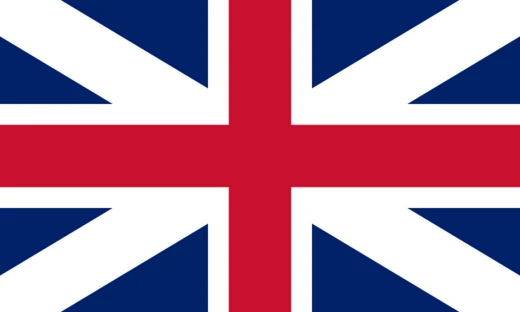
Imperial Federation
Unadopted plan for a federal superstate replacing the British Empire.
Last updated
Supporters argued that the empire's potential was wasted because it lacked political unity, common policies, or central direction.[1] India would be ruled directly by this parliament, while dominions and crown colonies would have internal self-government accountable to London.[2] Around the 1880s, the British Empire's land area constituted one-quarter of the globe, and its population made up one-fifth of humanity.[1] The envisioned parliament for the federation was meant to manage internal trade, foreign relations, and defense matters collectively for the entire entity.[2]
Quick Facts
- Field
- Political proposal
- Known for
- Proposed federal superstate to replace the British Empire
Facts from the source article.
What the cited sources add
Edward Ellis Morris reminded listeners in 1885 that travel from Melbourne or Singapore to London was now as easy as from Orkney to London in 1707.[3] Canadian advocates of imperial federation were termed "Canadian Imperialists," an ideology identified separately from Canadian nationalism by Carl Berger's 1970 book.[4] During an 1897 address to the Fellows of All Souls at Oxford, Albert Venn Dicey put forward a concept of Anglo-Saxon "intercitizenship."[5] Among the prominent Canadian Imperialists were George Monro Grant, Sir George Robert Parkin, Stephen Leacock, Sir Sam Hughes, and George Taylor Denison III.[4]
References
- Wikipedia, "Imperial Federation" (CC BY-SA 4.0), which cites: Bernard Porter, The Lion's Share: A Short History of British Imperialism 1850–1970 (1975) p 133 (original not read by us) en.wikipedia.org
- Wikipedia, "Imperial Federation" (CC BY-SA 4.0), which cites: Kenneth J. Panton, Historical Dictionary of the British Empire (2015) p. 238. (original not read by us) en.wikipedia.org
- Wikipedia, "Imperial Federation" (CC BY-SA 4.0), which cites: Smith, 1921. (original not read by us) en.wikipedia.org
- Wikipedia, "Imperial Federation" (CC BY-SA 4.0), which cites: Trent, "Imperial Federation: The Problem of National Unity.", Political Science Quarterly, 1893, p. 174; "FEDERATION FOR ENGLAND.; IMPERIAL FEDERATION. The Problem of National Unity. By George R. Parkin, M.A. With map. 12mo. New-York: Macmillan & Co.", The New York Times, 1892-08-28; Imperialism . The Canadian Encyclopedia. Retrieved on 2013-07-17. (original not read by us) en.wikipedia.org
- Wikipedia, "Imperial Federation" (CC BY-SA 4.0), which cites: L. Dyer, "Anglo-Saxon Citizenship," The Barrister 3 (1897):107. Cited in Dimitry Kochenov (2019) Citizenship ISBN 9780262537797, page 139. (we also read that source) en.wikipedia.org
Each numbered sentence above was checked against the source it cites before publication. Sentences citing Wikipedia adapt text from the English Wikipedia article Imperial Federation (contributors), used under CC BY-SA 4.0; this entry is available under the same licence. Other sources were used for facts only; no text or images are copied from them.
More in British Empire
Sources
Compiled from Wikipedia and the sources listed below. Text from Wikipedia is available under CC BY-SA 4.0; this entry is adapted from it.
- Wikipedia: Imperial Federation (CC BY-SA 4.0).
Spotted an error? Know more?
Reader corrections go straight into our review queue. Suggest an edit · How this site is sourced