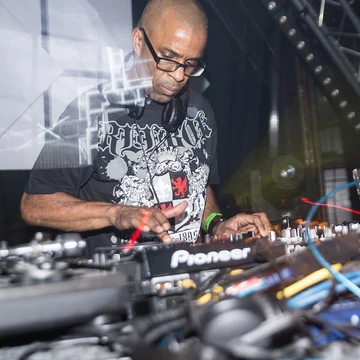
Konflict
Scottish duo who shaped neurofunk and produced Messiah.
Konflict, a drum and bass duo from Glasgow, was made up of Kemal Okan and Robert Rodgers. Their track Messiah, released on Renegade Hardware, was voted the decade's most essential drum and bass tune by Knowledge Magazine in 2010.
Quick Facts
- Also known as
- Kemal and Rob Data
- Associated acts
- Paranoid User
- Nomad'iqa
- Velahavle
- Origin
- Glasgow, United Kingdom
- Genre
- Drum and bass, neurofunk
- Years active
- 1998–2000 as Konflict, 2000–2002 as Kemal and Rob Data
- Current members
- Kemal Okan; Robert Rodgers
Facts from the source article.
Description
Kemal Okan and Robert Rodgers, both from Glasgow, Scotland, first connected through the Detroit techno scene, favoring its minimal style. Kemal began DJing young and worked at Glasgow’s well-known 23rd Precinct record store. Their techno roots clearly shaped the music they would later make. In 1998, they released their first track as Konflict, a remix of the trance tune “Share of Bitterness” by Paragliders, put out on the Scottish label WAQT Recordings.
Their big break came in 1999 when they signed with Renegade Hardware. Key tracks from that period include “Roadblock,” “The Beckoning,” the Maelstrom EP, and their standout hit “Messiah,” which Knowledge Magazine later named the most essential drum and bass track of the 2000s. After a dispute over the release of “Messiah,” Kemal and Rob left Renegade Hardware in 2000. Because the label owned the Konflict name, they dropped it and continued as Kemal and Rob Data, launching their own imprint, Negative Recordings.
Rob Data stopped making music with Kemal in 2002, and Negative Recordings shut down. Kemal then started Cryptic Audio, releasing music there until 2004. The label’s first release saw him use the alias Paranoid User, the only time he worked under a different name. Beyond Renegade Hardware and their own labels, their music appeared on Outbreak, Moving Shadow, Underfire, Audio Blueprint, Timeless, DSCI4, Cyanide Recordings, and Industry Recordings.
Kemal also collaborated with Dom & Roland, Technical Itch, Paul Reset, Black Sun Empire, Sinthetix|Rob F and Impulse, and Dresden Codex. In 2004, Kemal said he was “fed up with the current state of the Drum and Bass scene” and went back to his studies. He kept producing, joining the world music group Nomad’iqa to make their first album. He also produced a 2005 album for Velahavle, a Bosnian trip-hop and electronica band from Sarajevo.
In 2024, Konflict reunited for a drum and bass festival in Mexico. Around that time, Kemal also started recording and releasing new solo material.
Influence
Konflict is widely credited as a key influence on the neurofunk subgenre, with that impact showing up in tracks from later in the 1990s. Phace’s Florian has called them, alongside Optical, his all-time favorite producers, stating they essentially created the foundation for the sound he and others continue to pursue. The more famous group Pendulum also listed Kemal and Konflict among their most important early drum and bass inspirations.
Trivia
The track "Bios-Fear," a collaboration with Stakka and Skynet, took its name from a computer crash that happened while they were making it, likely a BIOS issue. As one of the artists recalled, Kemal and Rob traveled from Glasgow to Brighton for a few days, and during a studio session, their PC completely failed. The two spent hours trying to get it working again, and the resulting tune was named after that meltdown. Kemal completed his remix of Paul Reset's breaks track "Crisis" in just a few days.
Reset said he asked Kemal if he wanted to work on one of his breaks tunes, met him for coffee, and handed over the parts. Within a couple of days, Kemal had finished it, and Reset described him as a studio genius. That remix became the biggest release in Nerve Recordings' history, though the distributor went bankrupt, so exact sales figures were never known. The track "Stranded," a collaboration between Black Sun Empire and Kemal, came about after Kemal found himself stuck at Amsterdam Airport Schiphol.
He then stayed with the three Dutch members of the group in Utrecht for several days. Both tracks had actually been composed years earlier but were only released later, after Kemal had left the scene, due to delays and issues with label management.
More in British Drum and Bass Music Groups
Spotted an error? Know more?
Reader corrections go straight into our review queue. Suggest an edit · How this site is sourced