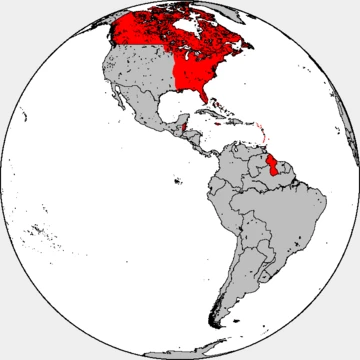
British Guiana
British colony on South America's north coast, now Guyana.

via Wikipedia: British Guiana · see source
British Guiana was a British colony on the northern coast of South America, now the independent nation of Guyana. The first known Europeans to encounter the area were Sir Walter Raleigh and his crew. The Dutch were the first Europeans to settle there, beginning in the early 17th century, and the British consolidated the territories into a single colony in 1831. The colony's capital was Georgetown, known as Stabroek prior to 1812. Since 1966 it has been known as the independent nation of Guyana.
Quick Facts
- Common name
- Guyana
- Empire
- British Empire
- Era
- New Imperialism
- Established
- 1831
- Dissolved
- 1966
- Date start
- 21 July
- Date end
- 26 May
- Event start
- Single colony
Facts from the source article.
Did You Know?
- The first known Europeans to encounter Guiana were Sir Walter Raleigh and his crew; Raleigh published a book called The Discovery of Guiana, but it mainly relates to the Guayana region of Venezuela.
- In 1922, what was thought to be the world's largest diamond was discovered in British Guiana, though it did not generate significant revenue.
- The Booker Group of companies dominated the economy so thoroughly that some referred to the colony as 'Booker's Guiana'.
- The British built the first railway system in British Guiana, opening a 61-mile line from Georgetown to Rosignol in 1848.
- In 1948, when the railway in Bermuda closed down, its locomotives, rolling stock, track, and sleepers were shipped to British Guiana to renovate the aged system.
Establishment
The Dutch were the first to establish lasting colonies in the region that later became British Guiana. The Dutch West India Company ran Essequibo, while the Berbice Association administered Berbice. A third Dutch colony, Demerara, was founded by the West India Company in the mid-1700s. During the 1600s, the English had tried at least twice to settle these lands, but both attempts failed.
Control shifted during the French Revolutionary Wars. Because the Netherlands had been taken over by France, and Britain was at war with France, a British force sailed from Barbados in 1796 and took the colonies from the French-controlled Batavian Republic. The colonies gave up without a fight. The British allowed the existing Dutch laws to stay in place, so life changed little at first.
Under the Treaty of Amiens in 1802, Britain gave the colonies back to the Batavian Republic. But war with France resumed in 1803 during the Napoleonic Wars, and Britain seized the colonies again within a year. The Netherlands formally handed over all three colonies to the United Kingdom in the Anglo-Dutch Treaty of 1814. For a time, the UK ran each colony separately.
In 1822, the administrations of Essequibo and Demerara were merged. Then in 1831, the combined Essequibo-Demerara was joined with Berbice, creating the single colony called British Guiana. During World War II, the United States Navy set up two facilities there: NAF British Guiana and NAF Paramaribo.
Economy and politics
The economy of British Guiana relied on sugarcane as a cash crop, grown and processed by enslaved people, most of whom came from sub-Saharan Africa. Though Britain and the United States banned the transatlantic slave trade in 1807, the internal slave trade continued until the British government freed all enslaved people in its colonies during the 1830s. The profits from this system mostly went to absentee owners living in Britain, particularly in Glasgow and Liverpool.
Until the 1880s, sugarcane was the colony’s entire economic focus. When sugar prices dropped, the economy began to diversify into rice farming, mining, and forestry, but sugar remained crucial—still making up nearly half of exports in 1959. Under Dutch rule, settlements and economic activity centered on sugarcane plantations located inland from the coast. The British expanded cane planting to richer coastal lands and improved coastal defenses.
Before emancipation, sugar planters relied almost exclusively on enslaved labor. A major slave rebellion occurred in Georgetown in 1823. Gold and diamond finds in the 1880s, including what was believed to be the world’s largest diamond in 1922, did not bring in much revenue. Bauxite deposits proved more valuable and stayed an important economic sector.
The colony lacked significant manufacturing beyond sugar factories, rice mills, sawmills, and a few small-scale operations like a brewery, soap factory, biscuit factory, and an oxygen-acetylene plant. The Booker Group, based in London, dominated the economy. This company had owned sugar plantations in the colony since the early 1800s; by the end of that century, it controlled most of them, and by 1950, all but three. As the Booker Group grew wealthier, it expanded internationally and diversified into rum, pharmaceuticals, publishing, advertising, retail, timber, and petroleum. It became the colony’s largest employer, leading some to call the territory “Booker’s Guiana.”
Administration
When the British took over, they kept much of the Dutch colonial system in place. The colony was run by a Court of Policy, which handled both lawmaking and administration, all under the authority of the Governor, a role that existed from 1831 until 1966. Alongside this court sat a group called the Financial Representatives, and together they formed a Combined Court that decided tax policy. Most members of these courts were chosen by the Governor, while the rest were picked by a College of Kiezers, a Dutch term for voters.
These Kiezers were themselves elected, but only the colony’s largest landowners could vote, thanks to strict property requirements. Once elected, a Kiezer held the position for life or as long as they lived in the colony. For many years, the sugar planters and their allies dominated these courts. In 1891, the College of Kiezers was done away with, and people began directly electing the members who had previously been chosen by that body.
The Court of Policy was then split evenly between elected and appointed members, and all Financial Representatives became elected positions. The Court of Policy lost its executive duties, which were handed over to a new Executive Council that the Governor controlled. Property rules for both voters and candidates were loosened considerably. In 1928, the British scrapped the Dutch-style constitution entirely and set up a Crown colony system.
A Legislative Council was created, but most of its members were appointed, and the Governor’s powers grew stronger. Guyanese did not like these changes, seeing them as a setback. Women were given the right to vote. After a series of labor and civil unrest, the West India Royal Commission, also called the Moyne Commission, was formed in 1938 to look into economic and social problems across the British Caribbean.
The Commission suggested some constitutional reforms. Still, the Governor kept control of the Executive Council, which could pass or veto laws even if the Legislative Council disagreed.
Territorial disputes
In 1840, the British government sent German-born explorer Robert Hermann Schomburgk to survey and define the western border of British Guiana with Venezuela, which had recently become independent. Venezuela rejected the resulting Schomburgk Line because it placed the entire Cuyuni River basin inside British Guiana, while Venezuela claimed all territory west of the Essequibo River. This disagreement simmered for about fifty years, eventually leading to the Venezuela Crisis of 1895.
During that crisis, Venezuela tried to use the Monroe Doctrine to gain U.S. support. President Grover Cleveland applied diplomatic pressure on Britain to accept arbitration, and the terms eventually agreed upon favored Britain. An arbitration tribunal met in Paris in 1898 and delivered its decision in 1899, granting roughly 94 percent of the contested land to British Guiana. A commission then surveyed a new border based on that award, and both sides accepted it in 1905.
The issue stayed quiet until 1962, when Venezuela revived its old claim, arguing that the arbitral award was invalid. After his death, Severo Mallet-Prevost, a lawyer for Venezuela and a partner in the New York firm Curtis, Mallet-Prevost, Colt & Mosle, published a letter alleging that the tribunal judges had acted improperly due to a secret deal between Russia and the United Kingdom. Britain rejected this claim, insisting the 1899 award was valid.
The government of British Guiana, led at the time by the People's Progressive Party, also strongly rejected it. Efforts to settle the matter just before Guyana gained independence in 1966 failed, and the dispute remains unresolved today. Schomburgk’s 1840 mission also involved surveying the colony’s eastern boundary with the Dutch colony of Surinam, now independent Suriname. The 1899 arbitration award that settled the Venezuela border referenced the Suriname border as continuing to the source of the Courantyne River, which it identified as the Kutari River.
The Netherlands protested diplomatically, arguing that the New River, not the Kutari, should be considered the Courantyne’s source and thus the boundary. In 1900, Britain responded that the matter was already settled because the Kutari had long been accepted as the border.
More in British Colonization of the Americas
Spotted an error? Know more?
Reader corrections go straight into our review queue. Suggest an edit · How this site is sourced