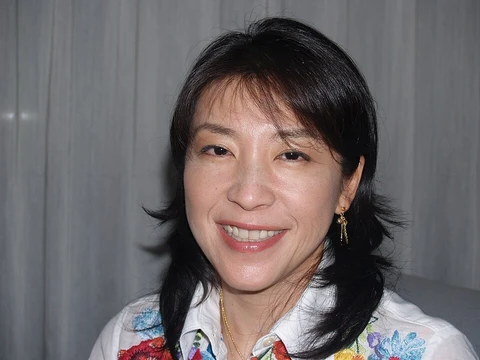
Lisa Ono
Last updated

via Wikipedia: Lisa Ono · see source
Lisa Ono is a Japanese-Brazilian bossa nova singer born on 29 July 1962. She popularized bossa nova in Japan and has performed with musicians such as Antônio Carlos Jobim and João Donato. Her 1999 album Dream sold over 200,000 copies in Japan, cementing her place in the country's bossa nova scene.
Life
Lisa Ono was born in São Paulo, Brazil, in 1962 and moved to Tokyo at age 10. She thereafter spent half of each year in Japan and half in Rio de Janeiro. Her father, who owned a club in Brazil and was Baden Powell's agent, influenced her role as an MPB ambassador in Japan. She began singing and playing guitar at 15 and debuted professionally in 1989.
Her natural voice, rhythmic guitar, and smile brought her success, popularizing bossa nova in Japan. She has performed with top musicians including Antônio Carlos Jobim and João Donato, and has performed in New York City, Brazil, and Asian countries. Her 1999 album Dream sold over 200,000 copies in Japan, establishing her position in the Japanese bossa nova community.
Career
Lisa Ono got her start performing bossa nova and samba at Saci-Pererê, a Brazilian restaurant her father opened after the family moved to Japan. She is also a guitarist and songwriter. Her debut album, Catupiry, arrived in 1989, and she has kept up a pace of one release per year since, with most of her work sung in Portuguese. Television commercials helped make her a household name in Japan.
In 1991, her album Nanã took home Japan’s Grand Prix Gold Disk Award for Jazz. Her third record, Menina, was cut in Rio de Janeiro and won the same prize. The year 1992 saw the BMG release Serenata Carioca and her first book, Felicidade. For 1994’s Esperança, guests included Tom Jobim, Sivuca, Paulo Moura, Danilo Caymmi, and Mario Adnet.
A year earlier, she had put out Minha Saudade, a set of songs by João Donato, who also handled the arrangements. Antonio Adolfo co-produced 1996’s Rio Bossa. In 1998, Paulo and Daniel Jobim produced Bossa Carioca, and Ono launched her own label, Nanã, to push Brazilian music in Japan. Oscar Castro-Neves co-produced 1999’s Dream, which moved over 200,000 copies; it reworked American standards and film tunes from the 1940s and 1950s as bossa nova.
Pretty World, co-produced by Eumir Deodato, came out in July 2000. That fall, Boas Festas offered a winter bossa collection with original songs and Brazilian takes on American Christmas classics.
Summer 2001 brought Bossa Hula Nova, which blended Hawaiian songs into bossa nova with arrangements by Mario Adnet. In March 2002, Lisa Ono Best 1997–2001 included two live tracks from her winter bossa tour. That July, Questa Bossa Mia turned to Italian music, again with Adnet’s help.
Did You Know?
- Lisa Ono's father was Baden Powell's agent and owned a club in Brazil.
- In 2004, she released Boas Festas 2 – Feliz Natal with guitarists Toninho Horta, Oscar Castro-Neves, and Romero Lubambo.
- Her song Sway It, Hula Girl was sampled on Freddie Dredd's 2019 TikTok hit Cha Cha.
More in Brazilian Bossa Nova Singers
Sources
Compiled from Wikipedia and the sources listed below. Text from Wikipedia is available under CC BY-SA 4.0; this entry is adapted from it.
- Wikipedia: Lisa Ono (CC BY-SA 4.0).
Spotted an error? Know more?
Reader corrections go straight into our review queue. Suggest an edit · How this site is sourced