
Wayne Cashman
Hard-grinding left winger and two-time Stanley Cup champion.

Boston Bruins / NHL · Public domain
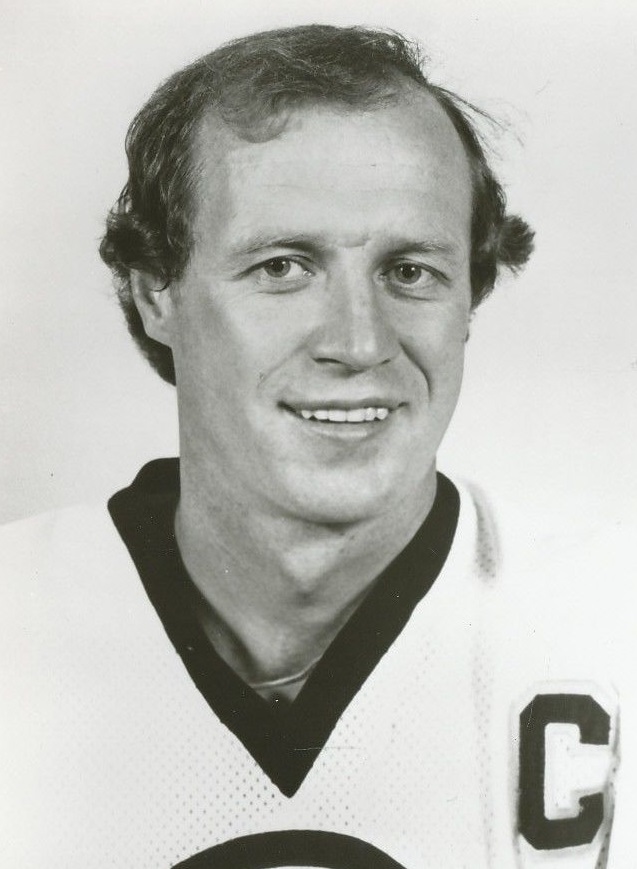
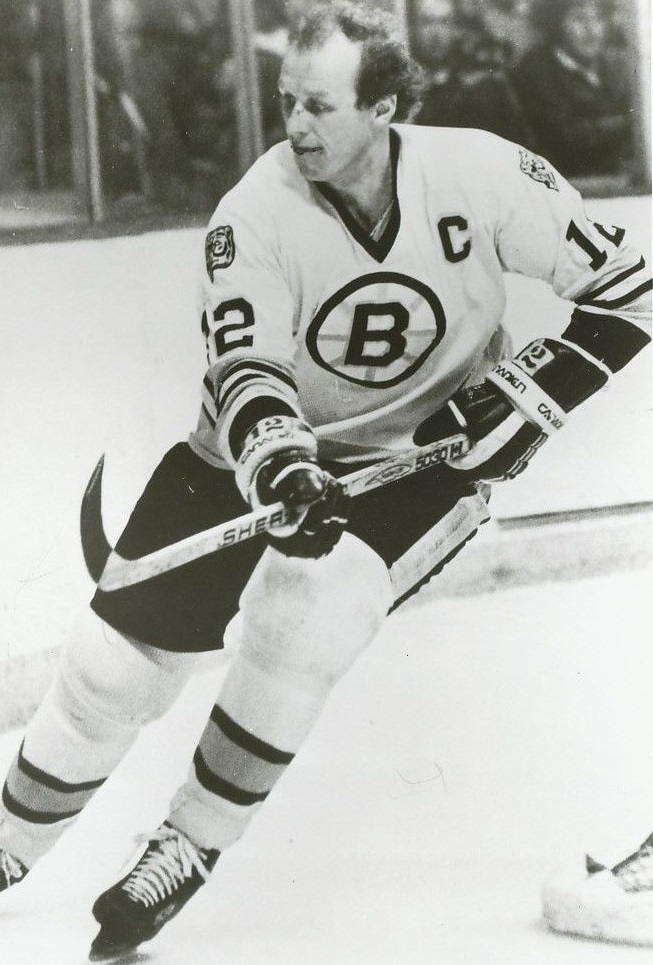
Wayne Cashman is a Canadian former professional ice hockey player who played 17 seasons for the Boston Bruins of the National Hockey League (NHL). He helped the Bruins win the Stanley Cup twice and was the last active player who started his NHL career in the Original Six era. Known as a hard-grinding left winger, he formed part of the era's most formidable forward line with centre Phil Esposito and right wing Ken Hodge.
Quick Facts
- Birth Date
- 1945-06-24
- Birth Place
- Kingston, Ontario, Canada
- Height Ft
- 6
- Height In
- 1
- Weight Lb
- 180
- Position
- Left wing
- Shoots
- Right
- Played For
- Boston Bruins
- Ntl Team
- CAN
- Career Start
- 1965
- Career End
- 1983
- Coached For
- Philadelphia Flyers
Facts from the source article.
Lore & Background
Cashman grew up on a family farm near Kingston, Ontario, and began playing hockey early, listening to games on the radio nightly. He played junior hockey with the Oshawa Generals, where his teammates included Bobby Orr. Cashman made his NHL debut as an undrafted free agent at age 19, appearing in one game for the Bruins during the 1964–65 season. He later played for the Bruins' farm teams, the Oklahoma City Blazers and Hershey Bears, before establishing himself in Boston.
On the ice, Cashman's role was to battle for loose pucks in the corners and feed them to Esposito or Hodge. He was a tenacious forechecker and served as an enforcer to protect Esposito and Orr, becoming known as one of the best fighters of his era with his signature uppercut. He earned the nickname 'Cash' from teammates and fans. Cashman also developed a reputation as a clutch postseason performer and an established leader as his career progressed.
Cashman suffered a ruptured disc in his back after crashing into a goal post during the 1972–73 season, requiring surgery. He played through persistent back pain for much of his career, with Bruins GM Harry Sinden noting his high pain tolerance. Cashman played for Team Canada in the first four games of the 1972 Summit Series but missed the rest after an exhibition game in Sweden where Ulf Sterner's stick cut his tongue open, requiring 50 stitches.
Reader's Guide
Wayne Cashman's significance lies in his role as the heart of the Bruins' dominant forward line during the team's 1970 and 1972 Stanley Cup championships. While Phil Esposito and Ken Hodge received much of the scoring attention, Cashman was the digger who retrieved pucks and created opportunities, described by Esposito as underrated and the heart and soul of their line. Bobby Orr stated that Cashman could play anywhere the team needed him.
Cashman's best statistical season came in 1973–74, when he finished fourth in the league in points with 89, played in the All-Star Game, and was named to the NHL Second All-Star team. That year, he joined Esposito, Orr, and Hodge as the top four scorers in the league, the second and last time in NHL history that all four top scorers played for one team. He scored at least 20 goals eight times in his career and compiled multiple hat tricks and five-point games.
His physical and mental toughness defined his legacy. Despite chronic back pain from a 1972–73 injury, Cashman continued to play at a high level, appearing in all 80 games for the only time in 1975–76. He was a key contributor to Bruins playoff runs that included Stanley Cup finals appearances in 1974 and 1977. Cashman's career spanned the end of the Original Six era through the expansion era, making him the last active player who began his NHL career in that earlier period.
Did You Know?
- Cashman was the last active NHL player who started his career in the Original Six era.
- He scored his first NHL goal on November 6, 1968, in a 7-1 home victory over the Philadelphia Flyers.
- Cashman scored two hat tricks within seven days in January 1973.
- He played for Team Canada in the first four games of the 1972 Summit Series before a tongue injury requiring 50 stitches ended his participation.
The Cornerman's Career
Wayne Cashman spent the entirety of his NHL career with the Boston Bruins, appearing in games from the 1964-65 season through 1982-83 — a remarkable 17-season tenure with a single franchise. Wearing number 12, he carved out a role as a hard-grinding left winger on what was arguably the most dominant forward line of his era, flanked by Phil Esposito at centre and Ken Hodge at right wing. His job was unglamorous but essential: battling in the corners, digging out loose pucks, and feeding them to his more celebrated teammates. He also served as a tenacious forechecker and a protective enforcer for Esposito and Orr. His scoring output was impressive — he recorded at least 20 goals eight times in his career, and in 1970-71 he tallied 79 points in 77 games. He helped Boston capture the Stanley Cup in 1970 and 1972, and his postseason contributions were consistently significant.
Defining Moments
Several moments defined Cashman's career. On November 6, 1968, in a 7-1 home victory over the Philadelphia Flyers, he scored his first NHL goal. In the 1970 playoffs, he recorded 9 points across 14 games as Boston swept the St. Louis Blues for the Cup. In the 1972 final against the New York Rangers, he scored twice in the 3-0 clinching game. But perhaps the most painful defining moment came in 1972 during the Summit Series. After playing in the first four games for Team Canada, Cashman was injured in an exhibition game in Sweden when Ulf Sterner's stick got lodged in his mouth, cutting his tongue open. The injury required 50 stitches and kept him out of the final four games. He also scored his first career hat trick on January 21, 1973, with all three goals coming in the second period of an 8-2 win over the California Golden Seals.
Legacy & Recognition
Despite his two Stanley Cups and 17 seasons, Cashman is often remembered as the unsung hero of the Bruins' dynasty. Phil Esposito himself called him underrated, describing Cashman as 'the digger' and 'the heart and soul of our line.' Bobby Orr echoed this sentiment, noting that Cashman could play anywhere the team needed him. These endorsements have cemented his reputation as one of the best cornermen in NHL history and the archetype of the perfect teammate. Among Bruins fans, he earned the nickname 'Cash' — a term of endearment from both teammates and supporters alike. He was also known as one of the era's most effective fighters, throwing a signature uppercut and serving as the team's self-appointed protector. In the 'Big Bad Bruins' era, he was one of the biggest, always the first to intervene when opponents targeted Esposito or Orr. His legacy is that of a player whose value was measured not in highlight-reel moments but in the thousands of small, gritty contributions that made his teammates look brilliant.
From a Kingston Farm to the NHL
Cashman's path to professional hockey was anything but straightforward. Born on June 24, 1945, in Kingston, Ontario, he grew up on a family farm just outside the city. Hockey was a constant presence in his childhood — he listened to games on the radio every night and began playing at a very young age. He won an Ontario championship with the Kingston peewee team before moving up to Junior B with the Frontenacs. He then played junior hockey in the OHA with the Oshawa Generals, where one of his teammates was the young Bobby Orr. Despite this proximity to future stardom, Cashman went undrafted. At 19, he signed as a free agent and made his first NHL appearance in a single game during the 1964-65 season. He returned to Oshawa for a 35-point season and a Memorial Cup final run before joining the Oklahoma City Blazers, where his productivity eventually earned him a permanent spot with Boston.
Gallery
More in Boston Bruins Players 1-24
Spotted an error? Know more?
Reader corrections go straight into our review queue. Suggest an edit · How this site is sourced